Louisa’s story – Diverticular disease
“Having surgery is the best decision I’ve ever made and probably ever will make. Instantly, I felt like a different person.”
Note: At Guts UK, we want our stories to be easy to understand for everyone. If any medical terms in Louisa’s story are unfamiliar, you can find definitions in our medical glossary below.
Tell us a little bit about yourself
“I’m happily married, with two grown-up stepchildren. I work for a clothing store in their customer and staff cafés. I help prepare the food and pour the coffees and keep everybody entertained.”
When did your symptoms start and what were they?
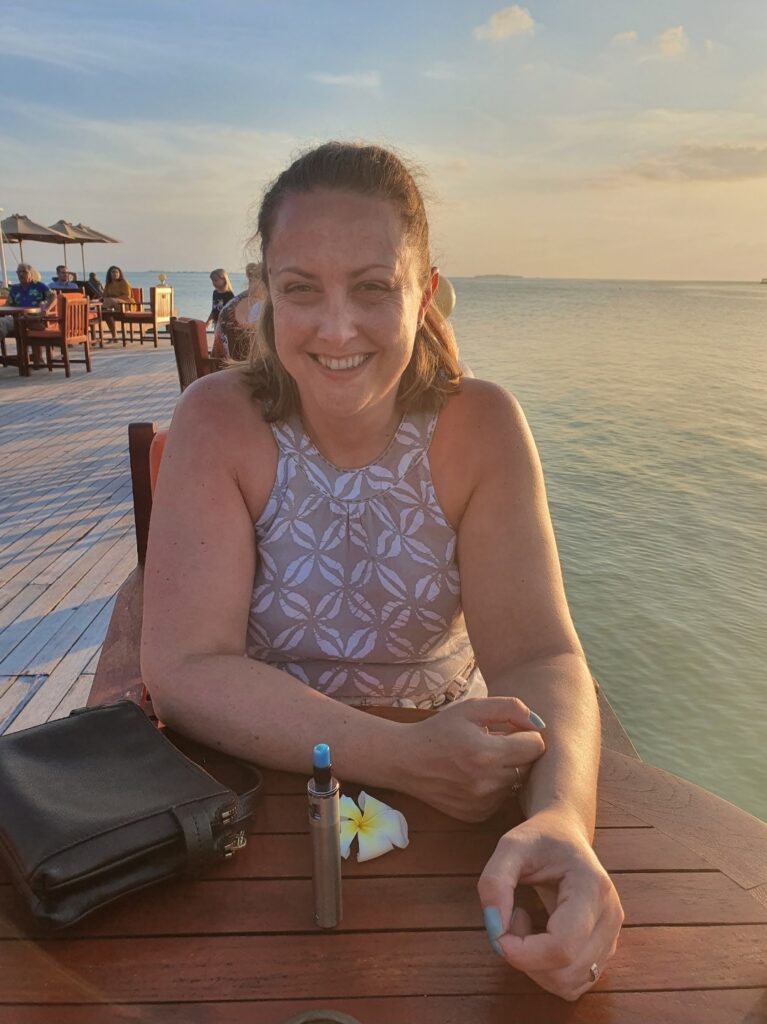
“I was on holiday in the Maldives and one night towards the end of the trip I had a desperate urge to go to the toilet. I thought perhaps I’d eaten something a bit dodgy and had an upset stomach.
I experienced pain and urgency, and I was going to the toilet 20 to 30 times a day. My stools were like water and were uncontrollable.
When I returned home the symptoms stopped for a couple of months, until I got a new job. Within the first week of starting the role, the pain, diarrhoea and urgency started again. I thought, ‘Oh, maybe it’s the stress of the new job.’ I didn’t really know what it was. I was watching what I was eating and just trying to get through it.
To try and manage the symptoms I was getting up extra early in the morning, a couple of hours before I had to go to work, because most of the urgency and diarrhoea was in the morning. I’d take four or five anti-diarrhoea tablets, and it would last me during my shift. Then by the time I got home, it started again.”
When did you seek medical help and what happened?
“I went to the doctors and they sent off a stool sample, which came back raised, so they referred me to gastroenterology.
My dad’s got ulcerative colitis, so I thought I might have the same thing. The referral took around 6 months, with my symptoms being constant the whole time. I had a colonoscopy and a CT scan, and I was told they were all clear.
Then, about two months after the colonoscopy and CT, they called me up and diagnosed me with Irritable Bowel Syndrome (IBS). And the day they diagnosed me with IBS was the day that my bowel perforated.”
Tell us about your experience with a bowl perforation.
“I knew something was wrong. I was having contraction like pain that was really intense and my bowels had shut down and weren’t working like they normally do. I went to A&E and they said ‘Oh, it’s probably IBS,’ and sent me on my way, but I knew there was more to it than IBS.
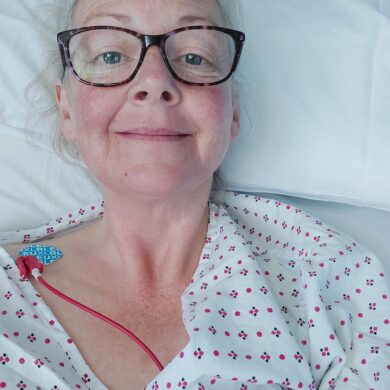
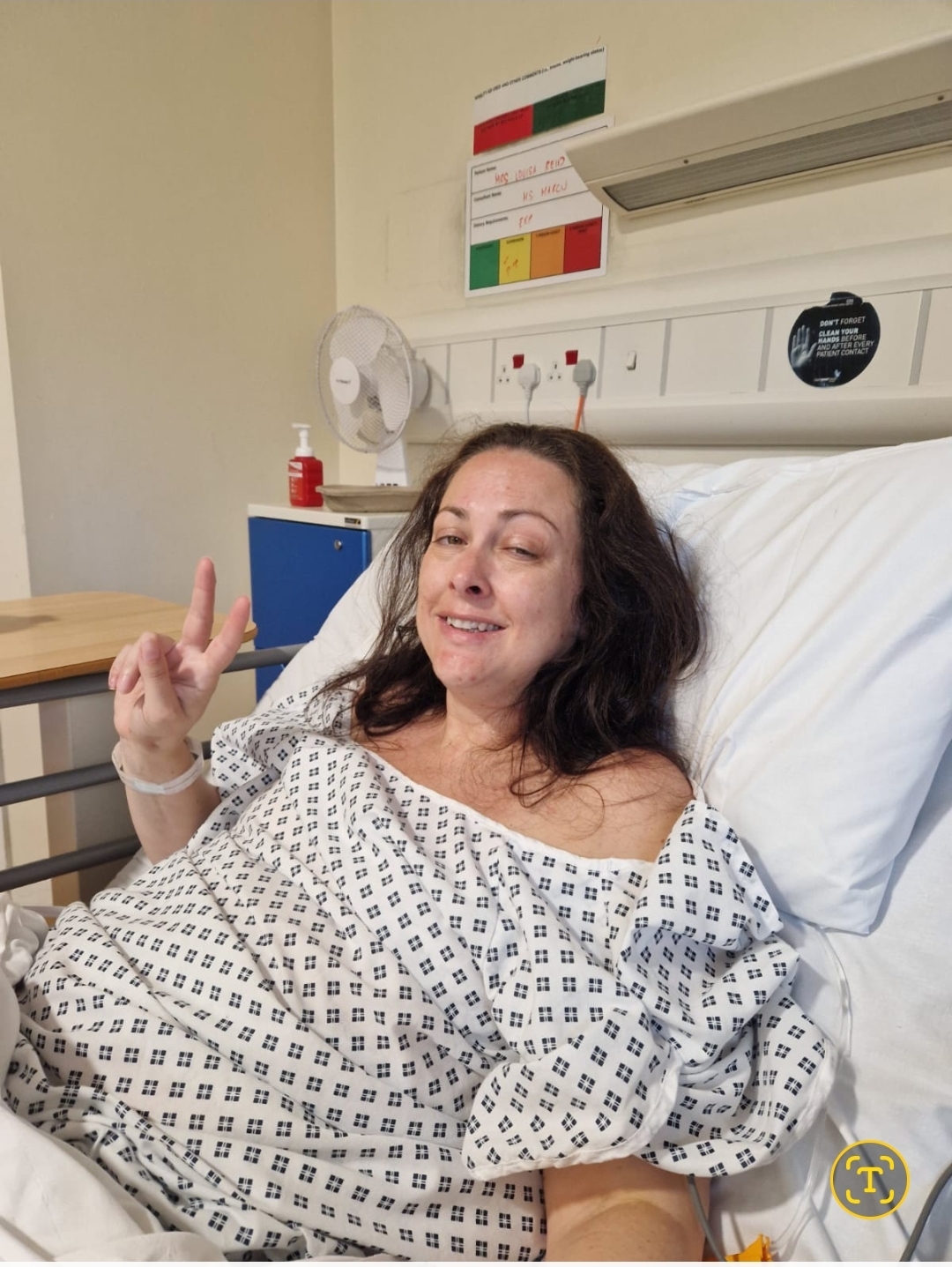
I went back to A&E the following day and they did a scan. They said I’d perforated my bowel and had an abscess that was three and a half centimetres. I spent nearly two weeks in hospital being treated with IV antibiotics. They reassessed my original CT scan and said that I had diverticulitis, a complication of diverticular disease.”
What happened after you returned from hospital?
“I went back to work and I was constantly having flare ups. My symptoms never really settled down. I was re-referred back to gastroenterology and had numerous CT scans, the pill cam and another colonoscopy.
I knew I had diverticular disease and that I was having these flare-ups, but they couldn’t really explain why I was still having so many symptoms. I’d get antibiotics from the doctors every now and then when I had a big flare.
I couldn’t eat certain things. You’re meant to have a high-fibre diet, but I couldn’t tolerate anything like that. It caused too much pain. And I now think it was causing blockages.”
How did your symptoms affect your day to day life?
“It took over my life. I was constantly in pain. It was irritating and compressing my bladder, so I also had a constant urge to pee. Trying to keep myself well enough to go to work was difficult because I looked okay on the outside, so people didn’t get it. I was constantly drained, constantly in pain, and always worrying about where the toilets are.
If I wanted to go out with friends, I felt like a bit of a party pooper because I always needed to know where the toilets were, where we were going and how long the journey was going to be.”
Talk us through your surgery.
“Eventually I had another really bad episode and I went to A&E. They found that it was the diverticulitis again and there was a fluid collection around it. That’s when I was referred to the surgical team. The lady took one look at my notes and what was going on and said, ‘We can refer you to surgery.’ That was August last year, and on June 11th 2026, I finally got my surgery.
It was a robotic sigmoid resection. I had a lot of adhesions, with everything stuck together. My caecum, where my appendix is, and my small bowel were stuck to my sigmoid. My sigmoid was stuck to my uterus, and everything was also stuck to the front wall of my abdomen.
It was a seven-hour surgery, and they said it was quite difficult and complex. It’s not that you want to be ill, but when they say that it was a bad case, at least you know then it’s not in your head, because you do start to think that.
Note: Surgery is not routinely advised as a treatment for diverticular disease and is only considered in severe or complicated cases. Surgery carries risks, so the potential benefits and risks should always be discussed with a surgeon and other relevant healthcare professionals. Louisa’s experience is personal to her and does not mean surgery will be appropriate for everyone.
How are you now?
“Having surgery was the best decision I’ve ever made and probably ever will make. Instantly, I felt like a different person.
I’m going back to work next week. I’ve had 10 weeks off. My digestive system’s not been a problem. I’m eating whatever I want, which I couldn’t do before. I’m on All-Bran and avocados and vegetables, and they were all things that used to get stuck and cause a lot of problems.
I’ve got energy, my mental health is so much better and I’m not living in fear. My bladder pain has gone. It’s transformative. It’s amazing.
I’m back to normal now. It’s life changing. I can’t believe the difference. It was amazing how quickly things went back to how they should be.”

Why are you sharing your story with Guts UK?
“Because I want to raise awareness. Diverticular disease was always seen as something you get as you get older or something for constipated people. My surgeon said they’re operating on people that are in their 30s now and that it’s affecting more and more young people. People just don’t realise. The condition needs to be taken seriously because it can do a lot of damage.”
Glossary of medical terms
- Adhesions: Areas of scar tissue that can cause organs or tissues in the abdomen to stick together.
- Colonoscopy: a thin tube with a small camera on the end inserted via the back passage.
- CT Scan: A non-invasive test that takes detailed pictures of the inside of your body
- Diverticulitis: this happens when one or more diverticular pouches get inflamed or infected. This can cause increasing pain and other symptoms.
- Pill cam: A small ‘pill’ sized camera that is swallowed so that pictures of your small intestine can be taken.
- Sigmoid resection: A surgery to remove the diseased area of the bowel and a length of normal bowel either side of it. The two ends of the healthy bowel are then joined by stitching or stapling them together.
About Guts UK
Guts UK is the national charity for the digestive system and the only UK charity funding research into the whole digestive system.
We provide information and support for people affected by digestive conditions such as diverticular disease and diverticulitis, including a dedicated Helpline.