Griffin’s story – irritable bowel syndrome (IBS)
"Digestive conditions that are seemingly common can often be seen as less severe or less impactful, but that’s not the case. There needs to be more awareness of the different types of IBS and how they impact people."
Note: At Guts UK, we want our stories to be easy to understand for everyone. If any medical terms in Griffin’s story are unfamiliar, you can find definitions in our medical glossary below.
Tell us a little bit about yourself
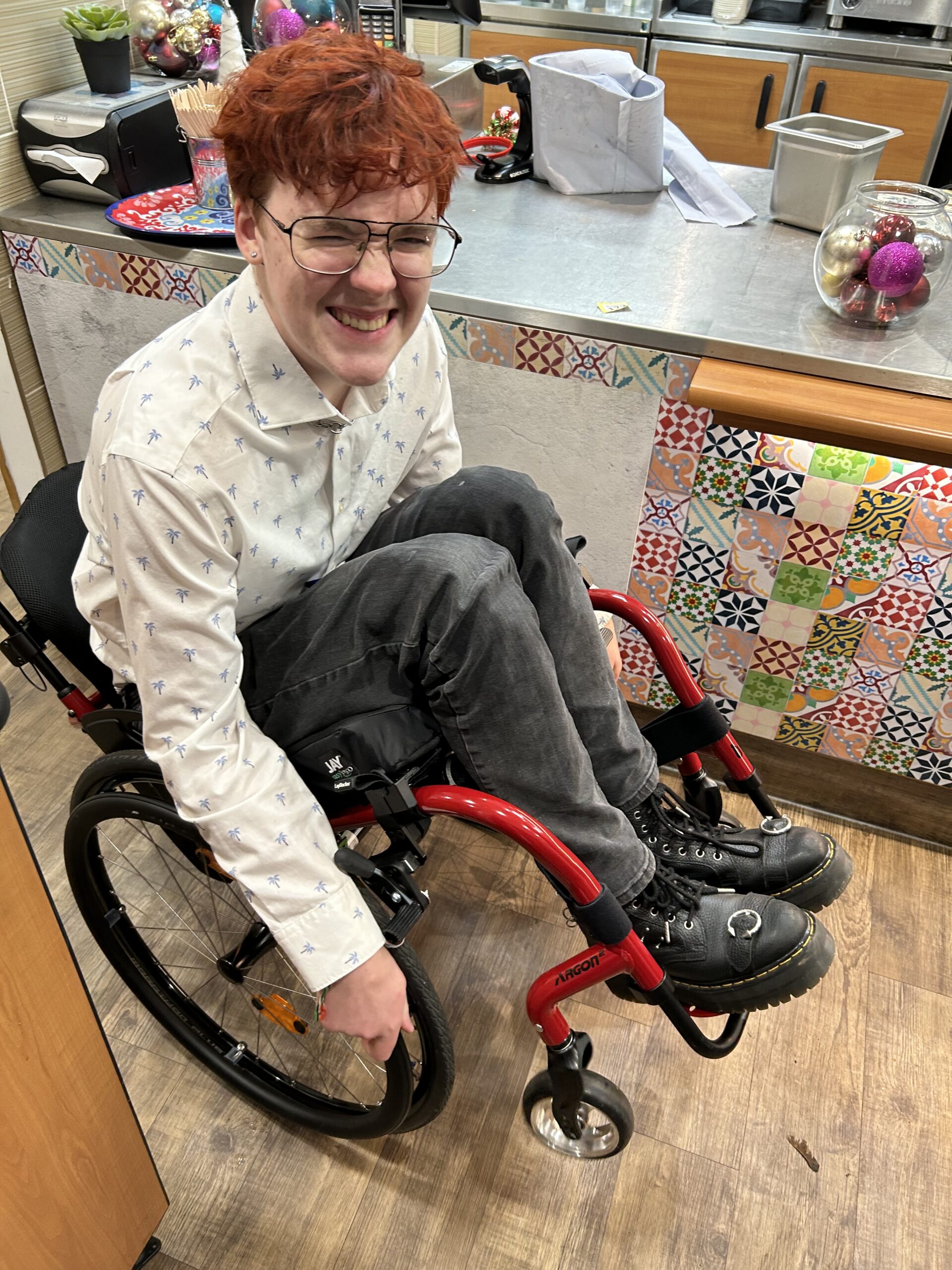
“I’m Griffin, I’m 19 years old, and I’m from Hampshire. I’m a student in animal management and live on campus with my friends. I love wheelchair rugby with my team, Solent Sharks, and compete in wheelchair skating. I also help run a non-profit called Transkaters, which helps gender-diverse people get into the skating scene.”
When did your symptoms begin, and what were they?
“From birth, I experienced bloating, constipation and reflux, and for most of my infant years, I had severe colic. As a child, I experienced constipation and abdominal discomfort, which was put down to me being a picky eater, but as I got older and developed a more varied diet, my symptoms carried on into my teenage years and early adulthood.”
When and how were you diagnosed with irritable bowel syndrome (IBS)?
“For years, I was told by my GP that I was a picky eater and that my symptoms were down to anxiety. They tried me on many medications and kept giving me similar advice. Finally, in 2020, I was referred to a gastroenterologist. After just one appointment, I was diagnosed with IBS-C (IBS with constipation).
I was prescribed medications to try, and under my doctor’s advice, I tried different diets. I was told I was gluten intolerant and that once I cut out gluten, all my symptoms would disappear. This wasn’t the case.
I experienced bloating, constipation, abdominal pain, nausea (feeling sick) and couldn’t eat. This led to me losing a lot of weight and muscle mass because my body wasn’t getting the nutrients it needed.”
Note for diagnosis of IBS: Your GP will want to rule out other conditions. After ruling out other conditions with a few simple tests, doctors can be confident the diagnosis is IBS. This then allows the person to try treatments to reduce symptoms.
When were you diagnosed with dumping syndrome and gastritis?
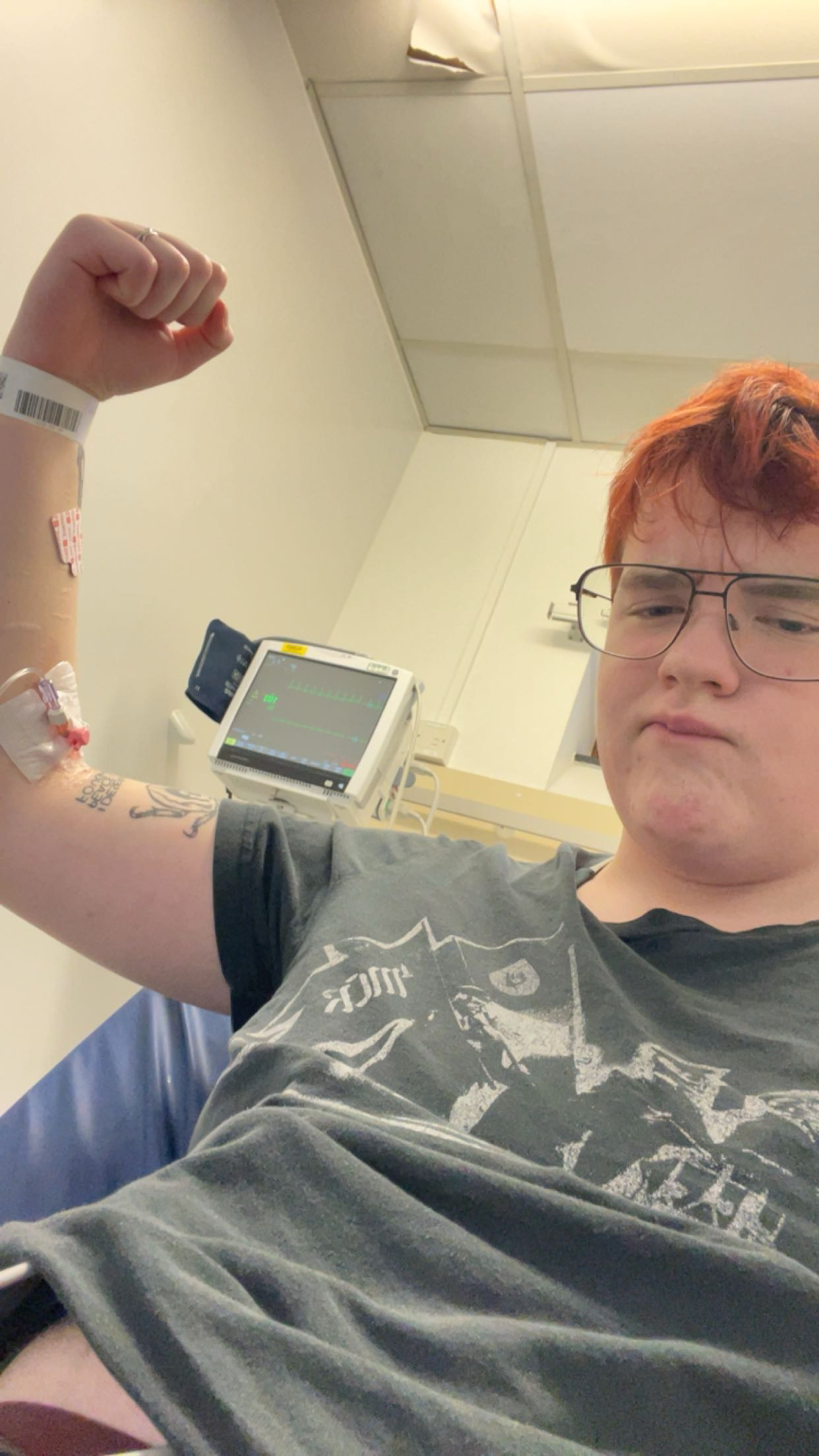
“In 2025, after waiting to get an appointment to see my gastroenterologist again, I was referred for further tests. I had a gastric emptying study and an endoscopy. From these, I was diagnosed with dumping syndrome, gastritis and severe duodenitis.”
Can you tell us a little bit about how your diagnoses made you feel emotionally?
“Receiving my diagnoses was a mix of emotions. I was glad there were finally answers for what I had been experiencing and that my problems weren’t ‘just in my head’. However, I also felt sad that my conditions didn’t have a quick fix and that they’re lifelong. I had to learn to manage my illnesses, and that felt so overwhelming.”
What treatment have you received for IBS?
“I have been on pretty much every laxative and medication available on the NHS, including combining multiple medicines at once. I also saw a dietitian. I have been gluten-free for the last three years, which has helped.
Currently, I’m on two laxative medications and a stomach acid neutraliser, along with trans anal irrigation. I space out my meals into more frequent but smaller meals and make sure I have enough fibre and protein throughout all my meals.”
Note on identifying trigger foods: It’s important to speak to a dietitian before trying exclusion diets.

How do your digestive conditions impact your daily life?
“Digestive symptoms and conditions have affected my whole life in so many ways. The symptoms I have experienced, such as bloating, dehydration, nausea and severe constipation, have been debilitating, and sometimes, even required a trip to A&E. Whilst I deal with my digestive conditions impacting me physically, they also impact my mental health, relationships and self-esteem. I often feel humiliated by my conditions and symptoms and try to hide them from my loved ones because of the shame I feel. Hiding big parts of my life also influences the relationship I have with myself.”
Why are you sharing your story?
“Digestive conditions that are seemingly common can often be seen as less severe or less impactful, but that’s not the case. There needs to be more awareness of the different types of IBS and how they impact people. There is so much stigma around digestive conditions and symptoms, and people don’t talk about them because they can be seen as gross or unsanitary. But the truth is, we all have bodily functions, and when things go wrong, they can impact people’s lives to varying degrees and make people feel like they must suffer in silence and alone. By speaking up about my story, I hope someone else feels empowered to talk about their symptoms.
I’m so glad I discovered Guts UK through other creators with digestive conditions on social media. Having charities like Guts UK means that vital awareness can be raised and more people can develop an understanding to those impacted by digestive conditions and symptoms.”
Glossary of medical terms
Colic: Severe pain in the abdomen caused by wind or obstruction in the intestines.
Duodenitis: Inflammation of the first part of the small intestine which connects to the stomach.
Endoscopy: A thin tube with a small camera on the end is inserted via the mouth.
Gastric emptying study: A medical test that tracks how long it takes a meal (or drink) to move through your stomach and empty from it.
Gastroenterologist: A healthcare professional who specialises in the diagnosis and treatment of conditions affecting the digestive system.
Trans anal irrigation: A treatment for chronic constipation, consisting of flushing water into the rectum to help emptying.
About Guts UK
Guts UK is the national charity for the digestive system and the only UK charity funding research into the whole digestive system.
We provide information and support for people affected by digestive conditions like irritable bowel syndrome (IBS), dumping syndrome and gastritis, including a dedicated Helpline.