Ceri’s story – Oesophageal cancer
I saw mentions of oesophageal cancer, but I thought: ‘Well, I can't have that, because Dr Google tells me everyone who's got that is male, 65, and a smoker and drinker’, none of which applied to me.
Tell us a little about yourself
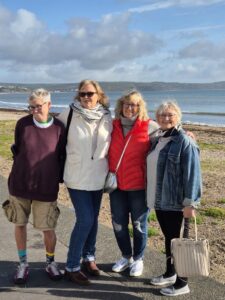
“I’m Ceri, I’m 61 years old, and I live in Farnham. I am the youngest of three, with an older brother and sister living close by. I work part-time for a marketing company, focusing on telemarketing and data research. In my spare time, I love being outdoors, going for walks and visiting the theatre.”
Can you describe when your symptoms started and what they were?
“In July 2019, I was with my parents at our family cottage in Pembrokeshire. During a meal out, I had a bit of trouble swallowing my food. I didn’t think much of it at first, but it kept happening when I returned home. I mentioned it to my mum, a former nurse, who suggested it might be a hiatus hernia or that I was eating too quickly. So I slowed down my eating, and I slightly changed what I was eating as well.”
Talk us through your journey with oesophageal cancer
“By September 2019, I went to see my GP and was referred for an endoscopy. He told me not to worry. I left the surgery and turned to the internet. I saw mentions of oesophageal cancer, but I thought: ‘Well, I can’t have that, because Dr Google tells me everyone who’s got that is male, 65, and a smoker and drinker’, none of which applied to me.
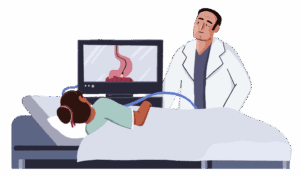
After the endoscopy, the nurse mentioned she had taken several biopsies and noted things didn’t look right. A week later, she confirmed the diagnosis and told me I had oesophageal cancer. It was squamous carcinoma, located higher up in my oesophagus. My treatment followed a curative pathway involving chemo-radiotherapy and a feeding tube for nutrition, as I had already moved to a liquid diet due to my swallowing difficulties.”
Are there any hospital experiences that you particularly remember?
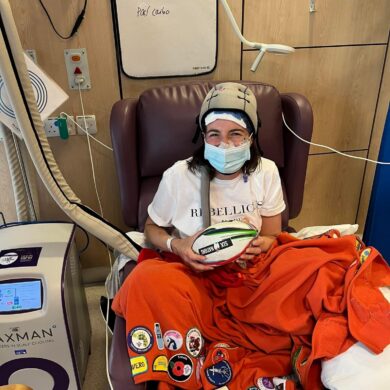
“My sister took me to the hospital for my surgery, but because it was during the COVID-19 pandemic, she had to leave me at the door. It was a traumatic start to the process. I had a total oesophagectomy and remained in the hospital for three weeks due to a chest infection.
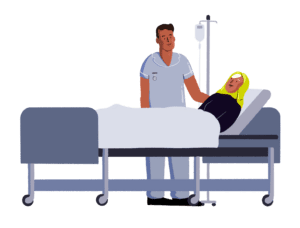
Later, I was readmitted with a pericardial effusion, an irregular heartbeat, and recurring chest infections caused by acid reflux. I was in and out of the ward for weeks. My body felt like it was in rebellion. I remember thinking, ‘Just leave me alone. Give me some peace.’
How did this impact you emotionally?
“I struggled a lot after my diagnosis. I had a lot of anxiety, which gradually got worse. I was prescribed medication for my anxiety and depression. I had counselling through a cancer charity and was paired with a Macmillan buddy for a few months. Having someone to talk to was important. My buddy challenged me, saying: ‘Rather than sitting there saying you can’t do this or that, why don’t you try doing things?’ It was exactly what I needed at that time.”
How are you now?
“Life is better now, though there are things I can’t do. I can’t do the ‘downward dog’ in yoga because my stomach now sits between my ribs, reaching the base of my neck. When it gets full, it presses against my lungs.
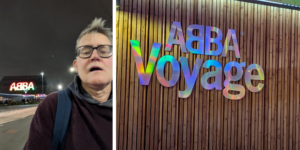
But my perspectives on life are different. Instead of saying: ‘I’ll do it one day,’ I think: ‘I’ll do it now.’ I do stuff when I want to. I’ve now been to see ABBA Voyage twenty times!”
What is one thing you wish people knew about oesophageal cancer?
“So many people are unaware of this condition. I didn’t even know it was a thing until I had it. If you are taking any medications for acid reflux long-term, like Gaviscon, you need to go and see your doctor. It might be nothing, but it is important to be sure. If you have persistent indigestion or difficulty swallowing, you need to see a doctor. If you are told not to worry, say: ‘No, I do worry about it, and I want this followed up.’
Why are you sharing your story?
“I feel like one of the lucky ones because I have made it to the five-year milestone. Too many people are diagnosed too late. I have now become a Macmillan buddy myself. I’ve had people contact me saying, ‘I’m having my surgery in a couple of weeks’, and I’m more than happy to have a chat about it. If we’re not there to share our experience, then who are these people going to get it from?”
Why do you support Guts UK charity?
“I discovered Guts UK through my support group. They support people living with these ‘Cinderella conditions’ that many haven’t heard of, which have a massive impact on their lives. People living with these conditions need to have a dedicated place where they can find support and answers.”
What are your hopes for the future?
“I want people to be educated about oesophageal cancer. I also hope for increased funding for research. On a personal level, I just want to keep seizing every moment.”

Glossary of medical terms
Biopsies: A medical procedure where a small sample of tissue, cells, or fluid is removed from the body to be examined in a laboratory.
Endoscopy: A thin tube with a small camera on the end, inserted via the mouth to look inside the body.
Hiatus hernia: When part of the stomach moves upwards into the chest by passing through a hole in the diaphragm.
Oesophagectomy: A major surgical procedure to remove some or most of the oesophagus.
Pericardial effusion: An abnormal buildup of fluid surrounding the heart.
About Guts UK
Guts UK is the national charity for the digestive system and the only UK charity funding research into the whole digestive system.
We provide information and support for people affected by digestive conditions like oesophageal cancer, including a dedicated Helpline.