Leah’s story – gastroparesis
"I wish people understood how serious and life-changing gastroparesis can be. People often think digestive conditions are just stomach aches or feeling sick occasionally, but for me it affects every part of my life — my mobility, independence, energy levels, work and future."
Note: At Guts UK, we want our stories to be easy to understand for everyone. If any medical terms in Leah’s story are unfamiliar, you can find definitions in our medical glossary below.
Tell us a little bit about yourself
“My name’s Leah, I’m 29, and I live in Essex. I used to work as an A&E receptionist for the NHS before becoming too unwell. I love crocheting and anything crafty.
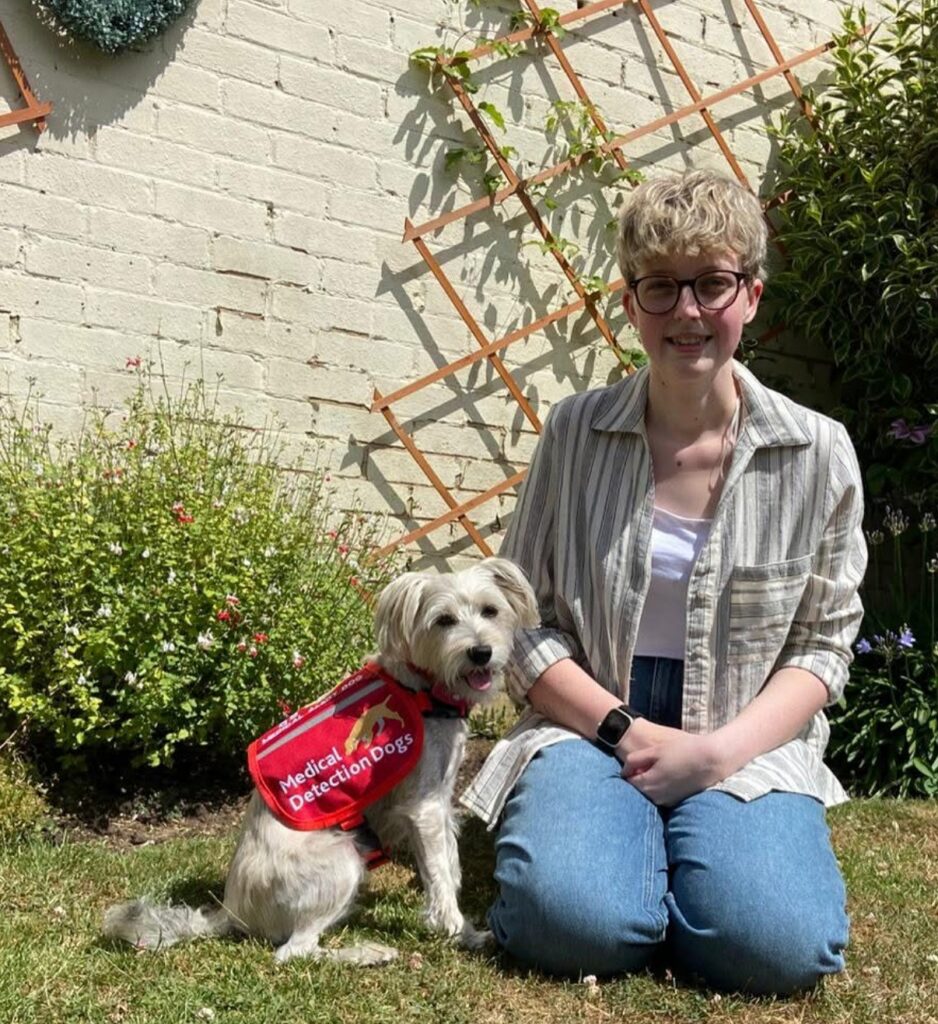
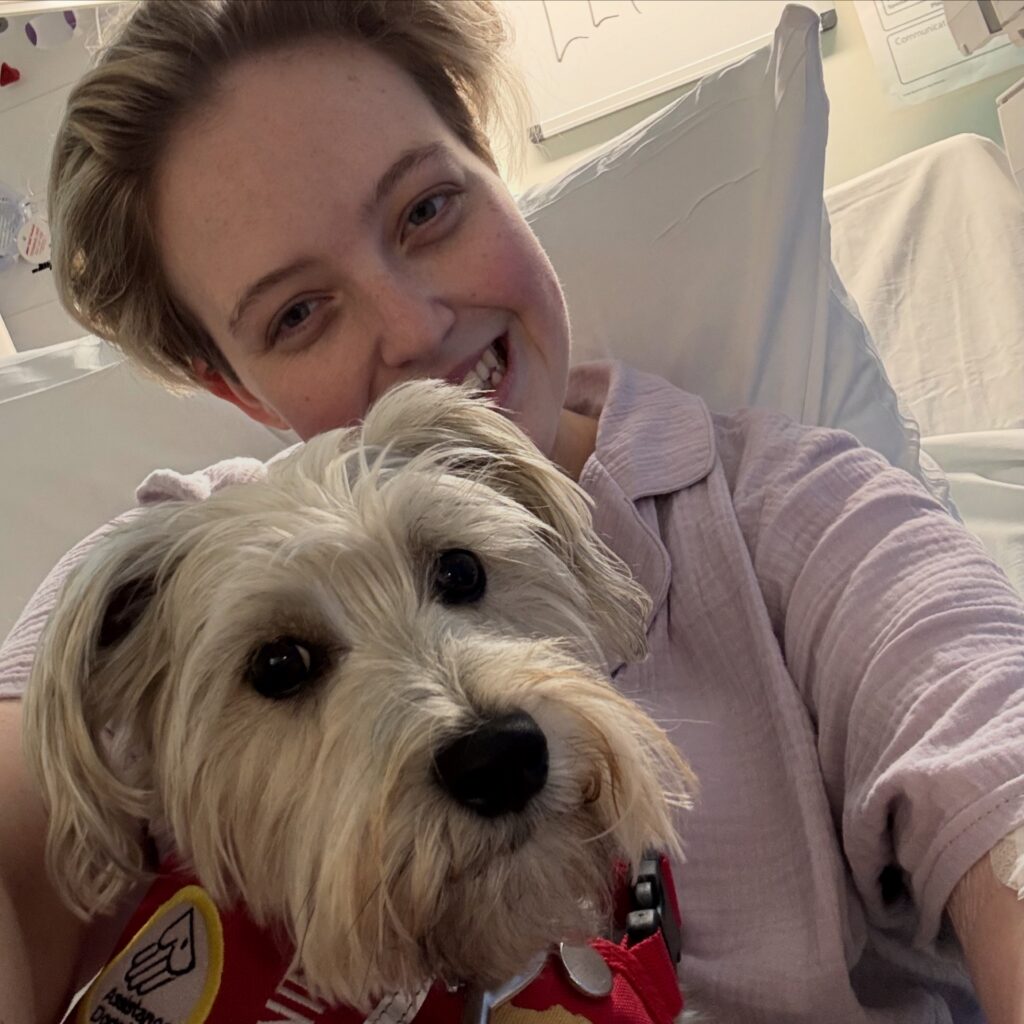
I have several conditions, including Ehlers-Danlos syndrome, Postural Tachycardia syndrome (PoTS) and gastroparesis. I have a medical alert dog, Doris, who alerts me when my heart rate spikes or when I’m about to pass out.”
When did your symptoms of gastroparesis begin, and what were they?
“I’ve always had digestive issues since I was a teenager, but no one knew why. Then, around four years ago, suddenly everything changed. From eating pretty normally, I suddenly stopped being able to eat.
I started getting severe bloating, pain, swelling and vomiting after eating. My stomach would swell so much that I looked pregnant. I also lost weight very quickly.
We noticed there was a pattern where my stomach seemed to hold onto food for about three days before I’d be violently sick. My digestive system wasn’t moving food through properly.
At first, I tried everything to keep eating. Smaller meals, including eight small meals a day, prescribed supplement drinks, different diets, including gluten-free foods, dairy-free foods, literally anything and everything. Weirdly, the only thing I could tolerate for a while was ready-salted Pringles. I basically lived off them for months.
Eventually even those became too much, and the pain only improved once I stopped eating completely.”
Note: Please note, it is not advised to remove any food groups or take on a specialist diet without the supervision of a healthcare professional.
Tell us about your initial experience with seeking medical help
“I went to my GP after around two weeks because I’d already lost a significant amount of weight unintentionally and I knew something wasn’t right. I had blood tests, ultrasounds and an endoscopy, but nobody really knew what was happening inside my body.
Even though food was still sitting in my stomach during my endoscopy despite fasting beforehand, I was mostly told to try different diets and keep attempting to eat.
As I became more unwell, I was repeatedly admitted to hospital with starvation ketosis and severe malnutrition. I lost around six stone in about ten weeks, but because I was still technically within a healthy body mass index (BMI) range, I often felt like people didn’t understand how seriously ill I was.
At one point, I was told my symptoms were psychological or linked to my autism. That experience has had a lasting impact on me. Even now, I sometimes struggle to trust myself and my symptoms because of how much I was made to question whether it was “all in my head”.
Tell us about your experience with feeding tubes
“When I first became severely unwell and couldn’t tolerate food anymore, doctors initially tried an NG tube, which goes through your nose into your stomach. My body rejected it almost immediately, and I couldn’t tolerate it at all.
After that, I had an NJ tube placed, which goes further down into the bowel. That worked slightly better, but my body still constantly rejected the tubes. Over about a year, I ended up needing around 17 replacements.
At one point, I was surviving on tube feeding while continuing to lose weight. My body wasn’t coping well with any form of feeding into my digestive system.
I also underwent Botox injections into my stomach and jejunum to see whether I’d be suitable for a gastric pacemaker, but unfortunately that made things much worse. I became unable to tolerate even small amounts of fluid or feed properly.
One of the hardest parts was when feeding tubes were taken away as a treatment option because of my BMI.
Even though I had lost a significant amount of weight really quickly and was repeatedly being admitted to hospital with starvation ketosis, there seemed to be a focus on the fact that my BMI technically wasn’t “low enough”. Because of that, nutritional support was delayed and, at times, removed, even though I physically could not eat.
The consequences of that were huge. My health deteriorated massively. I became severely malnourished, lost muscle strength and mobility, and eventually needed a wheelchair and walking aids. My liver function also started becoming affected because my body was starving.
Emotionally, it was devastating because I felt like I had to keep proving how ill I was before people would intervene.”

What led to your diagnosis of gastroparesis?
“The turning point was when I paid privately to see a gastroenterologist because I felt like I wasn’t getting anywhere. He immediately suspected gastroparesis linked to my Ehlers-Danlos syndrome and arranged for me to have a gastric emptying study (GES).
During the test, I had to eat porridge and complete repeated breath tests over several hours. The results showed that after three and a half hours, I still had full stomach contents sitting there undigested, when it should have emptied within around 25 minutes.
Getting that diagnosis was emotional. I felt relieved because somebody finally believed me, and it proved it wasn’t in my head. But at the same time, it was terrifying because I knew it was something life-changing.
I was then referred for specialist intestinal failure care. That referral completely changed my care. For the first time, I was under a team that specialised in severe gastroparesis and complex nutrition support. They understood how serious my condition was and focused on stabilising me rather than questioning whether my symptoms were real.”
What treatment have you received for your gastroparesis?
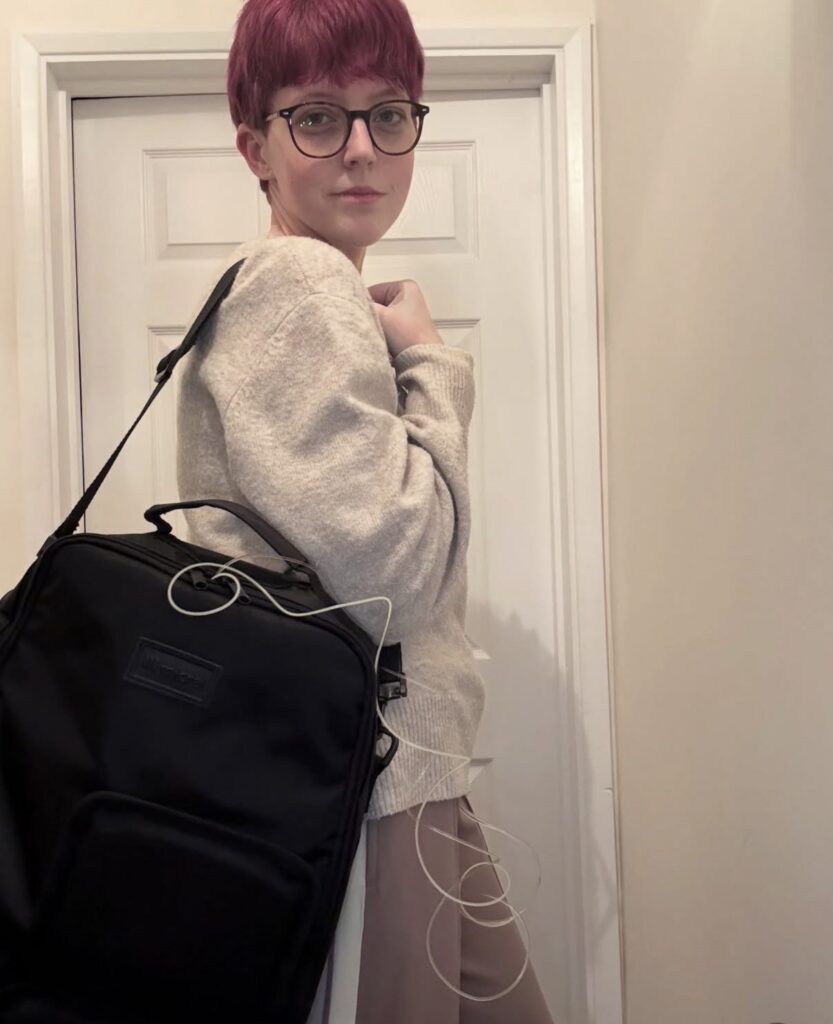
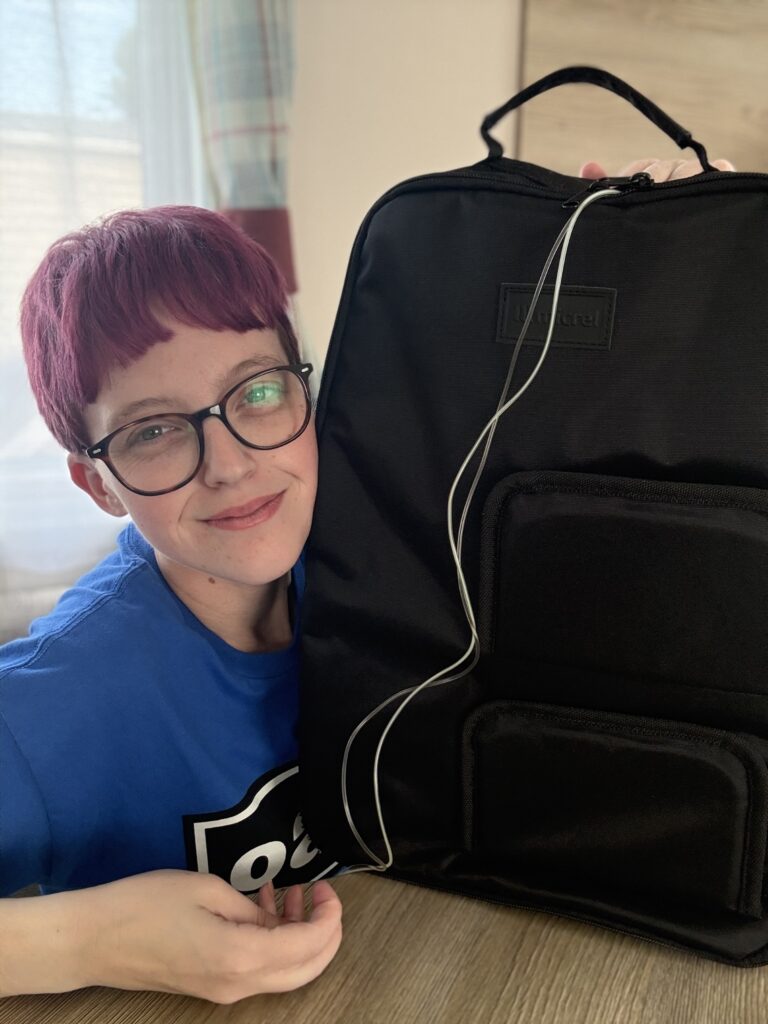
“I’m now on total parenteral nutrition (TPN) for around 12 hours daily overnight, which means all my nutrition goes directly into my bloodstream through a Hickman line in my chest. It’s my lifeline.
I still can’t tolerate eating food properly. The only things I can really manage are tea, coffee with lactose-free milk and occasionally the cream from the middle of a custard cream biscuit.”
Note: This route of feeding is not usually required in people with gastroparesis, as the small bowel is working. There would need to be evidence of small bowel intestinal failure to support the use of this high-risk feeding option.
What difficulties do you face living with gastroparesis?
“The biggest difficulty is energy. Because I can’t eat normally, I can’t replace energy in the same way other people can. The calories from my TPN are enough to keep me alive, but not enough to properly live on.
Simple things like hoovering, walking my dog or going out with friends completely wipe me out. If I have a day out planned, I’ll often spend days beforehand resting to save energy and then need days afterwards to recover.
I had to medically retire from the NHS because I became too unwell to work. That’s been difficult mentally, especially at my age. I’ve struggled a lot with feeling like I’ve lost my purpose.”
What do you wish others knew about gastroparesis?
“I wish people understood how serious and life-changing gastroparesis can be.
People often think digestive conditions are just stomach aches or feeling sick occasionally, but for me it affects every part of my life — my mobility, independence, energy levels, work and future.
I also wish people understood how damaging it can be when patients aren’t believed. Being told repeatedly that your symptoms are psychological when you’re critically unwell stays with you.
At the same time, every person’s gastroparesis journey is different. Some people can still eat certain foods or continue working, while others like me end up relying on TPN.”
Why are you sharing your story with Guts UK?
“Because if my story helps even one person, it’s worth it.
When I first became ill, I felt incredibly alone. Finding Guts UK helped me understand the condition and made me realise other people were going through similar experiences.
I’ve connected with people through Guts UK’s social media, and that sense of community has really helped me.
I know there are people at the beginning of this journey who might be feeling scared, dismissed or confused, like I was. If sharing my story helps somebody feel less alone or encourages them to keep fighting for answers, then that gives this whole experience some purpose for me.”
Glossary of medical terms
- Ehlers-Danlos syndrome: Ehlers-Danlos syndromes (EDS) are a group of rare inherited conditions that affect connective tissue. Connective tissues provide support in skin, tendons, ligaments, blood vessels, internal organs and bones.
- Endoscopy: A thin tube with a small camera on the end inserted via the mouth.
- Gastric Emptying Study (GES): A medical test that tracks how long it takes a meal (or drink) to move through your stomach and empty from it)
- Gastric pacemaker: This treatment involves implanting a battery-operated device in the skin of the belly. Leads attach the device to the bottom of the stomach where electrical impulses stimulate emptying.
- Gastroenterologist: A healthcare professional who specialises in the diagnosis and treatment of conditions affecting the digestive system.
- Hickman line: A long, thin, silicone tube inserted into a large vein in the chest for long-term intravenous treatment such as parenteral nutrition.
- Nasogastric (NG) tube: A thin, plastic feeding tube, inserted into one of the nostrils, down the back of the throat, then down to the stomach.
- Nasojejunal (NJ) tube: A soft tube which goes up the nose and into the small bowel
- Postural Orthostatic Tachycardia syndrome (PoTS): Postural tachycardia syndrome (PoTS) is when your heart rate increases very quickly after getting up from sitting or lying down, often making you feel dizzy or lightheaded.
- Starvation ketosis: A metabolic state where the body, lacking carbohydrates, exhausts its available glycogen stores and begins breaking down fat for energy. This produces excess “ketones” which accumulate in the blood.
- Severe malnutrition: Severe malnutrition is a life-threatening condition caused by a critical lack of essential nutrients or calories.
- Total parenteral nutrition (TPN): Nutrition administered via a thin tube into a large vein, directly into the bloodstream, to bypass the digestive tract.
- Ultrasound: a medical imaging technique which uses sound waves to create images of inside the body.
About Guts UK
Guts UK is the national charity for the digestive system and the only UK charity funding research into the whole digestive system.
We provide information and support for people affected by digestive symptoms such as constipation, including a dedicated Helpline.