Magda’s story – gastritis
Magda shares her gastritis story and fundraising challenge to inspire others to raise funds and awareness of digestive conditions and symptoms.
Note: At Guts UK, we want our stories to be easy to understand for everyone. If any medical terms in Magda’s story are unfamiliar, you can find definitions in our medical glossary below.
Tell us a little bit about yourself
“My name is Magda, I’m 29, and I live in Glasgow. I moved back to the UK about four months ago after spending a year and a half living in New Zealand. Before that, I’d spent much of my 20s working and travelling overseas, particularly in South America.
I work as a policy adviser in international climate change for the Scottish Government, which I absolutely love. My role involves working with other subnational governments around the world to collaborate on climate targets.
I’m very outdoorsy. I love swimming, kayaking, hiking, and travelling. Exploring new places and cultures has always been a huge part of who I am.”

When did your symptoms of gastritis begin and how was the condition diagnosed?
“My symptoms first started when I was 17, during my exams at school. I would describe them as a burning, gnawing pain in my stomach. I saw my GP, and I was prescribed a proton pump inhibitor (PPI), but no diagnosis was given. I don’t tend to get much reflux; for me, it’s more of a constant dull, burning pain.
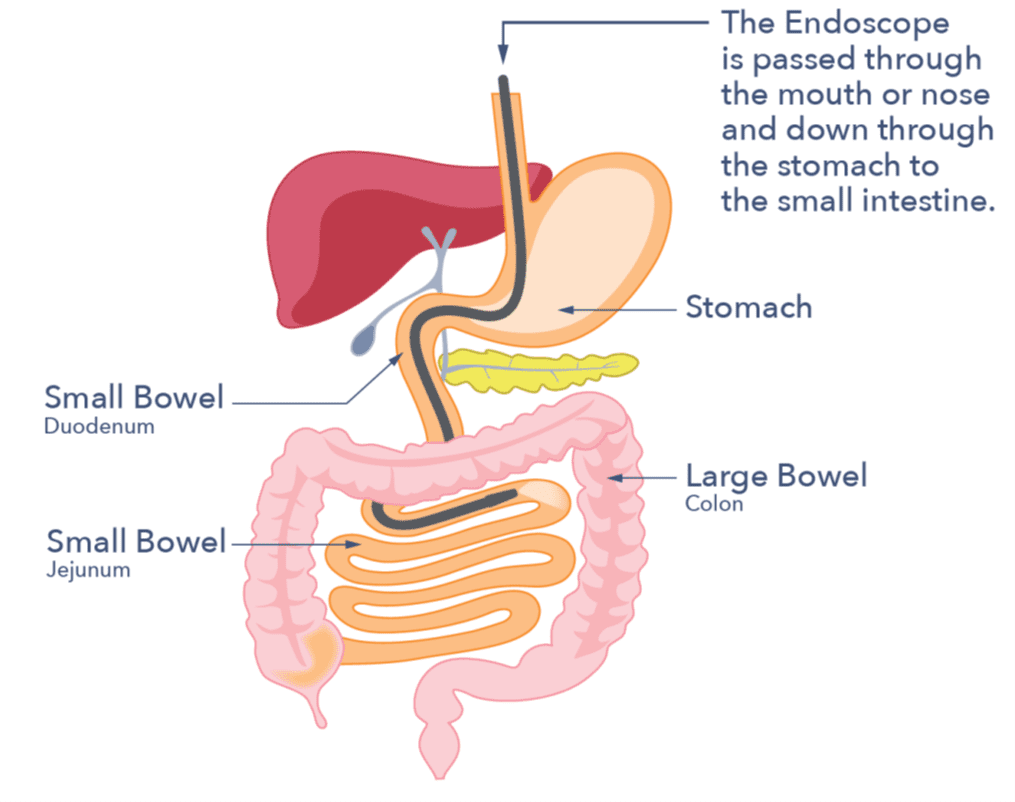
I then travelled to Honduras, where I lived for a year to do voluntary teaching. During my time there, I was given an endoscopy which diagnosed gastritis with no cause identified. I was given a different PPI to the one I was prescribed in the UK and that was effective for some time.”
What has the treatment and management of gastritis looked like over the years?
“Over the years, my gastritis has flared up during periods of stress, particularly big life transitions like moving abroad. Certain foods are major triggers, such as coffee, alcohol, spicy food, citrus, onions and garlic.
The worst flare-ups feel like someone is inside my stomach with a razor blade, pouring acid onto it. It can be relentless and all-consuming.
I have had further endoscopies which have shown inflammation and damage to the stomach lining. I’ve been on PPIs on and off for 10 years and I’m currently on the highest dose. I’ve tried every single one that there is and they just don’t seem work for me anymore. I feel like I’m now resistant to them.
I’ve also made dietary changes which have been self-led, as I haven’t been referred to a dietitian. I’m currently on an NHS waiting list to see a specialist, which likely won’t be until later this year.”

How is your gastritis affecting you currently?
“My latest flare-up started at the beginning of December 2024 when I was living in New Zealand. I’d had a coffee, which is one of my worst triggers, and I entered a flare-up that I’m still in now, over a year later. I’ve never had one last this long or be this intense.
The pain just kept escalating. What might previously have lasted two weeks started lasting a month, then six weeks, and then it just didn’t go away. I was in chronic pain daily for most of 2025. I was still going to work and getting on with things, but I felt like I was on autopilot, just surviving.
I had originally booked a flight home from New Zealand for Christmas, but the pain became so severe that I changed my flight and came home three months earlier. I just reached a point where I thought, I can’t stay here any longer feeling like this. The healthcare system in New Zealand is much smaller, and I wanted access to different medications and to push for specialist support back home. Although I was ready to come back to my career anyway, the severity of the flare-up definitely accelerated that decision.
Right now, I’m slightly better than I was at the peak, but I’m still in a long-term flare up. I usually wake up feeling okay, which feels like progress, but as soon as I eat, the burning starts.”

How has gastritis affected your day to day life?
“When you’re living abroad and building new friendships, so much of that bonding happens over food and drink. When gastritis took away my ability to enjoy food it felt like it limited how fully I could experience the places. There were times when I went to social events and didn’t feel present because of the pain.
Eating is no longer enjoyable; it’s functional. I stick to very bland foods, and even they can trigger symptoms. Socially, it’s difficult as I can’t drink alcohol, have hot drinks, or eat most restaurant food without consequences. It’s isolating and can feel depressing sitting with friends while they enjoy meals that I can’t have.
I don’t know anyone with gastritis, and it often feels invisible. You can look completely healthy on the outside while being in chronic pain. The hardest part is the uncertainty. I haven’t felt what I’d consider “normal” since early 2024. Living with that constant burning, and not knowing when it will settle is mentally draining.”
Why are you fundraising for Guts UK
“I really like the work you do, especially the way you provide accessible information and fund research into digestive conditions. Gastritis can feel overlooked, but more research could mean better treatments and more answers in the future.
I love swimming, so it felt like a natural challenge for me to choose. I decided, along with my mum and five friends, that we would collectively swim the equivalent of the English Channel, which is 45km in a 25-metre pool. That works out at around 1,800 lengths in total. We have raised over £1,000 for Guts UK.
When I swim, even when I’m having a day when the pain is bad, I know I’m doing it to raise awareness for gastritis. That empowers me to keep going.”

Glossary of medical terms
Proton pump inhibitor (PPI): A medication used to reduce stomach acid.
Endoscopy: A small tube with a camera on the end which is inserted into the oesophagus and stomach via the mouth.
About Guts UK
Guts UK is the national charity for the digestive system and the only UK charity funding research into the whole digestive system.
We provide information and support for people affected by digestive conditions such as gastritis, including a dedicated Helpline.