
Hirschsprung’s Disease
Download printable versionOverview
Hirschsprung’s disease is a condition people are born with. It slows or stops the movement of poo through the bowel. A ganglion is a group of nerve cells. Ganglions of nerve cells are found in the gut and are responsible for controlling bowel movement. In people with Hirschsprung’s disease, ganglions are absent in part of the bowel. Because of this, peristalsis, the motion that pushes poo through the bowel and anus (back passage) does not work properly.
Hirschsprung’s disease is often diagnosed in the first one to two weeks after birth when a baby does not pass poo normally, but sometimes the symptoms are milder. The diagnosis can happen later in childhood in these cases.
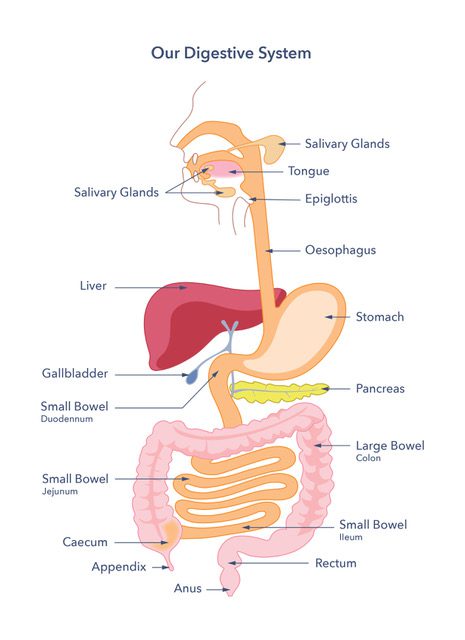
In about eight in ten people with Hirschsprung’s disease, the rectum and last part of the colon (sigmoid colon) is affected. The sigmoid is the S shaped section of the gut above the rectum (see diagram below). Doctors call problems with this short segment Hirschsprung’s. 15 in 100 people, up to 20 in 100, will experience an effect on the bowel further up the sigmoid. In 5 in 100 people with Hirschsprung’s disease, the whole of the large bowel is affected. Doctors call this total colonic aganglionosis (no nerve ganglions). Hirschsprung’s disease can also sometimes also affect the end of the small bowel (the Ileum).
Hirschsprung’s disease affects about one in 5,000 babies. Boys are affected four times more commonly than girls.
Causes
The reasons the nerve cells in the last portion of the bowel don’t develop properly aren’t fully clear. But we do know it’s not due to anything the mother does during pregnancy. Sometimes gene changes link to Hirschsprung’s disease. This means it can happen more often in certain families. Children with some genetic differences, like Down’s syndrome, are more likely to be born with Hirschsprung’s disease.
Symptoms
Symptoms in a baby
A delay in passing meconium. Meconium is a thick, dark greenish-brown poo that babies usually pass shortly after birth. This is usually passed in the first 24-48 hours of life. Signs include:
- Swollen belly (abdomen).
- Vomiting bile (green liquid).
A serious condition called Hirschsprung’s-associated enterocolitis (HAEC) may occur. Just under 1 in 5 children with Hirschsprung’s disease might experience HAEC but numbers vary. This is where the bowel becomes inflamed and infected. Signs of HAEC can include:
- Complete constipation (not passing wind or poo).
- Watery or explosive diarrhoea.
- Distended abdomen (swollen tummy).
- Rectal bleeding (blood from the back passage).
- Fever (high temperature).
- Drowsiness (sleepier than seems normal).
- Signs of Sepsis (see below).
Septic shock (sepsis) is a medical emergency. Sepsis might happen in 5 in 100 Children with Hirschsprung’s disease. You might notice a child has some of the following symptoms:
- Difficulty breathing. You may notice grunting noises or their stomach sucking under their ribcage. They may be breathless or be breathing very fast.
- A weak, high-pitched cry that’s not like their normal cry.
- They may not respond like they normally do. They may not be interested in feeding or normal activities.
- Being sleepier than normal or difficult to wake.
Call 999 or go to A&E if a child is having these symptoms.
Symptoms in an older child
Symptoms and signs of Hirschsprung’s disease in an older child can include:
- Abdominal (tummy) discomfort and swelling.
- Vomiting
- Constipation that goes on and is not made better by the usual treatments.
- Feeding problems
- Lack of normal weight gain
Diagnosis
A doctor first examines the child’s belly (abdomen) and may need to do a rectal exam. A doctor will gently insert a finger into the anus (also called the bottom or back passage) to check for any issues. A doctor may do an x-ray of the belly.
Doctors may need to perform a rectal biopsy. This is a small procedure where the doctor takes a sample of tissue from the rectum. In babies, this is done on the ward. In older children, this is done under general anaesthetic. A laboratory checks this sample to see if ganglion nerve cells are missing.
Treatment
Surgery is needed to treat Hirschsprung’s disease. Most children have a procedure called a ‘pull through’. The affected part of the large bowel is taken out, and the healthy sections are joined together. While waiting for surgery, the medical team may need to provide the following treatments:
- Intravenous fluids (fluids given into a vein through a ‘drip’).
- A nasogastric tube (A tube passed through the nose and passed down the food pipe into the stomach).
- Rectal irrigation. This is when fluid is delivered into the bowel using a tube inserted through the anus. The fluid is then slowly released, and the poo comes with it.
- Sometimes surgery is in stages. This can happen if the child has other issues, such as Hirschsprung’s associated enterocolitis, or if doctors diagnose Hirschsprung’s disease later in childhood.
At the first stage, a colostomy or ileostomy may be needed. This means the bowel is redirected on to the skin of the tummy, and waste passes into a bag outside the belly. This allows the lower part of the bowel to rest. The second stage will be an operation to remove the affected part of the bowel. The third stage is to close the colostomy or ileostomy and join the healthy bowel back together.
A few children with more widespread Hirschsprung’s disease may need a permanent ileostomy.
Children who have their whole large bowel affected will be referred to a children’s dietitian as part of treatment. But if your child is experiencing any difficulties with their diet, you can ask your child’s doctor for a referral.
Monitoring
Some children living with Hirschsprung’s disease may have problems with constipation or incontinence (soiling). Support is on hand to help with these problems. There is a thought to be a small possible risk that some people are at higher risk of developing inflammatory bowel disease (IBD) in later life. Inflammatory bowel disease includes Crohn’s disease and ulcerative colitis. Less than 3 in 100 children with Hirschsprung’s disease go on to develop inflammatory bowel disease. This is rare. There is no cure for Hirschsprung’s disease but with treatment and monitoring, most people can life a full and active life.
Support
Questions to ask your child’s doctor:
- What type of Hirschsprung’s disease does my child have?
- What are the benefits and risks of the treatment for my child?
- Will my child need a colostomy or ileostomy, and if so, for how long?
- What happens after the surgery?
- How will Hirschsprung’s disease affect my child’s toilet training?
- Are there any other long-term risks?
Further support
A Bear Named Buttony: This volunteer-led organisation provides products to children and young people with a stoma across the UK, or to specialist nurses. Visit the website: buttonybear.org.uk.
ERIC: A charity improving children’s bladder and bowel health. Visit the website eric.org.uk or call 0808 801 0343 (Monday to Thursday, 10am to 2pm).
Colostomy UK: A charity that supports anyone impacted by any kind of stoma or stoma surgery. Visit the website www.colostomyuk.org or call 0800 328 4257 (9am to 10pm, 365 days a year).
Ileostomy and Internal Pouch Association: An organisation that supports people living with an ileostomy or internal pouch, their families, friends and carers. Visit the website iasupport.org.
Bladder and Bowel UK: A charity that improves awareness and support people with bladder and bowel problems. Visit the website bbuk.org.uk, contact bbuk.org.uk/enquiries, or call 0161 214 4591.
Visit our webpages on Crohn’s Disease or ulcerative colitis or call us on 020 7486 0341 for more information about these conditions.
Research
Hirschsprung disease is relatively rare and as a result, it has not received the research attention or funding it urgently needs.
Guts UK is delighted to be funding research by Dr William Dalleywater and his team at the University of Nottingham, who are using special stem cells to grow the nerve cells and other tissues missing in children with Hirschsprung’s disease. Their goal is to combine these cells to create tiny working “mini‑colons” which could be used to repair the affected part of the bowel and offer an alternative to major surgery.
Discover more:



Copyright © 2026 Guts UK. This leaflet was published by Guts UK in January 2026 and will be reviewed in January 2029. The leaflet was written by Guts UK and reviewed by experts in Hirschsprung’s disease and has been subject to both lay and professional review. All content in this leaflet is for information only. The information in this leaflet is not a substitute for professional medical care by a qualified doctor or other healthcare professional. We currently use AI translation tools on our website, which may not always provide perfect translations. Please check for further explanation with your doctor if the information is unclear. ALWAYS check with your doctor if you have any concerns about your health, medical condition or treatment. The publishers are not responsible or liable, directly or indirectly, for any form of damages whatsoever resulting from the use (or misuse) of information contained or implied in this leaflet. Please contact Guts UK if you believe any information in this leaflet is in error.