Michael’s story – Gastroparesis
"It took years for my consultant to describe it as “debilitating.” When gastroparesis is this severe, it’s exhausting, especially when you're dealing with things that might hospitalise others. What’s normal for us is far from normal for most people."
Note: At Guts UK, we want our stories to be easy for everyone to understand. If any medical terms in Michael’s story are unfamiliar, you can find definitions in our medical glossary at the bottom of this page.
Tell us a little about yourself
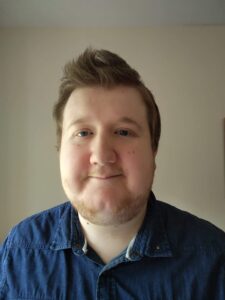
“I’m Michael, I’m 31, I’m disabled and live in the West Midlands. My pronouns are he/him. When I was younger, I did amateur musical theatre. Now I’m part of an access and inclusion project at a local theatre and spend most of my time on patient and public involvement and engagement (PPIE) projects. I love helping to improve things, even if it’s behind the scenes. I enjoy going to the cinema and theatre as it helps me switch off.”
Can you describe when your symptoms started and what they were?
“In September 2014, just after starting university, I developed heartburn, reflux and vomiting. At first, I tried to ignore it but the symptoms disrupted my daily life and education. By December, I saw my GP and was prescribed medication.”
Talk us through your journey with gastroparesis
“By March 2015, I had the first of many endoscopies. That December, I had a fundoplication to wrap the top of my stomach around my lower oesophagus. It partly helped for four months before severe vomiting returned and I developed really bad constipation.
Following another endoscopy, tests showed my stomach was still full after eight hours nil by mouth. In August 2016, I was diagnosed with delayed gastric emptying after a gastric emptying study. It was then reconfirmed by a second gastric emptying study in 2019. Some doctors were willing to call it gastroparesis, while others sadly did not.
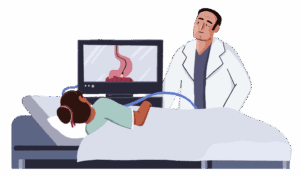
In 2026, I went to my second tertiary centre and it was confirmed again I have gastroparesis. Looking back, various consultants believe I had gastroparesis before my fundoplication, but nobody tested for it then.”
How did your life change after your diagnosis?
“It was a relief after being diagnosed. I started embracing anything that could potentially help and experimented with my diet. While I’d been ill for a while, my life changed a lot. My energy levels plummeted and my sleep was often disturbed, making everything harder.
I was studying anatomy, as well as gastrointestinal physiology at the time, and reading papers relevant to both my course and my condition gave me something to focus on. Unfortunately, undergraduate life wasn’t smooth sailing. It was an exhausting fight to get the support I needed which wasn’t fully provided and the stress of that struggle made things worse.”
Are there any hospital experiences that you particularly remember?
“I remember being admitted to the Acute Medical Unit (AMU) after being unable to keep fluids down. Doctors were unsure, so they asked me what normally works and let me guide my care. I’d never been involved in treatment decisions like that, so it stood out to me. Sadly, I haven’t had many experiences like it since.”
How are you now?
“I’m now on eight or nine prescribed medications, which also help with my other chronic conditions. It’s been a trial and error process, especially with anti-sickness medications and laxatives. I’m currently on a specific diet which takes a lot to get used to and I haven’t seen much improvement yet. I also aim to have a low-fat and low-fibre diet, though I have been increasing my soluble fibre at a dietitian’s suggestion.”
Note: Diet is individual to each person and following any specific diet or reducing the amount of specific foods you eat should only be done under the guidance of a medical professional.
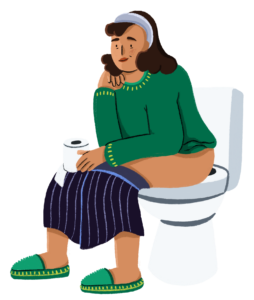
“Much of the time, I struggle to keep food down and spend a lot of time running back and forth to the toilet. It drains you. Occasionally, I get a few weeks of respite but that’s rare. I’ve had to cut back on a lot, so I focus on PPIE which I can do flexibly. I try to get involved with projects where I can use my lived experience to help improve things, wanting some good to come out of this.
Heat is a trigger for me, making summer and heatwaves a struggle. It becomes a balancing act between how much I want to do, how much I can cope with and the risk of ending up in an emergency.”
What is one thing you wish people knew about gastroparesis?
“Being on the heavier side means my condition isn’t always taken seriously or is used to deny treatment and dismiss its severity. Gastroparesis isn’t taken seriously by a lot of medics for many reasons and that needs to change.
Even when I lost six stone, it wasn’t treated with the urgency it deserved. If anything, it was encouraged by most medics I saw. It took years for my consultant to describe it as “debilitating.” When gastroparesis is this severe, it’s exhausting, especially when you’re dealing with things that might hospitalise others. What’s normal for us is far from normal for most people.”
Why are you sharing your story?
“What’s helped me most is meeting others with the condition. For a long time, being treated at a district general hospital, I’d never met anyone else with gastroparesis. Knowing you’re not alone brings some relief. I’ve only met a few people with it along the way, but it makes a difference. Sharing my story might help someone else feel a little less alone.”
Why do you support Guts UK charity?
“I started getting involved in PPIE over six years ago with a local hospital’s equality, diversity and inclusion group. I then became an Experts by Experience (EBE) for Guts UK, as I wanted to be more involved with research. It has snowballed since, and I’m now involved in a lot of different projects. I hope this will lead to change locally and nationally.”
What are your hopes for the future?
“Personally, I hope for stability as my condition has been worsening. I’d love to see a community IV service established so patients can get IV fluids without a full hospital admission. Maybe with the introduction of Neighbourhood Health Centres under the NHS 10 Year Plan, something could happen.
I also hope gastroparesis receives more attention in medical education. I’ve shared my experience with medical students and want to share more. Hearing directly from patients can transform how doctors understand and treat the condition, challenge biases about who gets certain conditions and improve care, especially at district general hospitals.
I’d like to see local changes in how the NHS treats people with multiple complex chronic conditions. It’s especially difficult when you reach the limits of local systems and are left on your own to cope, even while struggling.”
Glossary of medical terms:
- Endoscopy: A thin tube with a small camera on the end, inserted via the mouth to look inside the body.
- Fundoplication: A surgical procedure to wrap the top part of the stomach around the lower part of the oesophagus to treat severe acid reflux.
- Gastric emptying study (GES): A test that tracks how long it takes a meal or drink to move through your stomach and empty from it.
- Gastrointestinal physiology: The study of how the digestive system functions.
About Guts UK
Guts UK is the national charity for the digestive system and the only UK charity funding research into the whole digestive system.
We provide information and support for people affected by digestive conditions like gastroparesis, including a dedicated Helpline.