Diverticular Disease Awareness Week
Help Guts UK to raise awareness of diverticular disease this October.
Diverticular Disease Awareness Week is a national awareness campaign by Guts UK, the national charity for the digestive system. This year, the campaign will take place from Monday 5 to Sunday 11 October 2026. Will you join us in increasing public awareness and education around diverticular disease?
What is diverticular disease?
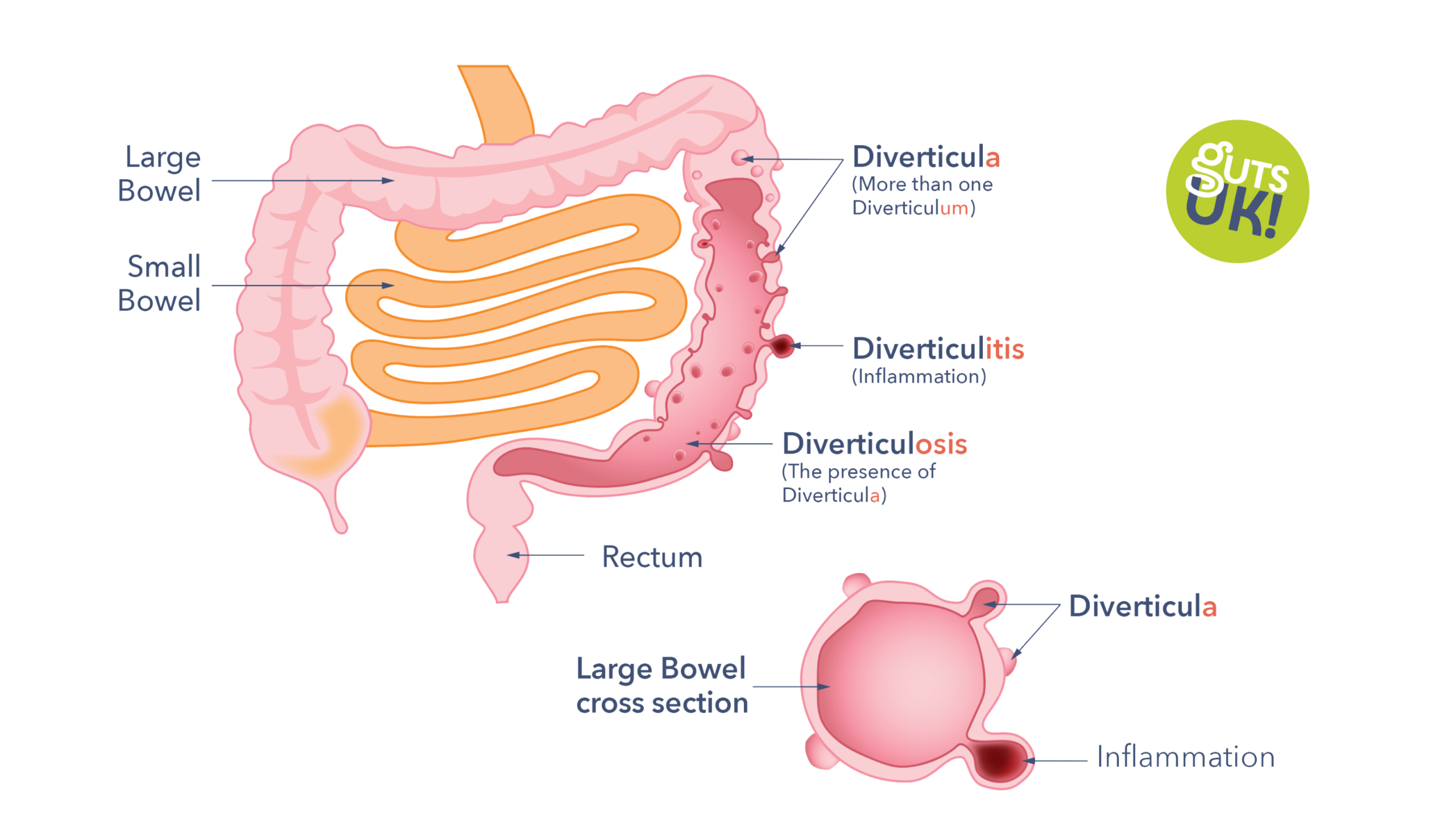
Diverticula are permanent pockets that develop in the bowel, and in some people, they can cause symptoms. Having symptoms is diagnosed as diverticular disease. But the terminology surrounding diverticular disease can get a little confusing, so let’s break it down:
The diverticular disease glossary:
- Diverticulum: A diverticulum is a small pouch, about 1cm in size, that protrudes from the wall of the large bowel.
- Diverticula: This refers to more than one Diverticulum. The most common site for diverticula is on the lower part of the large bowel on the left-hand side. They are permanent unless the affected part of the bowel is surgically removed.
- Diverticulitis: Diverticulitis is the condition that occurs when a single diverticulum or several diverticula become inflamed or infected.
- Diverticulosis: You may have heard the term diverticulosis, which means the presence of diverticula. This is not the same as diverticular disease. Most people with diverticulosis do not have, or will go on to develop, diverticular disease. The great majority of people with diverticulosis will live out their lives never having symptoms. Having symptoms is diagnosed as diverticular disease.
What are the most common symptoms of diverticular disease?
The most common symptoms of diverticular disease include:
- Pain or cramping in your lower belly (usually left-hand side, although in people of South Asian background, the pain is sometimes on the right).
- A feeling of bloating or swelling in your belly (from gas).
- Changes in your bowel habit (diarrhoea, constipation, or switching between both).
- Mucus or blood in your poo.
Everyone’s symptoms can be different. Pain may come and go and is often worse after eating. It may feel better after you’ve been to the toilet for a poo or passed wind.
Diverticular disease symptoms can look like those of other conditions such as irritable bowel syndrome (IBS), bowel cancer and colitis (inflammation of the large intestine). Not all belly problems are caused by diverticular disease.
What are the red flag symptoms of diverticular disease?
See your GP as soon as possible if you:
- Notice any new or different symptoms.
- Have blood in your poo.
- Are being sick (vomiting), feel very bloated, have cramping pain and can’t poo or pass wind. This may be a sign of a blockage or complication and needs urgent medical help.
Very few people have complications severe enough to require hospital admission or die from this common digestive condition. However, complications can occur, such as diverticulitis.
What about the symptoms of diverticulitis?
Diverticulitis is when the pocket(s) in the bowel can become infected. It occurs in up to a quarter of people with the condition. If any of the below symptoms are experienced, seek medical help immediately:
- Worsening abdominal pain.
- High temperature.
- Nausea (feeling sick) or vomiting (being sick).
To find out more about complications, visit our diverticular disease information.
Check your poo with our free Poo-Torial tool
If you experience a change in symptoms or develop new symptoms, especially blood in your stools, consult your doctor. You can also use our handy tool, the Poo-Torial, to give you more information about what the colour, consistency and frequency of your poo could indicate.
Who does diverticular disease affect?
It affects around 1 in 3 people, and this increases to 1 in 2 people as they get older. It affects both men and women and is more common as people get older. The chances of developing diverticula increase after the age of 40, though more young people under 45 are now being diagnosed; this is still uncommon.
Some lifestyle factors can raise the risk of symptoms or complications, including:
- Having a higher than healthy body weight.
- Not being physically active.
- Smoking, which is linked to a higher risk of needing hospital care.
Where can I find more information on diverticular disease?
Our patient information section is home to our expert, evidence-based information on diverticular disease.
Why is it important to raise awareness of diverticular disease?
Even though it is a common condition, a lot of people do not know the signs and symptoms to look out for when it comes to diverticular disease or complications of the condition. At Guts UK charity, we are dedicated to providing accredited information and raising vital awareness to change this.
Hear from people affected by diverticular disease
“My bowel had been perforated, and I was presented with two options: be put on an intravenous drip (a drip into the veins) with prescribed medication and be monitored or have surgery to remove the affected part of my bowel. Everything came as such a shock. I’d been none the wiser.
Weeks later, doctors told me that the diverticula (pouches about 1cm in size that stick out of the bowel wall) in the right-hand side of my large bowel (colon) were inflamed (diverticulitis) and it was likely they had been inflamed for months.” – Jonald.

Continue reading Jonald’s story here.
“At the end of 2020, I started to experience period-like pain in my left-hand side. I had no other typical diverticulitis symptoms, like bowel problems. The pain didn’t go away, and eventually my husband said, “This isn’t right, you need to go to the doctors.
The GP thought it could be diverticulitis and prescribed me antibiotics, but the pain continued. I completed a FIT test (a faecal immunochemical test that can indicate bleeding in the lower digestive tract) and was referred to a gynaecologist. In November 2021, the gynaecologist immediately told me, “This is a bowel problem”.
Just days later, things became much worse. I went to A&E and scans showed that my bowel had perforated.” – Karan.

Continue reading Karan’s story here.
Watch our webinar: Getting to grips with diverticular disease
How can I help?
You can help us raise vital awareness of diverticular disease by:
- Following us on social media and sharing our awareness and information posts during the awareness week itself. You never know who we might reach and help together. Our social links are here: Facebook, LinkedIn, and Instagram.
- Share yours or someone else’s experience with diverticular disease on your own social media channels and beyond. Submit your interest in sharing a story with Guts UK, our gutsy community and beyond, here.
- Fundraise for Guts UK Charity to help us abolish the taboos surrounding digestive health, and get to grips with guts. You can fund life-changing research, and empower people to seek help sooner.