Elle’s Story – Eosinophilic Oesophagitis
After walking a marathon over three days for Guts UK, she shares her experience of EoE, anorexia nervosa, and why we need more research into the whole digestive system.
Content note: This story discusses eating disorders.
Note: At Guts UK, we want our stories to be easy for everyone to understand. If any medical terms in Elle’s story are unfamiliar, you can find definitions in our medical glossary at the bottom of this page.
Tell us about yourself
“I’m Elle. I was born in 2004, and I currently live with my parents, sister and toy poodle, Huxley. I am a speech and language therapy student at university.“

When did your symptoms begin?
“At the time my symptoms began, I was taking oral medication for my allergies, as I suffered from severe hay fever. I had a really weird sensation in my throat, which felt like a swelling.
Then lockdown came, and I caught a virus (possibly COVID-19). I was really poorly for a week and from then on, I don’t remember feeling better again. I’d forget to eat regularly as I had no appetite. I also began experiencing difficulty swallowing, nausea and abdominal pain. I realised I’d started avoiding foods like meat, as it was difficult for me to swallow and would take me a long time to eat. I missed my A-Level exams due to issues with my skin, where I was put into isolation.
In August 2020, I started choking on some chicken, and it was so frightening. My dad managed to dislodge the chicken in my throat with the Heimlich manoeuvre. I was blue-lighted to A&E.”
How did you feel after you returned home from hospital?
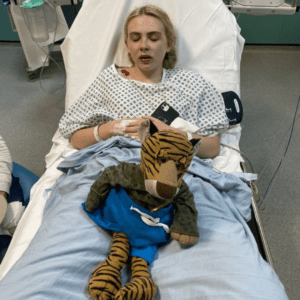
“After my frightening choking experience, my whole family were desperate to get answers. I was lost and confused. Getting a referral to a gastroenterologist proved really difficult as COVID was rife, so in the end my family decided to go private. The paediatric gastroenterologist that I saw suspected I had Eosinophilic Oesophagitis (EoE) during my first consultation in 2021, and an endoscopy and biopsy confirmed the diagnosis.”
How did it feel to have a diagnosis?
“I wasn’t too shocked because after my gastroenterologist had suspected EoE, I remember reading the symptoms and thinking that it sounded right to me. On the same day, my family and I went out for lunch together, as I knew I wouldn’t be able to do that much in the future. It was a relief to finally know the cause, but the future ahead seemed daunting.”
How are you doing now?
“It has taken years of trial and error to work out what is safe for me to eat. I feel much clearer on this now, but sometimes, there can still be no clear reason for my symptoms and flare-ups. Living with long-term damage to my digestive system has been very challenging and unpredictable. I often worry that no medications or treatments are going to help me, but, overall, I feel much more confident in dealing with my diagnosis.”
Note: Other treatments are available for EoE apart from diet, and what may not work for some may work for others, and vice versa.
What do you wish other people knew about digestive conditions, such as EoE?
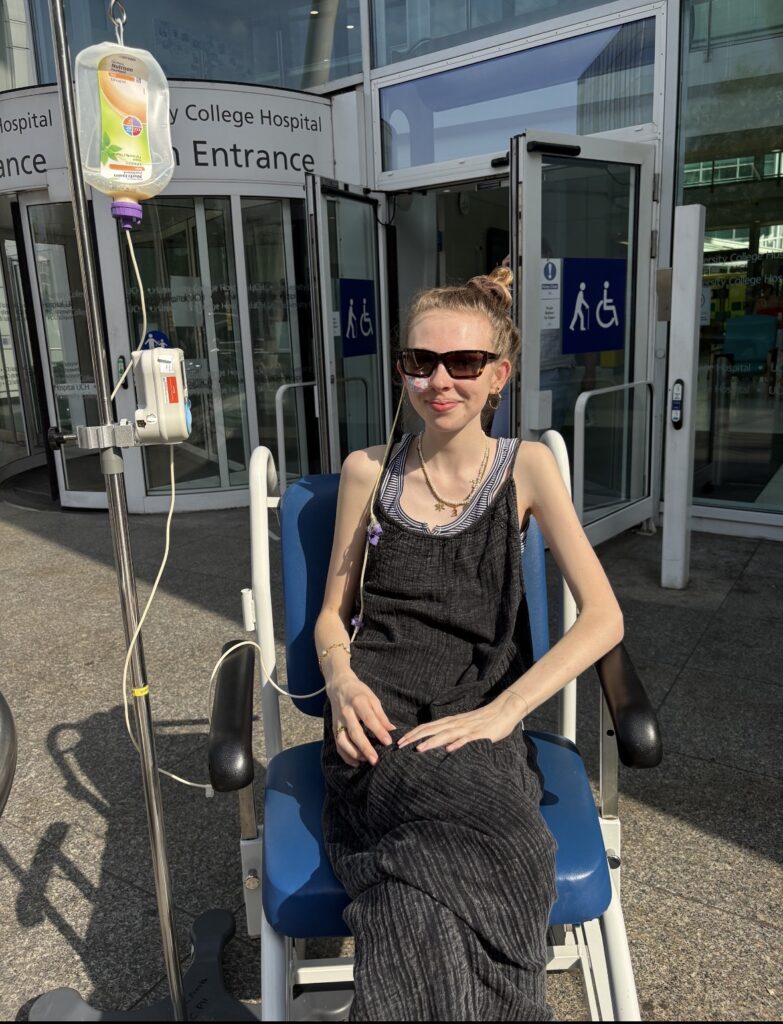
“My relationship with food has been hugely impacted, and I do think this is a very overlooked part of dealing with chronic digestive conditions. Unfortunately, I have been living with severe anorexia nervosa for the last two years and spent most of my time in and out of hospital. I believe this stemmed from multiple diets that I’ve tried for my EoE and not feeling in control of my symptoms.”
Note: If you’re struggling with an eating disorder, you’re not alone. If you need support, visit BEAT Charity for guidance and resources.
What would you say to people who feel reluctant to talk about their digestive symptoms?
“I would encourage anyone living with digestive symptoms and conditions to reach out to charities like Guts UK. The mental toll of constantly dealing with this can really weigh heavily alongside the physical symptoms. It is okay to often feel like it is too much to deal with on your own, but there are people out there to talk to and help.”
Tell us why you decided to fundraise for Guts UK
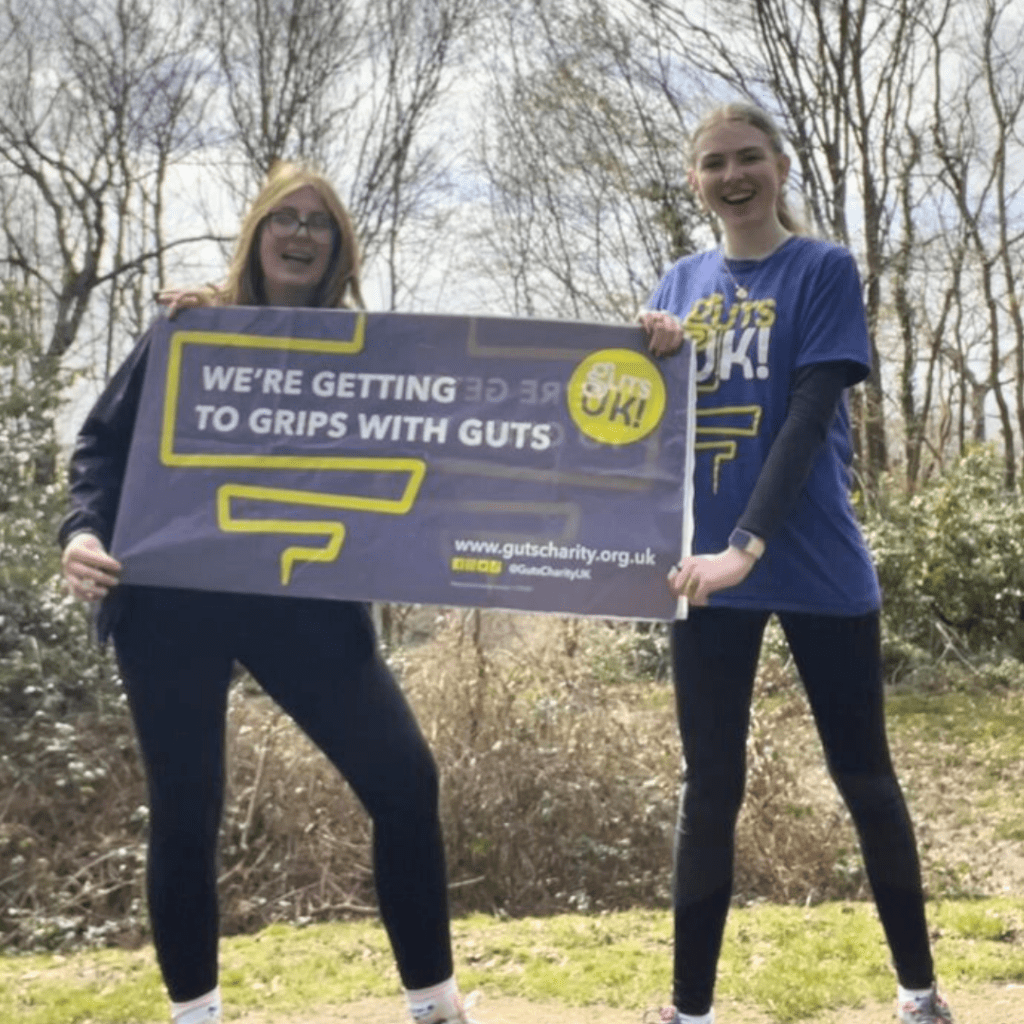
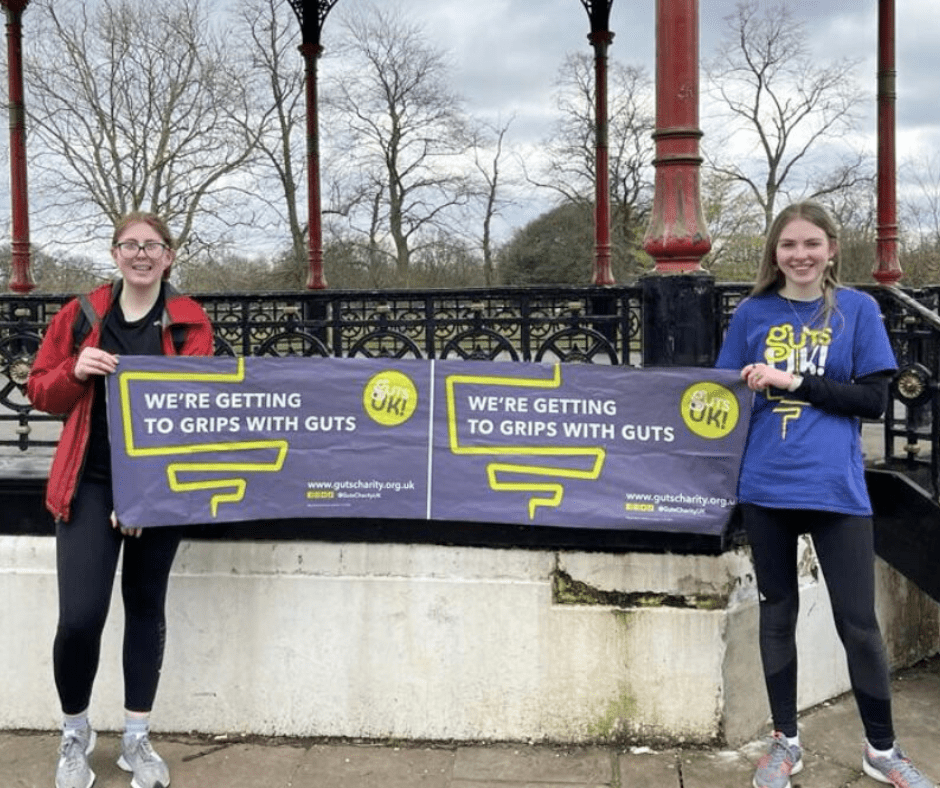
“My friend, Scarlett, and I took on the challenge of walking a marathon in three consecutive days for Guts UK. On my journey to diagnosis, I realised that there are so many digestive diseases that are all underfunded, despite your digestive system being such an important part of your body!
My sister has Coeliac disease, and my friend has Crohn’s disease, so I know these conditions can change people’s lives forever. I wanted to support Guts UK because they work on the whole digestive system. I wanted to fund more research, awareness and medical advancements that could help me and the many others like me. “
Glossary of medical terms:
- Anorexia nervosa: A serious mental illness and eating disorder where individuals severely restrict their food intake and/or purge due to an overwhelming fear of gaining weight and a distorted body image. It affects both physical health and psychological wellbeing.
- Biopsy: A medical procedure where a small sample of tissue is taken from the body.
- Endoscopy: A thin tube with a small camera on the end inserted via the mouth.
- Heimlich manoeuvre: An emergency first-aid intervention for choking caused by a blocked upper airway, using quick, upward abdominal thrusts to force residual air out of the lungs and dislodge the obstruction.
- Paediatric gastroenterologist: A healthcare professional who specialises in the diagnosis and treatment of conditions affecting the digestive system, specifically tailored to infants, children, and adolescents.
About Guts UK
Guts UK is the national charity for the digestive system and the only UK charity funding research into the whole digestive system.
We provide information and support for people affected by digestive conditions like eosinophilic diseases, including a dedicated Helpline.