Michael’s story – Diverticulitis
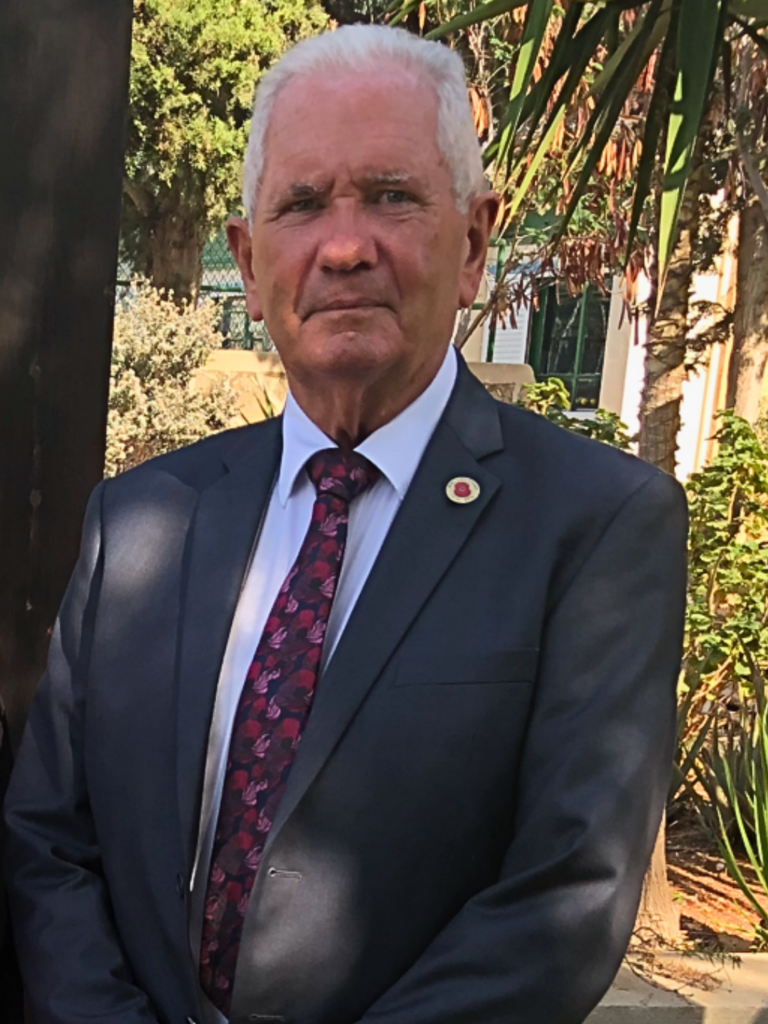
For over 50 years, Michael lived with ongoing digestive symptoms before finding a routine, centred on diet, movement, and proactive care, that help him manage his condition. While every journey is different, he’s sharing his story to offer hope and to emphasise why patient-led research is so vital for chronic digestive conditions.
Note: At Guts UK, we want our stories to be easy to understand for everyone. If any medical terms in Michael’s story are unfamiliar, you can find definitions in our medical glossary below.
Tell us a little bit about yourself
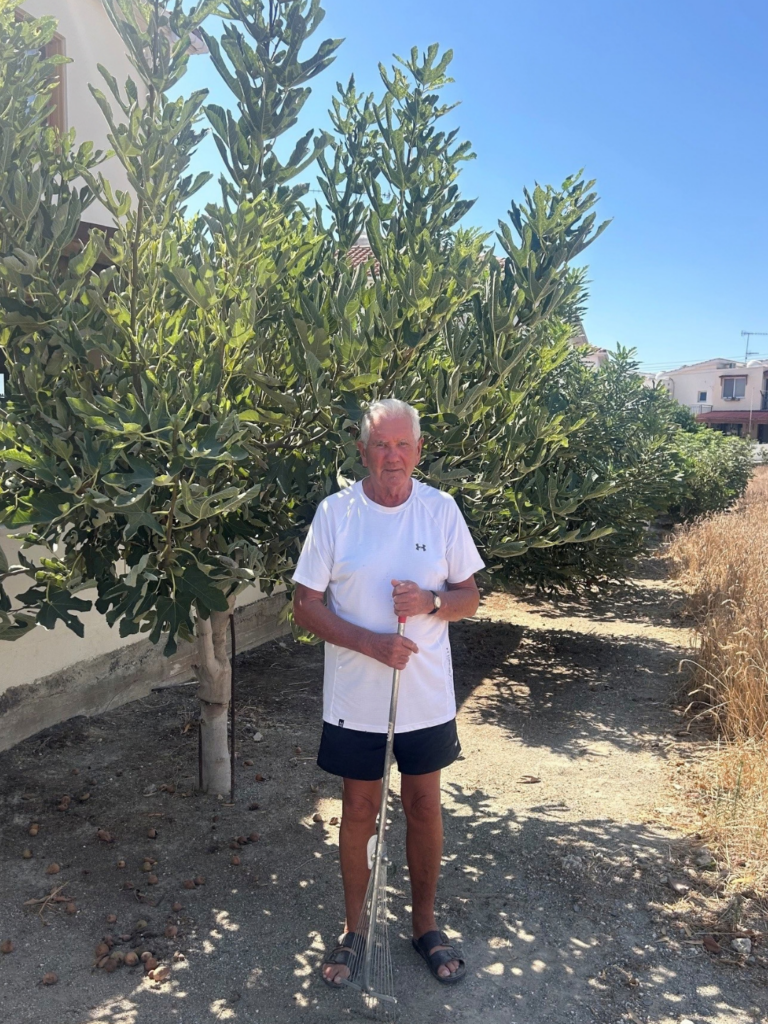
“I’m Michael and I’m 83 years old. I’ve been with my partner, Pauline, for 38 years and we spend our time living between Devon in the UK and Cyprus. I love to grow various fruit and vegetables, which are now part of my diet, and I exercise regularly.”
When did your symptoms start and what were they?
“My Mum suffered with diverticulitis for many years but managed it with diet and little prescribed medication. When I was 20 years old, I started to suffer with what I thought was indigestion and stomach pain in the left-hand side. I thought it may be related to work stress, working in export sales, which required me to travel a lot. I also had a hectic lifestyle outside of work and thought I might be burning the candle at both ends.”
What happened in the years that followed?
“Over the years that followed, I tried a variety of over-the-counter medicines. In 1978, I experienced a perforated peptic ulcer in my duodenum which needed emergency surgical treatment I was prescribed medications for some considerable time but was still in pain all the time at different levels. It was something I got used to dealing with and putting on the back burner.”
What led to your diagnosis?
“Around 1998 to 1999, after my symptoms worsened, doctors found a tumour in my colon near my appendix. I had emergency open surgery to remove the affected part and got given the all-clear. I was told that I had polyps and diverticulitis in the lower-left hand side of my colon (descending colon). I dealt with this as best as I could until 2002, when I decided to look into how I could manage it with my diet. I felt I had to do something about it. Regular endoscopies and colonoscopies showed polyps and pouches (diverticula) in my descending colon which they thought were causing my pain.”

What treatment have you received?
“By that time, we had bought our house in Cyprus, and this is what sparked me to investigate the Mediterranean Diet as a way of managing my diverticulitis. I joined a gym and attended five days a week, along with swimming in the sea to stay active.
My diet consists of chicken and fish, whole plant foods such as fruits and vegetables, some of which I grow myself, some cheeses and olive oil.”
Note on diet: Many people can control their symptoms by changing their diet and lifestyle. Eating well is one of the most important ways to manage diverticular disease. Everyone is different, but it’s generally advised to follow a healthy, balanced diet. Healthy eating has many similarities to the Mediterranean diet. More on this can be found in our diverticular disease information.
How are you now?
“Over the years, this has slowly helped me, although I still do deal with pain which I put down to my diverticulitis and polyps. I also opt for smaller meals more regularly. I know what foods make my symptoms worse and don’t eat late on a night or early on a morning. I am on a variety of prescribed medications and have regular monitoring annually. My most recent monitoring showed that there are very little signs of diverticulitis. There are times when I’ve felt angry at my body, but I think educating myself on my condition and helping myself through diet and exercise goes a long way.
Having diverticulitis has improved my lifestyle massively because it led me to take more care of myself. I don’t drink too much alcohol and no longer smoke. I wish that I had known more about the impact of diet and exercise and how important it is when it comes to looking after your digestive health and body overall.”

Can you tell us about being involved in the Diverticular Disease PSP and why this was important to you?
“I wanted to be involved in this PSP as I thought it was important that the patients give a view on the subject. From my complex medical history of over 50 years, I think I have a pretty good practical knowledge. Through a combination of diet and exercise, I have my diverticulitis under control.
I have not suffered for over three years, and I only take medication as a last resort. I have an endoscopy and colonoscopy every two years to check for polyps in Cyprus. I know not everyone is in the same situation as me and there needs to be more research, so that more guidance can be provided about how patients can best manage this disease over the long-term. Living with a chronic condition is not easy so it is so important that people are offered the best advice to make their condition manageable.”
Why are you sharing your story with Guts UK?
“I think it’s important to share your experiences because otherwise nobody’s ever going to know about it. It’s my own experience so it might not be helpful for everyone, but it gives people a chance to learn something and how they might be able to manage their condition.”
Glossary of medical terms
- Colonoscopy: A thin tube with a small camera on the end inserted via the back passage.
- Descending colon: A portion of the large bowel (colon) that runs down the left-hand side of the abdomen.
- Diverticula: A number of small pouches that stick out from the wall of the large bowel (colon).
- Diverticulitis: When one or more diverticular pouches get inflamed or become infected.
- Endoscopy: A thin tube with a small camera on the end inserted via the mouth.
- Perforated peptic ulcer: A medical emergency where an open sore in the stomach or upper small intestine can burst, creating a hole, which can leak acid and food into the abdomen.
- Polyp (in the bowel): A fleshy growth on the inside of the large bowel.
About Guts UK
Guts UK is the national charity for the digestive system and the only UK charity funding research into the whole digestive system.
We provide information and support for people affected by digestive conditions such as diverticular disease and diverticulitis, including a dedicated Helpline.