Elizabeth’s Story – Acute Pancreatitis
“I feel like I’ve been given a second chance, and I want to make the most of it.”
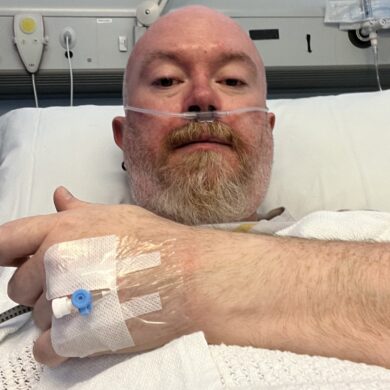
Elizabeth was 30 when she was suddenly admitted to hospital with severe acute pancreatitis. What followed was a year of intensive care, multiple hospital admissions, procedures and a long recovery. Elizabeth shares her experience, from the night her symptoms began to how she is moving forward today.
Note: At Guts UK, we want our stories to be easy to understand for everyone. If any medical terms in Elizabeth’s story are unfamiliar, you can find definitions in our medical glossary below.
Tell us a little bit about yourself
“I’m 31 and I was born and raised in the UK. When I was 16, I moved to the Philippines. I studied there and worked in digital marketing before returning to the UK in 2023.
I’ve been working as a receptionist. I still have a passion for digital marketing and started a master’s degree in digital marketing a few months before I was hospitalised. I had to put my studies on hold for a year because of everything that happened.”

When did your first symptoms of pancreatitis begin and what were they?
“It happened on 17 September 2025. I went to work that day and I felt completely fine.
After a walk with my friend in the evening, my stomach started hurting. At first, I thought it was my gastritis, so I went home and took omeprazole.
By around 6pm, I had started vomiting. When my mum came home a few hours later, the pain was still there and was getting worse.
I remember being in bed in my pyjamas, hugging my stomach and curled up in a ball. I told my mum, ‘I can’t manage this pain anymore. This doesn’t seem right.’
My dad told me to call NHS 111. After speaking to a doctor, they called an ambulance for me. They checked my oxygen levels and they were already low. I remember having an oxygen mask on and being taken to hospital.”
Talk us through your journey to diagnosis. What tests did you have and how did you feel emotionally?
“When I first arrived at hospital, they thought I might have an ectopic pregnancy because my stomach had become swollen.
I was eventually diagnosed with severe acute pancreatitis with pancreatic necrosis. My pancreas had become inflamed and part of it had died. It had become so swollen that it was pressing against my lungs, which meant I couldn’t breathe properly.
I also developed tachycardia and several other complications. I was put into intensive care, placed on a ventilator and heavily sedated for around six weeks.
There was a point where doctors told my family that they didn’t think I would make it.
I woke up sometime in October. I had a tracheostomy and two drains. When I first woke up from the sedation, I was hallucinating and hearing things that weren’t there. It took a couple of days for this to wear off, which was a frightening and confusing experience.
I think that was one of the hardest things emotionally. I didn’t process everything properly at first. Doctors kept telling me that recovery would take a long time, but I kept thinking, ‘No, I’ll be back to work by December.’
Soon, we were in January, and I didn’t realise how much my body had been through.”
What treatments did you receive?
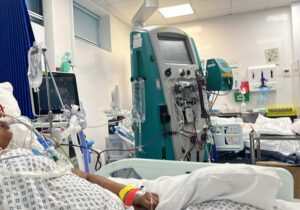
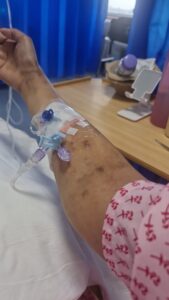
“I spent around three months in intensive care. I needed 24 hours of dialysis before a drain was inserted. At one point in intensive care, I was attached to 12 different medications through a central line coming from my neck. It was a lot for my body to go through.
I also developed blood clots in my neck, pancreas and between my liver and spleen. I was on a high dose of blood thinners until around June.
I had so many tests and procedures during that time. I had CT scans, MRI scans, ultrasounds, chest X-rays and an echocardiogram.
I also had a lot of physiotherapy because I had been lying down for so long that I couldn’t walk properly anymore.
I lost around 20 kilograms. Before all of this, I used to go to the gym, so it was shocking to look at myself and see how much muscle I had lost.
Eating was also really difficult. I had nutritional supplements to help me get the nutrients I needed.”
How are you now and how does acute pancreatitis impact your everyday life?
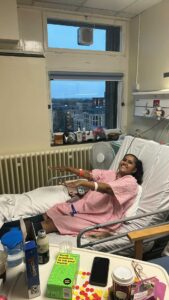
“I’m doing much better now, although I’m still recovering. The difference now is that I can eat better, I can walk and I’m not getting out of breath like I was before. I still have to be careful. If I have a really busy day, I know that I need to rest the following day.
I’ve also completely changed my diet and lifestyle. I’ve stopped drinking alcohol and I don’t eat much fried or fatty food anymore.
I go for walks, although I’m not allowed to go back to the gym or lift weights yet. I still have a wound dressing and lots of appointments.
I think the biggest change is how I see life now. I started to appreciate my life more.”
Is there anything you’d say to someone with digestive symptoms or a digestive condition?
“Before this happened, I knew nothing about pancreatitis. I think it would be good if people learnt more about it, because it’s something that can happen and you don’t necessarily know what the symptoms mean.
I would say take your health seriously. If something doesn’t feel right, get checked. Make sure you attend your appointments and don’t ignore symptoms.
Looking after yourself physically is important, but so is looking after yourself mentally. For me, meditation, reading, journaling, prayer and going for walks have all helped.
I would tell anyone going through something similar to be patient with themselves. Recovery takes time.”
Why are you sharing your story today?
“My sister was the person who found Guts UK. She was searching for information and found others’ stories on the website. Reading other people’s experiences made her feel better, because she could see that other people were going through similar things. I want to give that back to other people.
I wish I had known more about pancreatitis before this happened. I want more people to know about it and to understand that it can be extremely serious.
I also want people to know that there is life after something like this. I nearly lost my life, and now I appreciate it so much more.
I’ve made a bucket list of things I want to do, and I’m going to do it!”
Is there anything else you’d like to add?
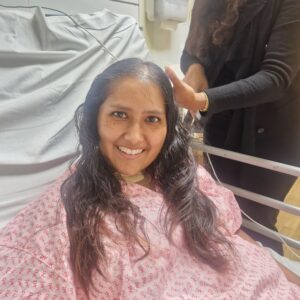
“I’m incredibly grateful for my family and friends. I don’t think I would have managed without them. I’m very thankful for everything I have now. I feel like I’ve been given a second chance, and I want to make the most of it.”
Note: 8 in 10 cases of pancreatitis in adults are caused by either gallstones or excessive alcohol consumption. Gallstones are the most frequent cause of acute pancreatitis. The second most frequent is drinking alcohol above recommended limits.
Glossary of medical terms:
- Chest X-ray: An imaging test that uses a small amount of radiation to create pictures of the chest.
- CT scan: A non-invasive test that takes detailed pictures of the inside of your body.
- Echocardiogram: A scan that uses sound waves to create images of the heart and show how well it is working.
- Ectopic pregnancy: When a fertilised egg implants outside the womb, usually in one of the fallopian tubes.
- MRI scan: A scan that uses strong magnetic fields and radio waves to create detailed images of the inside of the body.
- Omeprazole: An acid-suppressing medication that reduces the amount of acid produced by the cells in your stomach.
- Pancreatic necrosis: A serious complication of acute pancreatitis that occurs when part of the pancreas dies due to a loss of blood supply to the pancreas.
- Tachycardia: A fast heartbeat.
- Tracheostomy: A surgical procedure that creates an opening in the front of the neck and into the windpipe, or trachea, to provide a direct airway for breathing.
- Ultrasound: A medical imaging technique which uses sound waves to create images of inside the body.