AR’s story – Achalasia
"I want people to trust their instincts. If something feels wrong, keep pushing for answers. Rare conditions like achalasia are often overlooked, and too many of us have been dismissed or misdiagnosed. We deserve to be heard."
Note: At Guts UK, we want our stories to be easy for everyone to understand. If any medical terms in AR’s story are unfamiliar, you can find definitions in our medical glossary at the bottom of this page.
Tell us a little about yourself
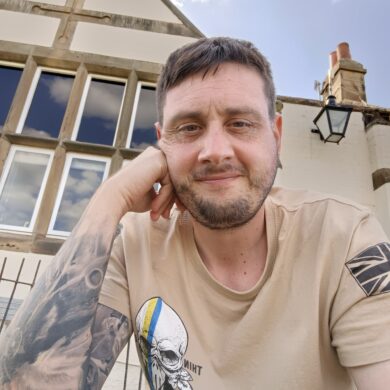
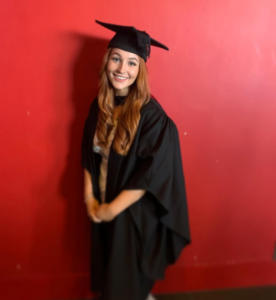
“I’m AR, and I’m 26 years old. I’m originally from North Wales and moved to Manchester to attend drama school. I work as an actor, at a bakery, and volunteer as Social Media Lead for Achalasia Action.”
Can you describe when your symptoms started and what they were?
“My symptoms began in November 2016 when I was 16. One day, it suddenly hurt to swallow. I felt intense pressure in my chest. Soon, every bite of food became painful, and I started regurgitating. It felt like I couldn’t breathe until the food came back up.
I was studying musical theatre at the time and suddenly couldn’t keep up. I was exhausted and didn’t understand what was happening. I was seeking medical advice daily but was told it was stress-related. It made me question myself and wonder if it was all in my head. Over six weeks, my symptoms worsened. I lost three stone and even struggled to swallow water.”
Talk us through your journey with achalasia
“My parents took me to A&E and refused to leave until someone took me seriously. When I was admitted, I was told I had an eating disorder and was made to feel like I was causing the problem.
In December 2016, after a barium swallow test, I was diagnosed with achalasia and transferred to a specialist centre. That was the first time someone properly explained what achalasia was. I was told my swallowing would never be normal again, but treatments could help.
I had a dilatation before Christmas, which allowed me to swallow liquids, but not food. I couldn’t eat Christmas dinner, so my dad gave me gravy in a bowl so I could feel included. In January 2017, I had a Heller myotomy, which allowed me to eat again. Since then, I’ve had nine dilatations to manage my symptoms.”
How did this impact you?
“At first, I struggled to accept my new ‘norm’ but quickly realised I needed to make lifestyle changes to live with achalasia. Transitioning back to food was hard. I was anxious about whether treatment would work. Even when I was able to try softer foods, I avoided them longer than I should have because I was scared that the treatment wouldn’t last.”
How are you now?
“Over time, I’ve accepted that achalasia is part of my life. I see it more as a superpower now. I manage my symptoms well and learnt to recognise when I need medical support.
At the start, I struggled to find support. I turned to the online world to find people I could relate to. That’s when I realised how important community is. I also realised that if I wanted to see change, I had to be the change.
I started sharing my experience on Instagram and connected with people who are now dear friends. I began volunteering as a Social Media Lead and later became a trustee at Achalasia Action. Being involved with charities that supported me has given me a real sense of purpose.
I’ve graduated, trained as an actor and stepped into opportunities that once felt impossible, like meeting an MP to raise awareness of achalasia. I’m proud of how far I’ve come.”
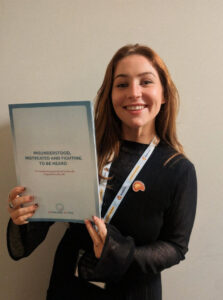
What is one thing you wish people knew about achalasia?
“I wish more people understood that life with achalasia can be fulfilling. It takes adjustments, but it is manageable.
Having a strong support network is so important. That might be family, friends or people online. They may not live with the condition, but they see how it affects your life, and having people who listen and stand by you makes a real difference.
I also want people to trust their instincts. If something feels wrong, keep pushing for answers. Rare conditions like achalasia are often overlooked, and too many of us have been dismissed or misdiagnosed. We deserve to be heard.”
Why are you sharing your story?
“I’m sharing my story to be the reassurance I needed when I was 16. When I was diagnosed, the information online felt frightening and overwhelming. I want others to know it’s going to be okay. If someone is able to use their voice, it can make a real difference.”
Why do you support Guts UK charity?
“I support Guts UK because the team have always shown me so much compassion and support. They make me, and so many others, feel seen and heard. Guts UK is a brilliant platform for raising awareness of rare diseases and digestive conditions.
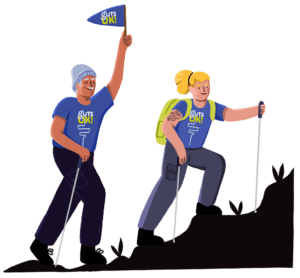
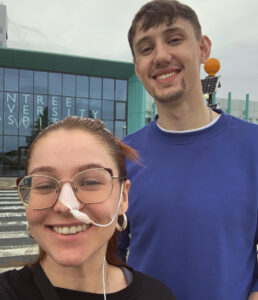
My partner and I completed the Yorkshire Three Peaks in 2023 and raised over £1250. I take part in their annual awareness-raising campaign each year, and it’s truthfully one of my yearly highlights!”
What are your hopes for the future?
“I hope awareness of achalasia continues to grow so people are diagnosed earlier and feel listened to from the start. I hope more people find clear information, stronger support networks and a community that understands. I hope we create a future where no one feels alone in their diagnosis.”
Glossary of medical terms:
- Barium meal test: This involves drinking some barium liquid, which will show up your oesophagus, stomach and first part of the small intestine on X-ray.
- Dilatation: Where the lower oesophageal sphincter is stretched open using a small balloon to allow food to pass into the stomach.
- Heller’s Myotomy: This cuts the muscle fibres of the lower oesophageal sphincter with the aim to permanently improve swallowing.
- Regurgitating: bringing food back up.
About Guts UK
Guts UK is the national charity for the digestive system and the only UK charity funding research into the whole digestive system.
We provide information and support for people affected by digestive conditions like achalasia, including a dedicated Helpline.