Sophie’s story – Gastroparesis
"I think people need to realise that people aren’t faking being sick a lot of the time. We’re faking being well. Just because I ‘don’t look sick’ doesn’t mean I’m not.”
Note: At Guts UK, we want our stories to be easy for everyone to understand. If any medical terms in Sophie’s story are unfamiliar, you can find definitions in our medical glossary at the bottom of this page.
Tell us a little about yourself
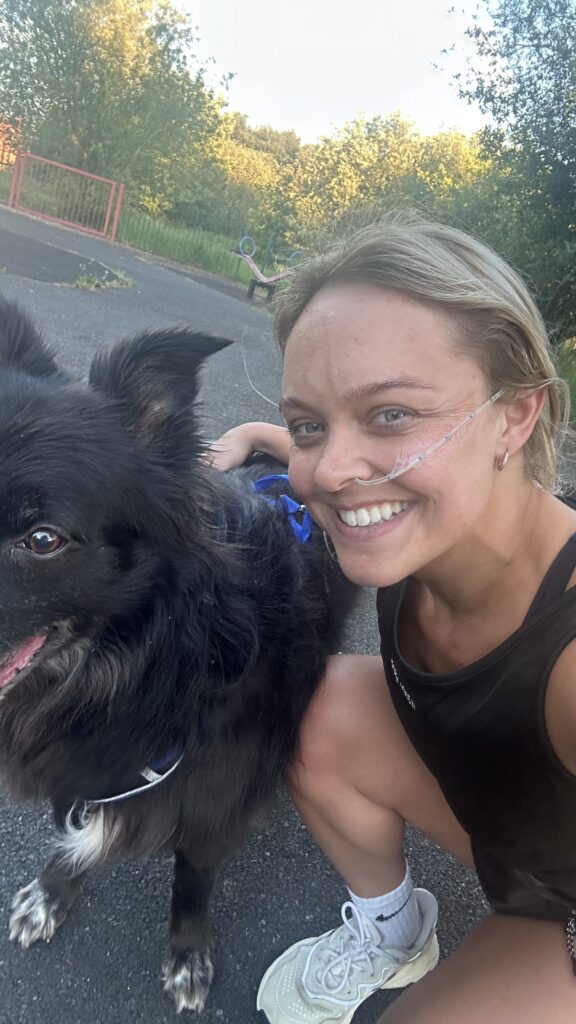
“My name is Sophie, I’m 30, and I live Walsall, West Midlands with my partner, Craig, and our dog, Diesel.
I work in the NHS as a clinical exercise physiologist. As part of my role, I provide exercise advice to people who are managing long-term health conditions, are recovering from heart attacks or have undergone heart surgeries. I love my job and I’m so passionate about helping other people.
I love to dance and I’ve represented England competitively. Unfortunately, I had to stop dancing in 2022 when my Crohn’s disease got really bad.”

What digestive conditions were you diagnosed with before gastroparesis?
“I’ve been going to the GP with bowel symptoms since I was 16. For years I was told ‘It’s just IBS.’ I was told to change my diet and to follow a low FODMAP diet. When I didn’t respond to treatment, it was put down to stress or all being in my head.
The IBS diagnosis was hiding a lot of other symptoms. I’ve since been diagnosed with Crohn’s disease and gastroparesis. I also have POTS and hypermobile Ehlers-Danlos syndrome.
When did your first symptoms of gastroparesis begin?
“I’ve had symptoms of reflux, pain, vomiting and extreme bloating for years, which were previously put down to IBS.
When I was diagnosed with Crohn’s I often experienced sickness, so when I suddenly started vomiting hours after eating and experienced pain, it was put down to a Crohn’s flare up.
For me, these episodes of vomiting felt different. With my Crohn’s, I can feel where the inflammation is in my body and where the pain is coming from. This pain, which I now know to be gastroparesis, was much higher up.
I started to become full very quickly. Even if I’d only had something small, it felt like I’d eaten a four-course Sunday dinner. Shortly after eating, my stomach would swell up and I felt really nauseous. Then, up to eight hours later I’d throw up food that was still undigested in my stomach.”
Can you tell us about your journey to diagnosis?
“Last September, I was already in hospital with what was believed to be a Crohn’s flare up. Simultaneously I started throwing up food hours after eating, I couldn’t keep anything down.
At one point I went ten days without any bowel sounds or a bowel movement. I had X-rays that showed there was no physical obstructions and there was nothing that could be operated on, but my bowels just weren’t working.
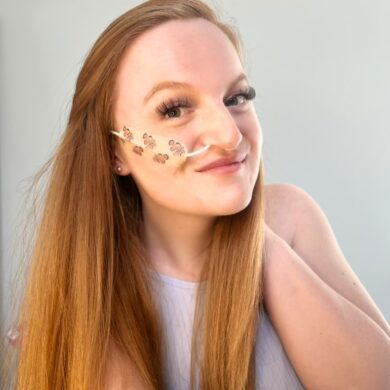
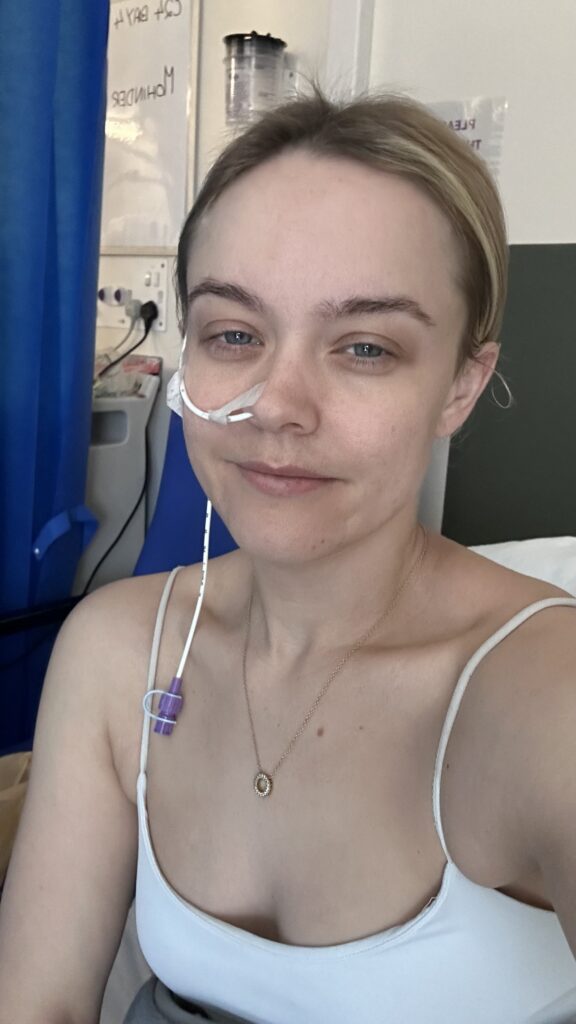
To support with nutrition, I had a NG feeding tube put in and was sent home. I lived with the tube until around January until I selected to have it removed and I tried to manage with liquids. I wanted to get back to work and didn’t want to go back with the tube. I think I was in denial that I needed it.
I was readmitted to hospital in March this year. I couldn’t keep any fluids in, I couldn’t eat and my bowels weren’t opening. I was put on IV fluids for ten days, I tried various medications, and eventually the NG tube was put back in.
The doctors could visibly see that every time I ate anything, I would swell up. That prompted them to book a gastric emptying study, which confirmed the diagnosis of gastroparesis.”
How did you feel about being diagnosed with gastroparesis?
“For me, getting the diagnosis of gastroparesis was validating because it meant there was a physical reason. After years of being told it was stress and this, that and the other, you do question yourself and think, ‘Is it just because it’s in my head?’. I was also really frustrated with the diagnosis because I hate having this shopping list of medical conditions.”
Can you tell us about your feeing tube journey?
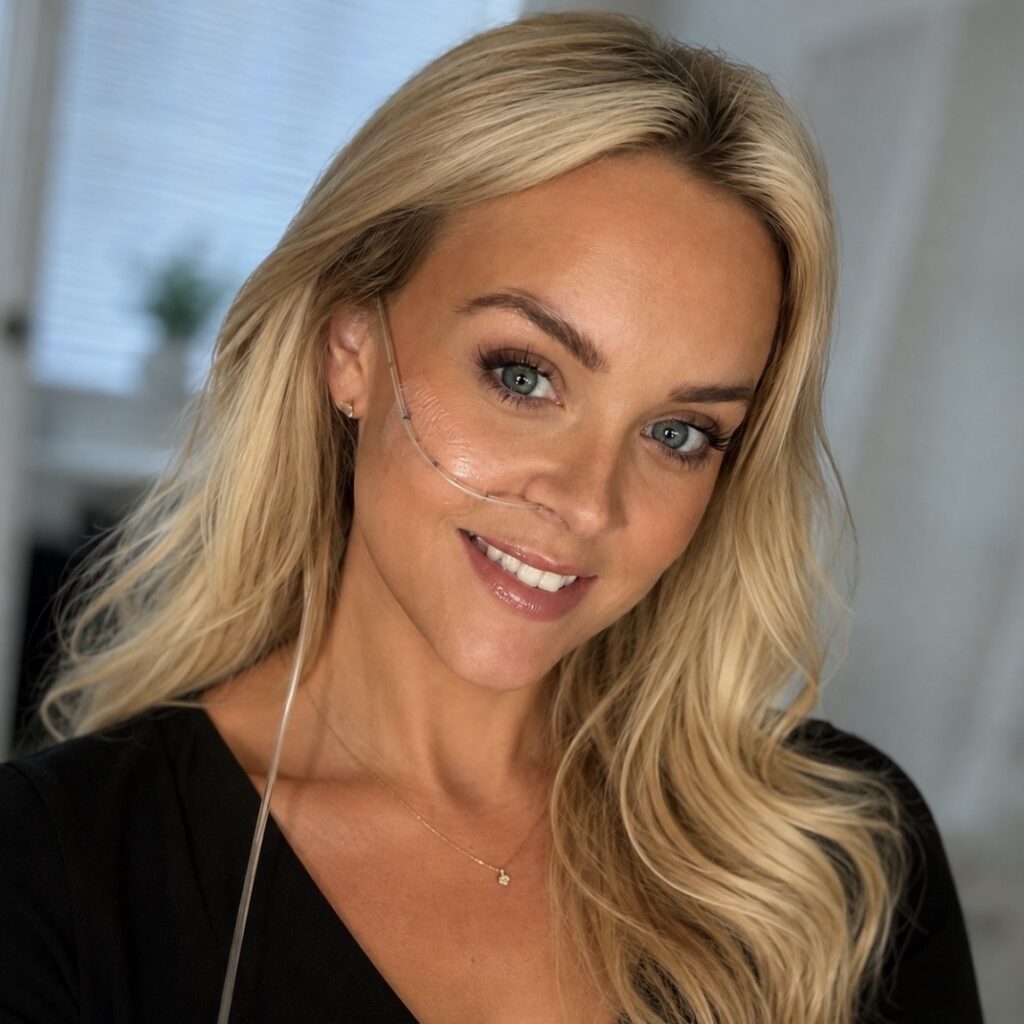
I hated the idea of having an NG tube and I cried to my mum. Then I took a ‘mind over matter’ approach and just thought they’re not going to give me a tube if they don’t think it’s going to work. I hoped it would just be temporary and that I’d get back to normality.
The thing I’m finding the hardest at the moment is it’s nearly a year later and I still have a feeding tube. I don’t have a very good relationship with my tube, if I’m being completely honest. But I know that I need it.
I connect the NG up in the evenings and overnight. On a good day, I can manage very small amounts of food, usually things like crisps, a little bit of white pasta, a few chips or some mash.
The tube itself wasn’t painful, but it was really uncomfortable initially. I felt like there was this huge pipe in my throat for the first three or four days. Now I’ve had that many tube changes, I generally can’t feel it in my throat day-to-day. It annoys me more around my nose and having tape stuck to my face.
I have to get a new tube every couple of weeks if I’ve thrown it up. When I vomit, the tube can come back up and loop through, which is horrible and does make me panic.”
How does living with gastroparesis affect your every day life?
“Socially, it’s really hard. As you get older, you catch up with friends over coffee or go for meals, and so much revolves around food. My family is very social too, so birthdays and celebrations always involve going out for food.
I went out for a meal recently for my mum’s birthday and my partner’s birthday. I had one piece of chicken as a starter at about 7pm and by midnight I was spending the night throwing up. That was probably the first time I’d been out for a meal in about six months.
I still get cravings for food all the time. Sometimes I give in because I’m human, and I know I’m going to suffer for it. People say, ‘Why don’t you just not eat it?’ But when your brain is telling you that you can’t have something, it’s hard to get that thought out of your head.”
What stigma have you faced from others about your digestive health?
“I’ve had people question why I’m not eating and assume it’s because I don’t want to eat. When actually I’m not eating because if I eat, I’m going to be sick. I’ve also had hints over the years that my symptoms were stress-related or that there was a mental health or eating disorder related reason for them.
I think people need to realise that people aren’t faking being sick a lot of the time. We’re faking being well. I put on a brave face and go to work because I love my job, but people can’t see what’s going on underneath. Just because I ‘don’t look sick’ doesn’t mean I’m not.”
Why do you support Guts UK charity?
“I’ve known about Guts UK since around 2020 or 2021. I’ve used the website for things like bloating and acid reflux, not just gastroparesis.
I also use the website through my work. When people ask me about certain things, I’ll point them towards their GP, but I can also point them towards Guts UK because I know the information is certified. There’s so much misinformation online.”
Why are you sharing your story?
“Hearing other people’s stories has made me feel like I’m not alone. Gastroparesis isn’t something that many people are aware of. So many people could be suffering with this condition without knowing or it could be the reason for a lot of their symptoms.
If sharing my story helps someone else recognise that what they’re experiencing could be something worth talking to their doctor about, then that’s really important to me.”
Glossary of medical terms:
- Ehlers-Danlos syndrome: Ehlers-Danlos syndromes (EDS) are a group of rare inherited conditions that affect connective tissue. Connective tissues provide support in skin, tendons, ligaments, blood vessels, internal organs and bones.
- Nasogastric (NG) tube: a thin, plastic feeding tube, inserted into one of the nostrils, down the back of the throat, then down to the stomach.
- Gastric emptying study (GES): A test that tracks how long it takes a meal or drink to move through your stomach and empty from it.
- Postural Orthostatic Tachycardia syndrome (PoTS): Postural tachycardia syndrome (PoTS) is when your heart rate increases very quickly after getting up from sitting or lying down, often making you feel dizzy or lightheaded.
About Guts UK
Guts UK is the national charity for the digestive system and the only UK charity funding research into the whole digestive system.
We provide information and support for people affected by digestive conditions like Crohn’s disease, including a dedicated Helpline.