David’s story – Hirschsprung’s disease
David shares his story, with the help of his mum, keen to raise awareness of the lesser-known digestive condition, Hirschsprung's disease.
Note: At Guts UK, we want our stories to be easy to understand for everyone. If any medical terms in David’s story are unfamiliar, you can find definitions in our medical glossary below.
Tell us a little bit about yourself
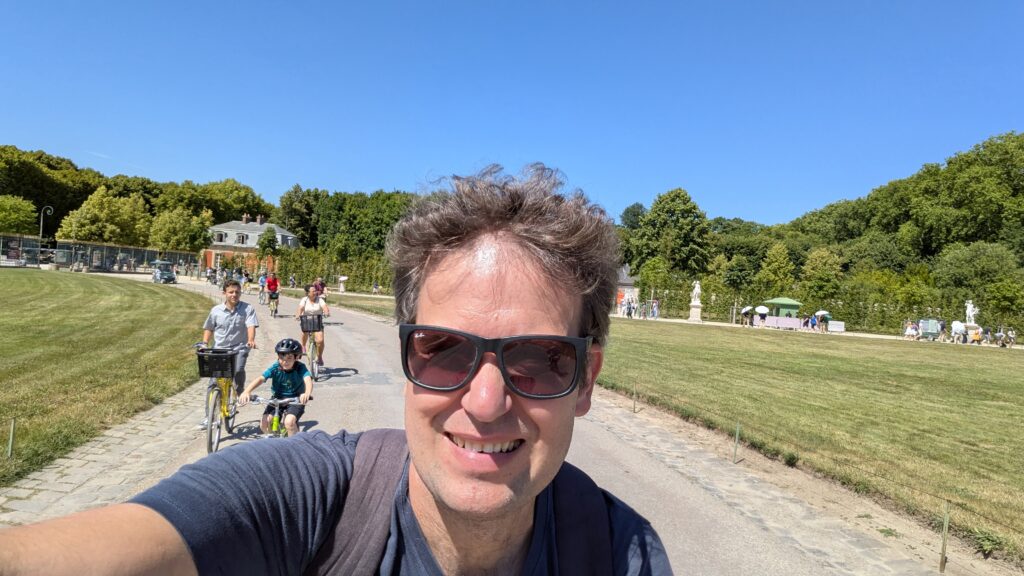
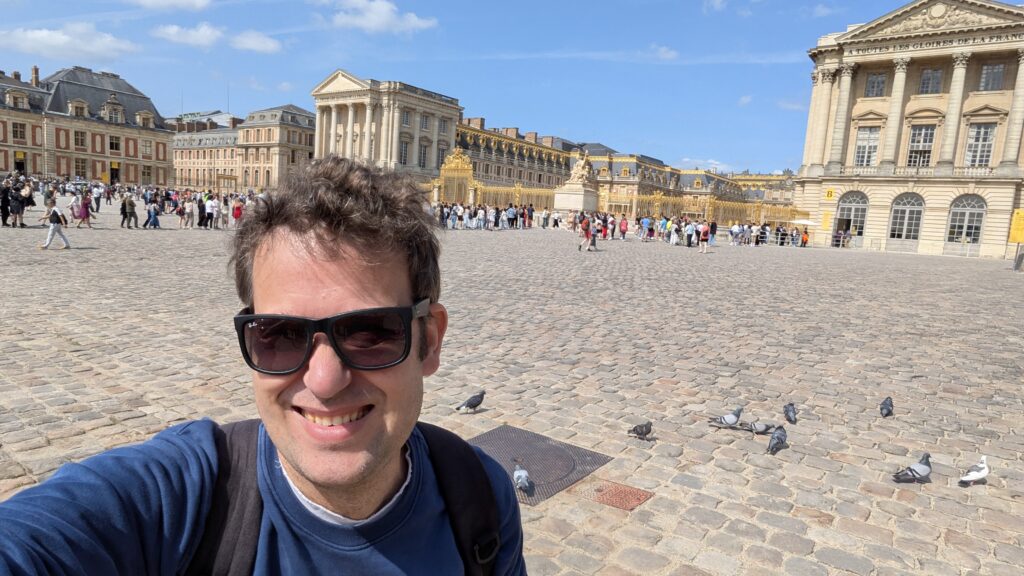
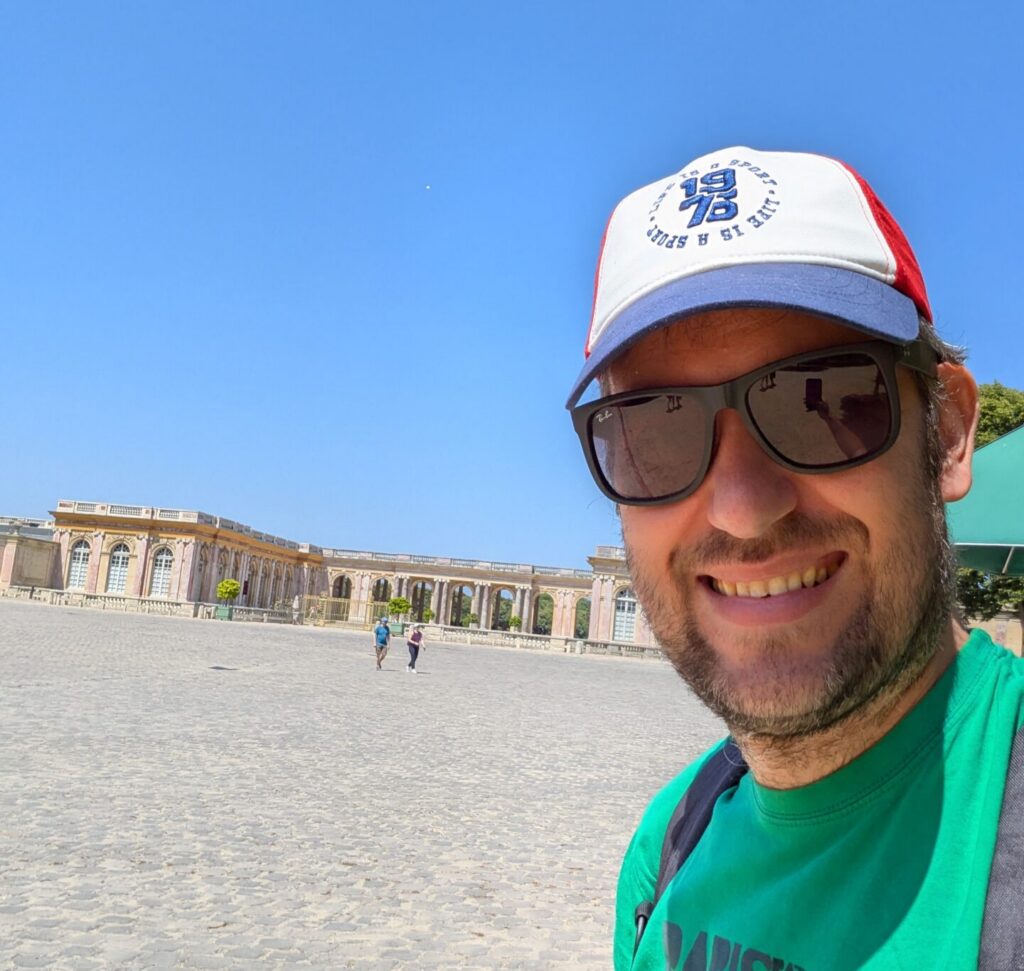
“I’m David, and I’m 40 years old. I was born in London and grew up there in Ealing, with my parents, my sister and two brothers. 16 years ago, I moved to Paris with my wife. I teach English in French businesses, and I also lead bike tours around Versailles in the summer.”
When did your Hirschsprung’s disease symptoms begin, and what were they?
“I spent the first few days of my life vomiting a lot of bile, not being able to keep anything down. My mum and dad, who is a GP, knew something was wrong, and the doctors dismissed it and put it down to birth trauma.”
Talk us through your journey to diagnosis
“In the months that followed, surgeons initially dismissed Hirschsprung’s disease, as the problem was very high up in my large bowel (colon) and extended into my ileum (the last part of the small bowel). My dad pushed for tests, and biopsies confirmed Hirschsprung’s disease. I was moved to a children’s hospital under the care of a new doctor. Mum and Dad travelled to hospital every single day, then went home to see my sister, who was only 18 months old. They moved in with my grandparents for a time.”
Note: In about 8 in 10 people diagnosed with Hirschsprung’s disease, the last part of the colon is affected (short-segment Hirschsprung’s). 15 in 100 people will experience an effect on the bowel further up the last section of the large bowel (sigmoid colon). In 5 in 100 people diagnosed, the whole large bowel is affected (total colonic aganglionosis) and can extend into the small bowel.
When did you have stoma surgery?
“In January 1986, I was transferred to another hospital and had an ileostomy. An ileostomy is a surgical procedure that creates an opening from the small bowel. This then diverts the contents through the abdominal wall into a medical bag, which is adhered to the abdomen. During recovery, my feed was a specific, blended, liquid, starting on a very small dose and then increasing very gradually daily.”
Have your parents ever told you how this felt for them at the time?
“From February to September 1986, I spent my time at home with my parents, recovering from surgery. They cared for me and my stoma. My mum told me it was an incredibly difficult time trying to work it all out. Neither my sister nor my younger brothers has Hirschsprung’s disease.”
Note: Hirschsprung’s disease is a condition people are born with. It is often diagnosed right after birth, but where symptoms are milder, diagnosis may happen later in childhood. Some gene changes are linked to Hirschsprung’s disease. This means it can happen more often in certain families.
What treatment have you received for Hirschsprung’s disease?
“In September 1986, I had pull-through surgery. My large bowel and 30cm of my small bowel were removed, then everything was joined back up. This was followed by a two-month stay in hospital, with my feed being gradually increased again.
I managed to be continent from 3 years old, and my teachers were asked to let me go to the bathroom as soon as I needed it throughout my time at school.”
What happened after that?
“I didn’t need to be admitted to hospital again until the summer of 1992, when I was 6 years old. My dad won a coconut at a school fair, and I ate it, not thinking anything of it, until it caused a blockage in my bowel.
My doctors were ready to take me back into surgery. Thankfully, I had a flush through my bowel via a nasogastric tube, which cleared the blockage, and when my surgeon came to take me into surgery, he realised I was fine as I was tucking into my breakfast!
I remember the tube being a bit uncomfortable, but at the same time, I felt relief as I hadn’t kept any food or drink down for a few days. Having fluid in my system made me feel so much better.”
What does Hirschsprung’s disease look like for you now as an adult?
“Besides check-ups and advice for my diet, I haven’t needed to see a doctor for my Hirschsprung’s disease since I was discharged from children’s care at 16 years old. I am active and busy, and Hirschsprung’s disease is the last thing on my mind. I look back to 1992 and find it quite amazing that I’ve only been hospitalised with Hirschsprung’s once since I was a baby. Somehow, I only missed a week of school, and that was it. I hope this gives hope to others as I’ve been able to manage my condition with diet and taking bathroom breaks when needed.”
Note: There is no cure for Hirschsprung’s disease, but with treatment in childhood and further monitoring, most people can lead a full and active life.
What do you wish other people knew about digestive conditions, such as Hirschsprung’s disease?
“Having a digestive condition doesn’t need to shape your life or dictate the direction of it. I’ve found that learning to manage my condition really helps. I’m not going to go camping in the middle of a field with no toilet, but I’m also not going to sit at home and do nothing. You can still do things and have a quality of life.
It’s good to see that the more “invisible” illnesses are being more widely understood. I’ve used a disabled toilet and had people ask me what I’m doing. All I need to say is ‘I have a severe digestive condition’, and people have usually been apologetic and understanding.”
Can you tell us a little bit about being an Expert by Experience (EBE) for Guts UK?
“I want to represent the Hirschsprung’s disease community and to promote interest in some of the lesser-known digestive conditions. Hirschsprung’s disease is still such an unknown disease, but for those of us who are affected by it, it can have a massive impact. Hirschsprung’s disease gives me a different perspective and more compassion and willingness to help push for research into it.”
Glossary of medical terms
- Nasogastric tube: A thin, plastic feeding tube, inserted into one of the nostrils, down the back of the throat, then down to the stomach.
About Guts UK
Guts UK is the national charity for the digestive system and the only UK charity funding research into the whole digestive system.
We provide information and support for people affected by digestive conditions such as Hirschsprung’s disease, including a dedicated Helpline.