Lois’ story
John shares his beloved wife Lois’ story to raise vital awareness of pancreatitis in her memory, after losing her to the condition earlier this year.
“Once the wedding had happened, Lois asked my sister and sister-in-law: “Do you think I’m going to die?” She’d never asked that before. That day marked a change in her, an acceptance that this couldn’t go on forever."
Note: At Guts UK, we want our stories to be easy to understand for everyone. If any medical terms in Lois’ story are unfamiliar, you can find definitions in our medical glossary below.
Tell us a little about Lois
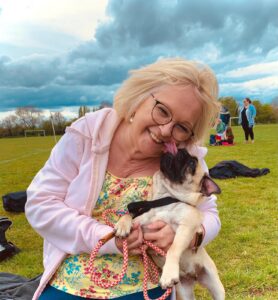
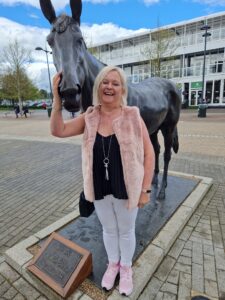
“Lois was 60 years old and we both come from Birmingham. We were together for 42 years and have one daughter, who’s 30. She was an amazing, fun-loving person who adored animals, loved the colour pink, and was a huge fan of 80s music. She worked in finance for most of her life.”
Can you describe when the symptoms started and what they were?
“In March 2025, she had polyps removed and was experiencing stomach issues, though we were told it was nothing concerning. In August, we managed two lovely holidays in Bath and Crete.
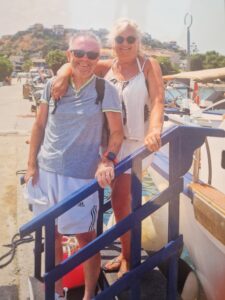
We arrived home from holiday on the Saturday and by the Tuesday, she was experiencing a bad headache and worsening stomach pains. She started to get sick, and the pain became so unbearable that she curled into the foetal position. Painkillers did nothing, and by 2am I called 999. Lois was taken into hospital and there, scans showed severe acute pancreatitis.”
Talk us through Lois’ journey with pancreatitis
“We knew nothing about the condition. Lois jokingly bet she would be out by 4pm, but instead, they sent her straight to critical care for two weeks and she was later diagnosed as necrotising pancreatitis.

She remained in hospital but by November, the condition caused a splenic aneurysm, and she was rushed to a bigger hospital for a procedure. She was discharged with instructions to carry out drainage from home. However, she was soon readmitted to critical care at our local hospital as it was clear she wasn’t ready to be home.”
What was it like when she came home around Christmas?
“She returned home on 16th December, though she was wheelchair bound and very weak. We hoped Christmas with family would give her a mental boost. Over Christmas, she did not eat, and her breathing worsened. A visiting doctor called 999 and rushed her into intensive care. In January, she was diagnosed with pulmonary embolism in both lungs.”
How did you manage the build-up to your daughter’s wedding?
“We were two months from our daughter’s wedding, which was absolutely her driving motivation. She survived intensive care and was moved to a normal ward. She was in good spirits, and I started arranging a daily care package so she could return home.
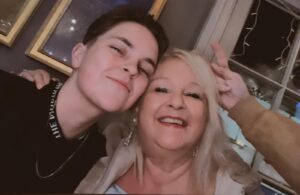
As we got closer to the big day, we planned small targets, like getting a new dress, doing her hair, and getting her nails done. Watching our daughter walk down the aisle was an unforgettable moment, and she managed to last until seven in the evening at the wedding, enjoying every part of the celebration.”
What happened after the wedding?
“We came back the next day, with carers coming to our home three times a day. Meanwhile, a large mass had developed on her back and worsened. She was stuck waiting for an appointment while doctors prescribed stronger painkillers and creams.
On Sunday 19th April, everything changed. Around 7:30pm, she emptied her bowels downstairs before making it to the toilet. She could no longer lift her neck and blacked out. I got her into a comfortable position on the carpet, revived her, and rang the ambulance. I immediately knew we were in trouble and she was rushed to intensive care.”
What happened in intensive care?
“The surgeon suggested moving to palliative care. I talked them round because I wanted them to properly examine the new mass, believing she had a fighting chance. For days, we kept watch while they gave her everything possible.
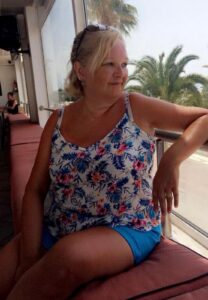
On 23rd April, they said to us: “Your wife is a dying, young woman. The kindest thing to do would be to keep her fully content, unaware of what’s happening. That would be the best for her.” My daughter and I then agreed to remove her from life support. They removed her tubes and blood pressure support while keeping her comfortable and pain-free.”
What were those last days like?
“Once the wedding had happened, Lois asked my sister and sister-in-law: “Do you think I’m going to die?” She’d never asked that before. That day marked a change in her, an acceptance that this couldn’t go on forever. Emotionally, she had gone to a different place.
We had most of the family around to see her. Doctors stopped her feed, which I argued felt more like killing her than letting her die. They put the liquid feed back on to show me why: a 350ml drip, and seven hours later, all but 25ml came back out. Her pancreas could not process it, which explained why she was constantly sick at home in pain. I wish they had told me sooner.
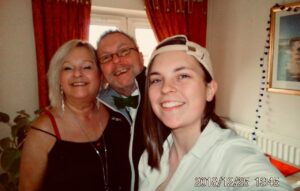
We had a few golden days where she’d have an hour each day when the morphine wore off, becoming her old self. She lasted another six days before passing away peacefully on the morning of 29th April with me by her side, just as our daughter and her wife were returning from breakfast and her brother and sister-in-law went to change.”
What has helped you and your family through this?
“Since the funeral, I’ve tried to create a new persona. I stay very active and do a weekly video diary exclusively for my daughter and her wife, sharing secrets no one else hears. I talk for fifteen minutes about my week and fifteen minutes about a photographic memory involving Lois. They absolutely adore it, and they hassle me if I’m late. It keeps her close to our hearts every single day.”
What is one thing you wish others knew about pancreatitis?
“There is a huge gap in terms of information about what might happen and what needs to be done when someone is experiencing pancreatitis. All I know is that she had severe acute pancreatitis, but all the statistics were in her favour.
Lots of people have said to me: “Surely it’s nothing,” but pancreatitis is devastating. Because nobody explained the true severity of the condition at the beginning, I genuinely believed everything would be fine. I wish someone had given us clearer information and straight answers much sooner.”
Why do you support Guts UK charity?
“Finding Guts UK has been an eye-opener. I feel like an ambassador, and friends who have digestive conditions have said how valuable that information is. Having a trusted source matters.
That is why I have been taking on challenges in her memory. When I ran a marathon recently, I wore a special running vest with her pictures and a pink angel because she adored pink. Through everything, I hope to raise £5,000 for Guts UK in her honour.”
Why do you support Guts UK?
“Guts UK is an amazing charity that raises awareness for digestive conditions. Campaigns like Kranky Panky are so important because pancreatitis isn’t something you hear about. Many people have gallbladder issues, but few realise gallstones can actually trigger severe pancreatitis. We need to talk about it more.”
Glossary of medical terms
- Palliative care: specialised medical care focused on providing relief from the symptoms, pain, and stress of a serious, life-limiting, or incurable illness.
- Pulmonary embolism: a sudden blockage in an artery of the lungs.
- Splenic aneurysm: a bulge in the artery that supplies blood to your spleen.
About Guts UK
Pancreatitis is a priority area for Guts UK and we fund research into pancreatitis that has the potential to change lives. Our Kranky Panky Pancreatitis Awareness Campaign takes place each November and builds a community of those affected by pancreatitis, comforted in knowing they’re not alone. Our expert information allows those with acute pancreatitis and chronic pancreatitis to take control of their health, and make informed decisions.