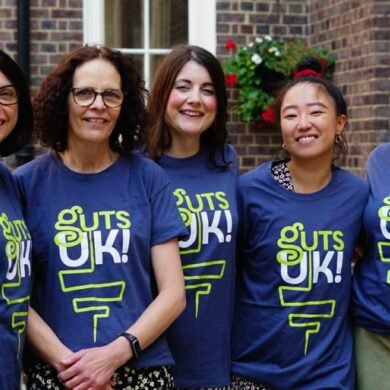
Amy’s story
“I wanted to turn something devastating into something positive and help others facing the same condition.”
After developing acute pancreatitis at 23, Amy spent seven and a half months in hospital. She lives with the long-term effects of pancreatitis and uses her experience to advocate for better care and support for others living with the condition.
Note: At Guts UK, we want our stories to be easy to understand for everyone. If any medical terms in Beth’s story are unfamiliar, you can find definitions in our medical glossary below.
Content note: This story discusses mental health struggles, including thoughts of not wanting to continue living. Please take care when reading.
Tell us a little about yourself, Amy
“I’m 37 and I work in a nursery with children with additional needs. I love spending time with my friends, caring for my autistic brother and reading.
I’m also involved in pancreatitis research and patient advocacy. I’m a patient representative on a research trial in Liverpool exploring whether a protein could help prevent acute pancreatitis from becoming more severe. Having experienced serious complications myself, I know how important this research could be.”

Can you take us back to when you first became unwell with acute pancreatitis? What symptoms did you experience?
“I was 23 when I first became unwell. It started with a bad stomach, followed by a night of repeated vomiting and shooting pains in my back and side. By the following morning, I was so unwell that I went to A&E.
I remember telling staff I also had chest pains because I was desperate to be seen. I often wonder what might have happened if I hadn’t said that. At the time, I had no idea how seriously ill I was about to become.”

What was your journey to diagnosis like?
“It took four weeks for me to be diagnosed. I couldn’t eat and felt my symptoms weren’t being taken seriously. I remember vomiting brown fluid, which was blood, and being asked by staff why I was drinking Coke (when I wasn’t) because they made assumptions about my weight.
One night, I became critically ill. I remember being told I was a drama queen and disturbing other patients. That was when I went into cardiac arrest and experienced multiple organ failure.
Although my body had effectively shut down, my mind was still aware of what was happening. I could hear staff saying they were losing me, but I couldn’t move or open my eyes. I was eventually transferred to intensive care, where I was diagnosed with acute pancreatitis.
My mum, who is a nurse, was instrumental in helping me get the care I needed. I honestly don’t know what would have happened without her constant support and determination to get answers.”
You spent a long time in hospital and experienced complications. What was that experience like, both physically and emotionally?
“I spent seven and a half months in hospital and returned to intensive care three times because of infections and complications.
At one point, I was so exhausted that I asked the doctors to let me die. I felt I couldn’t cope anymore. It was an incredibly dark time and the experience has stayed with me emotionally.
I lost around 10 stone and my muscles deteriorated so much that I couldn’t hold my head up or use my arms properly. I had to learn to walk again and rebuild my strength.
I also developed significant health anxiety. When you’ve experienced the worst-case scenario, it’s difficult to believe people when they tell you everything will be fine. Thirteen years later, I still struggle with the psychological impact, but the patient advocacy work I do really helps.”
Content note: Amy’s experience highlights the lasting psychological impact that severe pancreatitis can have. If you’re struggling with your mental health following a diagnosis or hospital stay, please speak to your GP about accessing psychological support or NHS talking therapies. You don’t have to manage these feelings alone.
What were some of the biggest challenges during your recovery?
“After leaving hospital, there was very little information available to help me understand pancreatitis and its long-term effects. My mum had to research everything herself and would arrive on the ward with a list of questions for the doctors.
Everyday tasks were difficult when I came home and I received very little mental health support. I had to learn to manage my health while dealing with the emotional trauma of what had happened.
Losing Joanne, a woman I became friends with who died from sepsis while in hospital with pancreatitis, also affected me deeply. I experienced survivor’s guilt, but her death motivated me to do something meaningful with my experience and help others.”
What does living with the long-term effects of pancreatitis look like for you now?
“I live with ongoing pain, take regular pain medication and manage long-term health complications. Chronic illness can be lonely because people can’t always see what you’re experiencing.
I think it’s important to talk to someone about what you’re going through rather than keeping everything to yourself. I’d also encourage people to be persistent when seeking help and use reliable information, including Guts UK, to understand their condition and ask informed questions.
Having access to good information can make a real difference when navigating healthcare and seeking the support you need.”

Are there any practical things or routines you’ve developed that help you manage everyday life with pancreatitis?
“Because my pancreas no longer produces the digestive enzymes I need, I take pancreatic enzyme replacement therapy (PERT). I find eating little and often much easier than having large meals.
I pay attention to what I eat and check food labels. Avoiding red meat has helped me, so I usually choose chicken instead. Everyone is different though, so what works for me might not work for somebody else. I also think it’s important not to make life unnecessarily restrictive and to allow yourself the occasional treat.
Looking after my mental health is just as important. I enjoy mindfulness, reading and colouring. My brother bought me a colouring book full of naughty words for my birthday, which always makes me laugh!
I also try to get out and spend time with friends, even if I know I might feel achy afterwards. Living with a chronic condition means making adjustments, but I don’t want my life to be defined entirely by my illness. Finding little things that make me happy is really important.”
You went on to become involved in patient advocacy and the NICE guidelines. What motivated you to use your experience to help other people with pancreatitis?
“Losing Joanne was a big motivation. I wanted to turn something devastating into something positive and help others facing the same condition.
I’m involved in patient advocacy, research and work on the NICE guidelines. Contributing alongside other patient representatives has shown me that our experiences can help shape the guidance and care other people receive.
I want people to understand that patients are not just statistics or numbers. We’re real people, with families, jobs and lives that are changed by our conditions.
I’ve encouraged people involved in treatment and research to think about the person behind the data. They need to understand the reality of what severe pancreatitis can do to someone’s life.
I hope that by sharing my story and contributing to research, I can help improve care for the people who come after me.”
To someone who has just been diagnosed with pancreatitis, what would you want them to know?
“I’d encourage them to visit Guts UK’s website for reliable information and to ask questions about the support available to them. Ask about referrals to a dietitian and other specialists where appropriate and keep speaking up if you feel your needs aren’t being met.
Some information online can be frightening or inaccurate, so stick to trusted sources and the NICE guidelines for guidance on recommended care.
Most importantly, look after yourself as a whole person, not just physically. Talk to someone about how you’re feeling and find little things that bring you joy.
If sharing my story helps someone feel less alone or encourages them to seek the care they need, then it’s worth it. We’re people, and our experiences deserve to be heard.”

About Guts UK
Pancreatitis is a priority area for Guts UK and we fund research into pancreatitis that has the potential to change lives. Our Kranky Panky Pancreatitis Awareness Campaign takes place each November and builds a community of those affected by pancreatitis, comforted in knowing they’re not alone. Our expert information allows those with acute pancreatitis and chronic pancreatitis to take control of their health, and make informed decisions.
Hear more from Amy as she shares what living with the long-term effects of acute pancreatitis has taught her, her passion for patient advocacy and why she wants to make a difference for others affected by the condition.
Where to find support
Guts UK Helpline
We provide information and guidance for people affected by digestive conditions through our helpline, helping you understand your condition and find further support.
- Telephone: 0300 102 4887
- Opening hours: Monday to Friday, 10am–2pm, excluding bank holidays.
Samaritans
Please know that you’re not alone if you’re facing mental health challenges. Sometimes, having someone to talk to can make all the difference. Samaritans offers a safe, confidential space to share your thoughts and feelings with someone who will listen, whatever you’re going through.
- Telephone: 116 123
- Opening hours: 24 hours a day, 365 days a year.
If you or someone else is in immediate danger, call 999 or go to your nearest A&E department.
Glossary of medical terms
- Cardiac arrest: When the heart suddenly stops pumping blood around the body, causing a person to lose consciousness and stop breathing normally.
- Intensive care (ICU): A specialist hospital department that provides treatment, close monitoring and support for people who are seriously or critically ill.
- NICE guidelines: Recommendations produced by the National Institute for Health and Care Excellence (NICE) to help healthcare professionals make informed decisions about treatment and care.
- Sepsis: A life-threatening condition that occurs when the body’s response to an infection damages its own tissues and organs.