
Pancreatic Exocrine Insufficiency (PEI)
Download printable versionOverview
What is pancreatic exocrine insufficiency (PEI)?
The pancreas is an important part of your digestive system and has two main jobs.
First, it makes special juices called digestive enzymes. These enzymes break down food into tiny pieces. This helps your body absorb nutrients through the small intestine and into the blood. This is called the exocrine function. When the pancreas doesn’t make enough of these enzymes, it’s called pancreatic exocrine insufficiency (PEI). This means your body can’t fully digest food, which can lead to digestion problems and poor nutrition.
The pancreas has another job too, known as the endocrine function. After food is digested, the pancreas makes a hormone called insulin. Insulin helps move sugar (glucose) from your blood into your body’s cells, where it’s turned into energy.
This information helps explain what happens when the pancreas’s enzyme-making job doesn’t work as it should.
Causes
What causes pancreatic exocrine insufficiency?
Any disease that affects pancreatic tissue can lead to PEI. The most common causes in the UK are:
- Cystic fibrosis
- Acute pancreatitis
- Chronic pancreatitis
- Pancreatic cancer
- Pancreatic surgery
- Stomach and oesophagus surgery
- Diabetes
8 in 10 people with chronic pancreatitis will develop PEI over time. PEI may also occur after pancreas surgery. It is possible to have a good quality of life with PEI.
People with acute pancreatitis and necrosis (tissue death) may also need PEI support, along with the common causes mentioned above. This depends on the severity of the attack.
Sometimes, surgery on the upper digestive system can lead to problems with digestion. For example, people who have their whole stomach removed because of stomach or oesophageal cancer can develop pancreatic exocrine insufficiency (PEI). One in 2 people after oesophagus and gastric resection might develop PEI. Up to 2 in 10 people who have bariatric surgery for weight loss may develop PEI.
People with diabetes can also develop PEI. When the pancreas doesn’t make enough digestive enzymes, it’s harder for the body to break down food and absorb nutrients. That’s why people with diabetes may have digestion problems in addition to issues with blood sugar. PEI can occur in one in two people with type 1 and type 2 diabetes. This happens when people have had diabetes for a long time.
For people diagnosed with neuroendocrine cancer and treated with somatostatin analogue medicine, treatment can cause PEI as a side effect.
There are rarer causes of PEI which include Shwachman–Diamond Syndrome, Johanson–Blizzard Syndrome, Pancreatic Hemochromatosis, as well as uncommon genetic metabolic errors such as Trypsinogen or Enteropeptidase Deficiency.
As we get older, it’s more common for us to develop PEI. This is because, over time, the pancreas may not work as well as it did when we were younger.

The pancreas and digestion
What is the role of the pancreas?
The pancreas is a key part of the body’s digestive and hormone systems. It lies in the upper half of the abdomen behind the stomach and in front of the spine. It is salmon pink in colour, about 22cm (9 inches) long and about as thick as your wrist at its widest part. It makes both digestive enzymes and hormones.
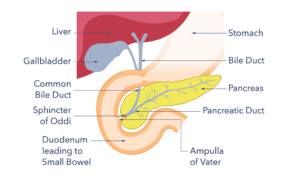
To understand PEI, it may be helpful to learn more about the role of the pancreas in digestion. Everything we eat is built from a combination of nutrients. The three macro nutrients are fats, proteins, and carbohydrates. The pancreas has a very important role in the digestion of all three. Energy for the body comes from both fats and carbohydrates. Proteins provide the building blocks for tissue growth and healing. When there aren’t enough carbohydrates in the diet, protein can sometimes provide energy.
Most dietary fats, proteins, and starches are made up of complex shapes. They are too big for body cells to absorb for use. Some carbohydrates in our food, like sucrose (table sugar) and lactose (milk sugar), have simpler shapes. Even those need to break down first. Then, the gut wall can absorb them into the body. Absorption can be thought of as tiny food parts soaking into the body through the gut wall, like a sponge.
The pancreas produces special chemicals known as pancreatic enzymes. These enzymes break down fat, protein, and certain carbohydrates into smaller pieces. One of the enzymes that perform this role is called amylase. Amylase helps break down starchy carbohydrates in foods like bread, rice, pasta, potatoes, and breakfast cereals. Fats in food break down into smaller parts known as fatty acids and glycerol. The enzyme in the pancreas that does this job is called lipase. Pancreatic enzymes break down proteins. These enzymes are called proteases and peptidases. In summary, pancreatic enzymes help convert:
- Starchy carbohydrates to glucose.
- Proteins to peptides and amino acids.
- Fats to fatty acids and glycerol.
When food breaks down into smaller parts, it releases the nutrients our bodies need to function and thrive. Food begins to break down in the mouth through chewing and by mixing with saliva. Food is swallowed and pushed down the gullet by muscle waves into the stomach. Stomach acid and the stomach’s churning motion also break up and mix food. The stomach pushes its contents into the duodenum, which is the first part of the small bowel.
The pancreas sits behind the stomach. It has a thin tube called the pancreatic duct. This tube runs through the pancreas to the top of the small bowel. The pancreas sends pancreatic juice through this duct into the small bowel. This juice helps with digestion. Pancreatic juice contains pancreatic enzymes and bicarbonate. Bicarbonate stops stomach acid from damaging the small bowel by making it less acid.
How does PEI affect digestion?
In a damaged pancreas, either not enough enzymes are made, or the pancreatic duct is blocked. Sometimes, both issues occur. If insufficient enzymes reach the top of the small bowel, food nutrients will not undergo proper digestion. They will continue to travel along the small bowel. When they reach the large bowel, the nutrients can cause unpleasant symptoms. One symptom is fatty diarrhoea, which doctors call steatorrhoea. The gut microbes use undigested nutrients for energy. This can cause belly pain, wind, and bloating. The body expels the rest of the undigested food as poo. Malabsorption is when the body does not absorb food properly. A healthy pancreas can produce a lot of enzymes and bicarbonate. It has a strong reserve capacity. PEI happens slowly over time.
Fat malabsorption tends to be the most visible problem in PEI for two reasons. The mouth, stomach, and small intestine also produce digestive enzymes as a first step in digestion. These may help break down proteins and carbohydrates to support a weak pancreas, especially at first. Fat digestion, however, depends more on the production of pancreatic lipase. This means that fat malabsorption tends to be an earlier and/or bigger problem in PEI. The second reason is that fat malabsorption shows clearer changes in bowel function, for example diarrhoea.
The diagnosis could be missed if the diet lacks enough fat to trigger fat malabsorption symptoms. But weight loss, muscle wasting, and other signs of malnutrition can still happen. Low-fat diets just mask the symptoms of PEI without solving the actual issue. So, they shouldn’t be used. One exception is when someone gets pancreatitis from a hereditary disorder leading to high fat levels in the blood. Check out the treatment section for more information.

What other roles does the pancreas have?
Endocrine function
The pancreas has another role called its endocrine function. Endocrine function affects how well sugar enters body cells. Endocrine function needs specialised chemicals, like the hormones insulin and glucagon. These hormones go straight into the bloodstream. Insulin stops high blood sugar, while glucagon stops low blood sugar. They work together to keep blood sugar within a healthy range.
Cells in the pancreas handle its exocrine and endocrine functions. Most of the pancreas makes enzymes for digestion. Acinar cells are the ones that produce digestive enzymes. Insulin and other hormones are made in the pancreatic islets, also known as the islets of Langerhans. These islets are distributed throughout the pancreas. Damage to the pancreas can cause PEI. It can also reduce insulin and glucagon production. This leads to a unique type of diabetes known as pancreatogenic (type 3C) diabetes. People with this type of diabetes often find it hard to manage their blood sugar levels.
Symptoms
What are the signs and symptoms of pancreatic exocrine insufficiency?
PEI can take time to develop and at first the symptoms might be mild. Symptoms can include:
- Belly discomfort or pain.
- Bloating.
- Wind.
- Fatty diarrhoea.
- Weight loss.
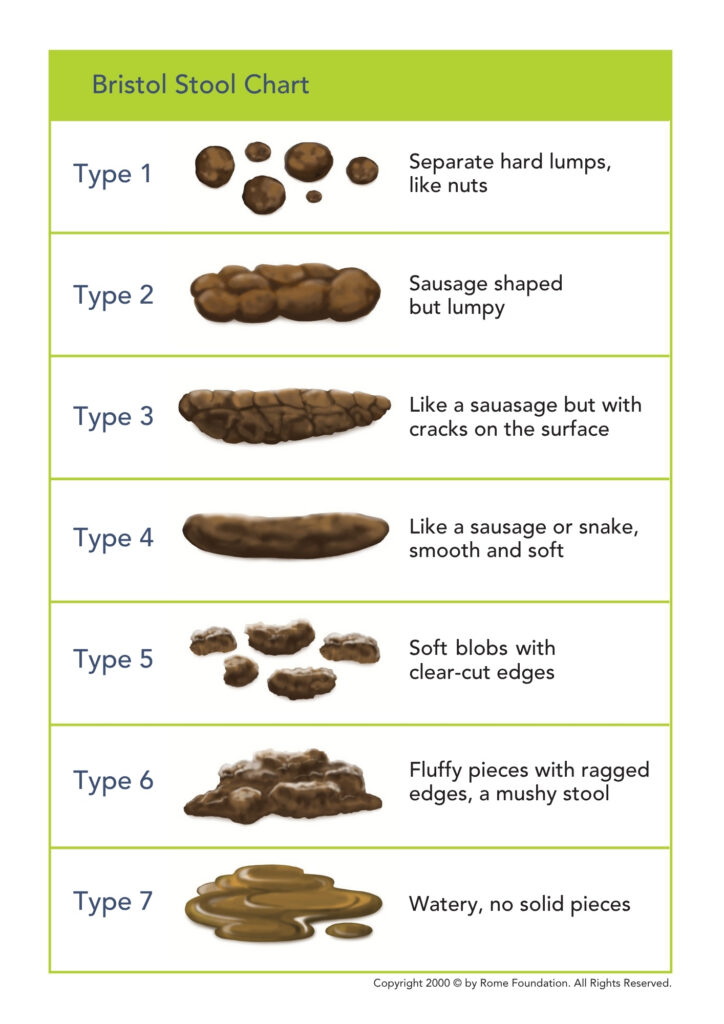
Steatorrhoea (fatty poo) may appear bulky and oily. It can be pale orange or yellow, have a foul smell, and be runny (Our Poo-Torial tool can help you to check your poo). Poo can also float and be difficult to flush away and may stain the toilet bowl.
See the chart below. Type 6 to type 7 is defined as runny poo (diarrhoea).
 Fat-soluble vitamins (vitamins A, D, E and K) are found in foods containing fat. Fat malabsorption can lead to nutrient deficiencies over time. Low vitamin levels can cause these symptoms:
- Bone problems such as osteoporosis (weakened bones)
- Bruising
- Poor wound healing
- Increased infections
- Sight problems (particularly in the dark)
- Neurological (nerve) symptoms
- Muscle weakness
- Fatigue
Codeine and other morphine-based medicines can hide the diarrhoea symptoms of PEI as they cause constipation. Weight loss, belly pain, bloating, and flatulence can still occur. Belly pain can also be a side effect of these painkillers.
Diagnosis
How is pancreatic exocrine insufficiency diagnosed?
The diagnosis of PEI is a skilled clinical procedure. The first stage is to ask about symptoms. Next, there is an examination to check for signs of weight loss or malnutrition. If a doctor suspects PEI, they will then suggest tests. Tests will check the structure of the pancreas. The doctor will also assess how well it functions with a poo test.
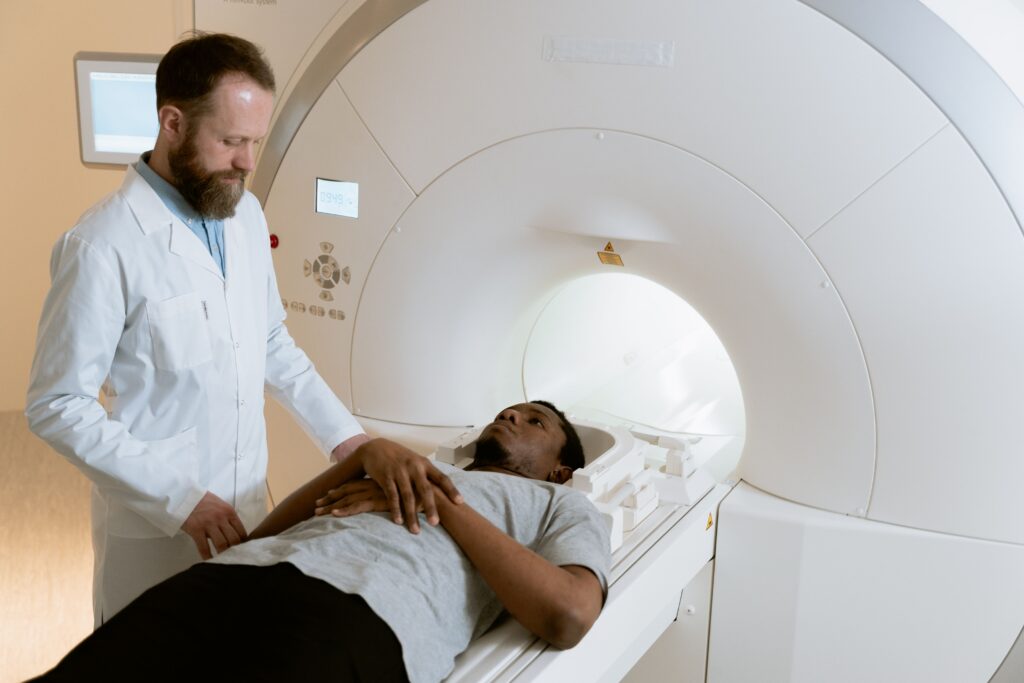
Doctors call structural tests “imaging techniques” or “scans.” Ultrasound, CT, and MRI scans all check the pancreas for signs of tissue and duct damage. The tests highlight different features. You may need more than one type of scan to build up a picture of the damage that has occurred. Magnetic Resonance Cholangio-Pancreatography (MRCP) is a special feature of the MR scanner. It shows the ducts of the liver and pancreas in detail. An ultrasound is done by moving a probe across the abdomen. An internal ultrasound, known as Endoscopic Ultrasound (EUS), gives clearer details when a diagnosis isn’t clear. EUS is usually only available in the NHS in specialist centres.
The most common method in the UK to test how the pancreas works is by measuring pancreatic enzyme levels in poo. During normal digestion some of the enzymes secreted by the pancreas end up in poo. Measuring pancreatic enzyme levels in poo can show how much the pancreas produces. In PEI, lower enzyme levels are released into the duodenum, resulting in finding less in poo. The best enzyme to measure is a protease known as elastase-1. Elastase-1 is not broken down by enzymes, it travels through the gut and it concentrates in the poo. This test is called the faecal elastase-1 test (or FE-1). Elastase-1 levels in poo can show if pancreatic function is normal or how serious the PEI is. Testing faecal elastase in poo is quite easy. It doesn’t need blood tests or invasive procedures. However, the test can fail to pick up cases of mild to moderate PEI. You do not need to stop taking pancreatic exocrine replacement therapy (PERT) when you have the faecal eastase-1 test. PERT is the treatment for PEI – see treatment section below.
Other tests measure the pancreas’s function, either directly or indirectly. These tests are not often done in regular clinical practice and aren’t usually available in the UK.
Sometimes, the history, examination, scans, and faecal elastase test all match. When that happens, the diagnosis is clear. Sometimes, there’s a disagreement between the tests or the history. When that happens, you might need more tests. For instance, an endoscopic ultrasound or tests for other digestive diseases may be needed if there’s no clear sign of pancreatic disease. An experienced doctor will look at all these factors to help make the right diagnosis. They will also explain if any extra tests are needed. It’s up to your doctor to decide which test is best for you, based on your symptoms and overall health.
Treatment
How is PEI managed and what is the role of Pancreatic Enzyme Replacement Therapy (PERT)?
Pancreatic Enzyme Replacement Therapy (PERT) is the standard treatment for PEI. When used correctly, PERT can help absorb fats, proteins, and carbohydrates better. PERT helps lessen fatty stools, wind, and belly pain. It also increases body weight and improves nutrition and quality of life. PERT needs to be taken for life after PEI has been diagnosed.
People with PEI take capsules, or powder if they need a tube feed, with the pancreatic enzymes lipase, amylase, and proteases. PERT comes in different strengths. This way, the dose can be adjusted to meet the needs of those with PEI. PERT is taken with meals, snacks, and milky drinks. They release enzymes in the top of the small bowel. This allows the food to be digested. PERT must be included in a nutrition plan made and managed by a dietitian. This specialist is a key member of the team.
There are four types of enzyme medicine available:
- Creon®
- Pancrease®
- Nutrizym®
- Pancrex®
Religious and ethical considerations:
Enzymes come from a pig’s pancreas because they work similarly to human pancreatic enzymes. Right now, there isn’t a vegetarian or vegan option available. If you avoid pork for religious reasons, you can get dispensations. This applies to medicines and health conditions when they are necessary, and no good alternatives are available. Since there are no other options, the Chief Rabbi and most Muslim groups find the use acceptable. Discuss this with your religious leader for support.
Alternative enzymes:
People with PEI should not ask non-registered ‘nutritional therapists’ for advice. Their training varies, so they might provide bad or unsafe advice. The British Dietetic Association can give you more details on how a dietitian, a nutritionist, and other roles differ. Health food shops and nutritional therapists promote digestive enzymes, but they contain only tiny amounts. Even if they are sold as vegan or vegetarian, they probably won’t work well. Only the enzymes prescribed by a doctor, nurse, or dietitian are safe and effective.

PERT and ongoing symptoms
Often people with PEI taking PERT have a poor appetite. Eating smaller meals more often can help. If a person with PEI has a stable weight and eats normally, there’s no need to change their meal pattern. It’s important to make sure the PERT dose is enough and spread out over bigger meals. There is no need to restrict fat routinely.
Sometimes, people with pancreatic issues find it hard to tolerate fat. If this is the case the PERT dose should be reviewed and possibly increased according to your doctor’s advice. If this doesn’t help with symptoms, doctors should check for other conditions. . Some people need vitamin and mineral supplements. You can discuss this with your dietitian. It’s important you don’t alter your diet to manage your symptoms. Instead, request a review of your digestive enzyme medicine from your doctor if you are having problems.
How to take PERT:
Many people with PEI take two capsules three times a day with food. Pancreatic experts discourage this as it only partly treats the PEI. This recommendation ignores meal size and doesn’t include snacks or healthy drinks like milky coffee or hot chocolate. Successful PERT therapy depends on changing the number or strength of capsules. This should match the meal’s size and fat content. People with PEI may be told to take part of their dose at the start, halfway through, and at the end of the meal. Your GP or consultant should always review the starting dose of PERT. It may vary, so make sure it meets your digestive needs. PERT works on food directly. So, it’s crucial that the capsules reach the stomach when food does. Taking PERT on an empty stomach will not be effective.
Some meals take longer to eat, like dining out at a restaurant. Taking PERT with each course will help the capsules mix with the food better. Heat can harm the enzymes. So, avoid leaving the capsules in direct sunlight, near radiators, or in trouser pockets. Successful PERT therapy needs a team effort between the person with PEI and their dietitian.

PERT and PPIs:
PERT is often given alongside a proton pump inhibitor (PPI). Examples include omeprazole, lansoprazole, and esomeprazole, among others. These medicines reduce the stomach’s ability to make acid. In PEI the top of the small bowel may be more acidic than it should be. This happens because the pancreas makes less bicarbonate, which balances stomach acid. Pancreatic enzymes can’t work properly in an acidic environment. The coating on PERT capsules stops the enzymes from activating if the top of the small intestine is too acidic. The capsules won’t release the enzymes at the right place. They therefore won’t work properly. The PPI medicine reduces the amount of stomach acid that gets to the small bowel. It also helps PERT work better. Speak with your GP to see what they recommend for you.
NICE guidelines:
The NICE guideline for pancreatitis recommends monitoring pancreatic exocrine function and nutritional status for people with chronic pancreatitis. This should be done at least every 12 months or every 6 months in people under 16. This should be done through a clinical assessment and blood tests, agreed upon with a specialist pancreatic centre. Any treatment for vitamin and mineral deficiencies should be changed based on the assessment results. Adults with chronic pancreatitis should also be offered monitoring of their HbA1c level, a test for diabetes, at least every 6 months. Plus, you should also have a bone density assessment every two years. Hospital staff should inform GPs of the need for these assessments.
PEI and familial chylomicronaemia syndrome
This happens when there is too much fat in the bloodstream. Doctors might recommend a low-fat diet for people with this rare diagnosis. They should see a dietitian for proper care.
PEI and diabetes
People with PEI can also get diabetes. Eight out of ten people with chronic pancreatitis might get diabetes within 20 years of their diagnosis. One in three people with cystic fibrosis over 16 years of age will be treated for diabetes. Diabetes can occur due to other causes of PEI, but we don’t know how many people are affected.
Talk to your doctor if you notice these symptoms of possible diabetes:
- Unintentional weight loss.
- Feeling very thirsty.
- Peeing more often than usual, especially at night.
- Tiredness.
- Blurred vision.
- Craving sugary drinks and foods.
People with PEI often learn to manage their food intake. This helps ease symptoms and boosts their nutrition.

Support
What to ask your doctor?
Talk to your doctor if you feel you have PEI or have questions about:
- Your prescribed enzyme medicine dose.
- If you think you might be allergic to your enzymes, check for signs like a skin rash. This reaction is rare.
- If you think a medicine might be causing side effects like constipation, belly pain, diarrhoea, or bloating. Although recognise that these side effects can be due to an inadequate dose. Your doctor can review your dose and change it if appropriate.
You’ll be able to tell if your treatment is working. Your diarrhoea should improve, any pain may lessen, and your weight should start to stay steady. PEI can feel complicated, but with support from your healthcare team, you can still have a good quality of life.
Discover more:


Copyright © 2026 Guts UK. This leaflet was published by Guts UK charity in Nov 2026 and will be reviewed in Nov 2028. The leaflet was written by Guts UK and reviewed by experts in diarrhoea and has been subject to both lay and professional review. All content in this leaflet is for information only. The information in this leaflet is not a substitute for professional medical care by a qualified doctor or other healthcare professional. We currently use AI translation tools on our website, which may not always provide perfect translations. We also use AI readability tools to develop our information. Please speak to your doctor if you need further explanation or if any of the information is unclear. ALWAYS check with your doctor if you have any concerns about your health, medical condition or treatment. The publishers are not responsible or liable, directly or indirectly, for any form of damages whatsoever resulting from the use (or misuse) of information contained or implied in this leaflet. Please contact Guts UK if you believe any information in this leaflet is in error.