
Type 3c diabetes (Pancreatogenic diabetes)
Download printable versionOverview
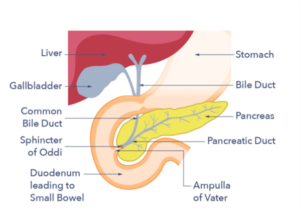
Image: The pancreas and the ducts around it.
The pancreas has two main roles. One of those is to produce digestive enzymes that help to break down food so it can be absorbed in the gut. This is called its “exocrine function”. When the body can’t make enough enzymes, food can’t be fully broken down. This is called “pancreatic exocrine insufficiency” or PEI. You can find more information about PEI here.
The pancreas also produces hormones. These hormones are messengers that help keep your blood glucose (sugar), at the right level. These include hormones called insulin and glucagon. This is called its “endocrine function”.
- Insulin helps transport glucose from the blood into body cells where it is used for energy or stored.
- Glucagon helps the body release more glucose from its stores when the level in the blood is below the target range.
If someone is not producing as much insulin as their body needs, then they cannot get enough glucose into their cells. This means they lack energy, and their blood glucose levels rise too high. This can make them unwell.
When the pancreas can’t make enough insulin, blood glucose levels go up. Over the long-term (months to years), high blood glucose levels can harm the blood vessels in the body. So, it’s vital to detect and treat high blood glucose levels.
Type 3c diabetes is different from type 1 and type 2 diabetes. It usually occurs with PEI, and it impacts all the hormones made in the pancreas.
This means information for people living with type 1 and type 2 diabetes may not be right for you. People living with type 2 diabetes are often encouraged to limit their diet and aim to reduce their weight. This advice doesn’t apply to some people with pancreatitis, as some may have a low body weight or find it hard to eat.
It is important to know that some people may have a combination of both type 2 and type 3c diabetes. Ask your healthcare team if you think you might have both. This is particularly likely if you are living with a higher body weight or if diabetes runs in your family.

Causes
- Chronic pancreatitis: Up to 20 years after developing symptoms of chronic pancreatitis, 8 out of 10 people will develop diabetes. Chronic pancreatitis accounts for three-quarters of type 3c diabetes cases in the UK.
- Recurrent acute pancreatitis: This occurs in both adults and children. In children with recurrent acute or chronic pancreatitis, 6 to 9 in 100 may develop diabetes.
- Severe acute pancreatitis: Pancreatic necrosis also leads to diabetes for many people. Pancreatic necrosis is when inflammation in the pancreas causes parts of it to lose blood supply and tissue dies. This can happen during acute pancreatitis.
- Trauma-related pancreatitis: Over 1 in 3 people with trauma-related pancreatitis develop diabetes. This sometimes happens after they leave the hospital.
- Pancreatic surgery: Removing part of the pancreas causes diabetes in 1 in 4 people who have this type of surgery. This is more of a risk for females who are older and have a higher body weight. It also depends on what part of the pancreas is removed. Total removal of the pancreas (total pancreatectomy) leads to type 3c diabetes in everyone who has this surgery.
- Haemochromatosis: This condition causes iron to build up in the body including the pancreas, which damages it. This damage can affect how well the pancreas works and is a complication of haemochromatosis.
Other causes include:
- Pancreatic cancer
- Cystic fibrosis
This information is about the first 5 causes in the list above. Check the support section for information on diabetes related to pancreatic cancer and cystic fibrosis.
Symptoms
Talk to your doctor if you notice these symptoms of diabetes and any of the causes listed above:
- Unintentional weight loss
- Feeling very thirsty
- Peeing more often than usual, especially at night
- Tiredness
- Blurred vision
- Feeling lightheaded
- Having palpitations
- Sweating when not hot
- Slow healing of wounds or a fungal infection called thrush.
- Craving sugary drinks and foods
The symptoms above can be caused by high blood glucose levels. You may have one or more of these symptoms. When the pancreas isn’t working properly, it may not make enough insulin. Therefore, enough glucose can’t move from the blood into the cells that need it for energy.

Type 3c diabetes impacts all the hormones made by the pancreas, including glucagon. Glucagon helps increase the level of glucose in the blood when it gets too low. Managing blood glucose levels with type 3c diabetes can be tricky.
Diagnosis
There are two blood tests that are used to diagnose diabetes.
- HbA1c (Glycated haemoglobin) is a test that measures how much glucose is attached to your red blood cells. This used to be reported as a percentage, but the laboratories now report this as in units of mmol/mol. A result above 48mmol/mol suggests diabetes. HbA1c is then used to check how well managed your diabetes is.
- Blood glucose levels are measured in units called mmol/L. If you have a fasting blood test, a high level is more than 7 mmol/L. A blood test taken when you are not fasting over 11 mmol/L would also indicate diabetes, though it would need to be repeated to be sure.
An HbA1c and blood glucose level within normal range does not always rule out diabetes.
Once diabetes has been diagnosed, the type of diabetes needs to be determined. Blood tests can check for antibodies associated with type 1 diabetes, which may need to be ruled out as a possible cause. For it to be type 3c diabetes, you would have to have some history of pancreatic damage. This is commonly identified with a scan.
You may have other tests to check if you have other conditions alongside diabetes. The tests will be explained to you if you need them. One of them is a test for pancreatic exocrine insufficiency (PEI). This is tested in a poo sample and is called faecal elastase-1. You can read about PEI here.
Treatments
What are high and low blood glucose levels?
You can find the symptoms of high blood glucose levels in the symptoms section.
If you’ve had diabetes for a while, your blood glucose levels might go higher than they used to. This could happen because your pancreas may produce less insulin over time. Talk to your diabetes team if your levels are increasing.
For people without diabetes, blood glucose levels are usually 4-7mmol/l but may temporarily go above or below this range. People living with diabetes are given different blood glucose targets depending on their circumstances. So, ask your diabetes team about the levels you should aim for.
Regularly having blood glucose levels above the recommended range can lead to unpleasant symptoms. These include excessive thirst, tiredness, confusion, needing to pee frequently, longer healing times for infections, weight loss, headaches, and irritability. High blood glucose levels can harm your blood vessels over time. This includes damage to your heart, brain, kidneys, eyes and other organs. So, it is important to have treatment and support for managing high blood glucose levels.
It’s also important to keep your blood glucose level from going too low. If it does go low, then it needs to be treated quickly to bring it back up again. Be aware of the symptoms of low blood glucose. This way, you can spot it and treat it before it drops further. For someone living with diabetes a blood glucose below 4 mmol/L, is called hypoglycaemia or a ‘hypo’ for short. Symptoms include:
- Hunger
- Trembling
- Headache or light headedness
- Blurred vision
- Paleness
- Sweating or ‘cold sweats’
- Palpitations
- Tingling of the lips
- Feeling sick or being sick
- Diarrhoea
- Anxiety or irritability
- Loss of concentration
- Feeling tired or weak
If you experience these symptoms, it is important you check your blood glucose level or continuous glucose monitor reading. If your blood glucose is less than 4 then you need to treat the hypo promptly to bring your blood glucose level back into the target range.
How to treat a low blood glucose level
If your blood glucose level is below 4 mmol/L, then please see the information on the NHS website here. If your blood glucose often goes low, ask your diabetes team or GP for advice. Take your pancreatic enzyme replacement therapy (PERT) with any meal or snack if prescribed.
In type 3c diabetes, low blood glucose levels can be more likely to occur than in other types of diabetes. This is because the pancreas is producing less or no glucagon. Other factors which increase the chance of having a hypo are:
- You have taken too much insulin
- You inject your insulin into a muscle by accident
- You miss or delay a meal
- You do not eat enough carbohydrate for the amount of insulin you have taken
- You are more active than usual
- You drink a lot of alcohol, particularly without eating carbohydrate
- You have developed pancreatic exocrine insufficiency (PEI). This may cause some digestive symptoms, like diarrhoea, abdominal pain, wind, and bloating
- If you have been prescribed PERT, not taking your pancreatic exocrine replacement therapy (PERT) as advised or missing a dose
- Vomiting (being sick) after eating having already taken your insulin
Do I need to monitor my blood glucose levels?
This depends on what treatment you have for your diabetes. Some people check their own blood glucose levels at home. Others will have a blood test, usually at the GP surgery.
The test a GP would do is called HbA1c. It measures how much glucose is attached to your red blood cells. This is a different test than the one to measure your own blood glucose level. It measures glycated haemoglobin which gives an indication of your average blood glucose levels over the past three months. If your high blood glucose levels are often high, this will increase your HbA1c levels. You do not need to fast for this test. The HbA1c level helps diagnose diabetes and track how well your treatment is working.
If you use a type of tablet called a sulphonylurea (e.g., gliclazide, glipizide, or glimepiride) or insulin to manage your blood glucose levels, you will be advised to check your glucose levels at home. This is usually done with a finger prick test and a glucometer. Some people will use a glucose sensor stuck to their arm or belly. This is called a “continuous glucose monitor” or “CGM”.
Whether you can get one funded by the NHS depends on how your diabetes is managed and the rules in your part of the country. A diabetes team should support you and provide training on how and when to test your glucose levels. They will also explain diabetes treatments and help you decide which option is best for you.
Type 3c diabetes can be complex to manage. Most people are looked after by a specialist diabetes team. Talk to your GP about whether you need a referral and where your local service is based.
What treatment might I be given?
There are three main treatment options for type 3c diabetes.
Diet
The nutrient in your foods and drinks that affects blood glucose levels is carbohydrates. Carbohydrates are found in starchy foods and simple sugars. When we eat starchy foods, our body breaks them down into sugars. These sugars, and those we consume directly as sugars, enter our blood and raise the blood glucose level. If there isn’t enough insulin to move the glucose into the body’s cells, or if the body doesn’t respond to the insulin, blood glucose levels stay high.
Eating less carbohydrates is one strategy for stopping the blood glucose levels from going too high. Carbohydrates should not be completely removed from the diet, as they are part of a healthy balanced diet. This is particularly important if you are aiming to increase your weight or finding it hard to stop your weight dropping.
If your weight is not dropping and you do not have a low weight, then wholegrain starchy carbohydrates are often the best choices of starchy foods. They contain fibre, which slows down the absorption of glucose into the blood. The fibre can reduce the rise in blood glucose level after eating. For example, white bread raises blood glucose levels more quickly than wholemeal bread. But if you have a low appetite, you may find you feel fuller when having higher fibre foods and therefore eat less. In this situation discuss your options with your diabetes team or dietitian.
Some people who are nutritionally well may be able to keep their blood glucose levels in their target range by making some changes to their diet. Reducing simple sugars, moderating carbohydrate portion sizes and maintaining a healthy weight through regular exercise can benefit those who can manage it.
Examples of starchy carbohydrates are:
- Bread, chapatti, naan, crispbreads and crackers
- Pasta and noodles
- Rice, couscous and quinoa
- Potatoes, yam cassava and plantain
- Cereals, wheat, bran, oats, barley, rye, millet and maize
Mixed foods with starchy carbohydrates include pies, savoury pastries, pizza, Yorkshire puddings, and dumplings.
Examples of sugar containing foods:
- Sugar, syrup, treacle, honey
- Jam, marmalade, lemon curd and chocolate spread
- Ice-cream, sweets, chocolate, mints, toffees, fudge
- Fizzy drinks (unless diet/zero version), fruit juice, smoothies, some processed yoghurts and some dilutable squash
Foods with both starchy carbohydrates and sugars include cakes, biscuits, sweet pastries, and sugary breakfast cereals. Reducing these can help manage your glucose levels.
Fruit, milk and natural yoghurt contain sugar, but this sugar is held in the cells of fruit or a milk sugar (lactose) and does not have the same impact on blood glucose levels as other sugars. These options also contain other nutrients that are good for your health. They should be included as part of a healthy diet.
Some foods have little impact on blood glucose levels when eaten. They include:
- Meat, fish, chicken, eggs, cheese and some vegan proteins such as tofu and Quorn.
- Pulses (lentils, chickpeas, peas), beans, nuts and seeds.
- Vegetables except for potatoes, yam and plantain
- Salad leaves, cucumber, tomato, bell peppers, cherries, grapefruit
- Condiments such as pepper, spices, herbs and vinegar. Salt use should be limited as part of a healthy diet.
- Fats, oils, butter and margarine.
The above are examples, but there are other options available. If you are prescribed PERT, you will need to take this with any food that contains starchy carbohydrates, as well as those containing protein and fat.
People with a body weight within or above their target weight range are also advised to follow other aspects of healthy eating. There is information about healthy eating here. Your dietitian can give you more details about your specific recommendations.

How does this advice change if your body weight is under the target range for your height or you are recovering from surgery?
There are not many dietary restrictions advised for people with pancreatitis, or those that have had pancreatic surgery or trauma who struggle to eat or have a low body weight. But it is advisable to avoid large quantities of foods and drinks that contain only sugar and flavourings, as this makes keeping blood glucose levels in the target range difficult. If you are eating very little and can only manage sugary foods, then continue to have them rather than eating or drinking less. Talk to your diabetes team to review your treatment and support you with this.
A symptom of ongoing high blood glucose levels is weight loss. Aim to include foods high in protein and calories to help you regain weight, muscles and strength. Ask your team about the options.
Your doctor or dietitian may suggest supplement drinks to support you. These supplement drinks deliver nutrition in a concentrated form (including carbohydrates). Your diabetes treatment may need to be changed to reduce any peaks in your blood glucose levels after taking these. Don’t forget you usually need to take PERT with them. Ask for the advice and support of a dietitian in getting the right supplements for you.
There may be specific advice for people who have had a total pancreatectomy with islet auto transplantation (TPIAT). Your surgical team should provide you with the information about your diet after this type of surgery and when you can relax the advice.
Medicines taken by mouth
There are a range of medicines that can help manage blood glucose levels. One of these is called metformin. This is a tablet or liquid that helps the body cells respond to insulin. This medicine may cause digestive symptoms in some people. This usually happens when you first start taking it. Examples include diarrhoea, abdominal pain, and feeling or being sick. If you notice any changes in your symptoms that might be from metformin, talk to your diabetes team or your GP. Do not stop taking it without talking to them first.
If your symptoms are severe and you cannot get in touch with your diabetes team or GP, speak to a pharmacist. Sometimes these symptoms can be short term and may improve after 2 weeks. The pharmacist, diabetes team or GP can tell you how to take it to reduce the chances of getting the symptoms. They might also suggest a different type of metformin that’s easier on your digestive system. If you take metformin, your GP may also need to monitor your vitamin B12 levels.
There are many other medications that can be prescribed for diabetes, for example sulphonylureas. Not all medicines are suitable for people with type 3c diabetes. Your diabetes team will discuss which is the most suitable medication for you.
Insulin
Many people with pancreatitis may need to take insulin to manage their blood glucose levels. Around 21 out of 100 people with acute pancreatitis will need insulin therapy five years after diagnosis. Almost half of those with chronic pancreatitis will need insulin after five years. There are lots of different types of insulin, and your diabetes team will help you decide which ones suit your lifestyle and diet. You may have more than one type of insulin. Insulin is usually given with an insulin pen which most people use to inject their own insulin. In some cases, it can also be given with an insulin pump; this continuously delivers insulin under the skin. Taking insulin can help you regain weight.

How will having pancreatic exocrine replacement therapy (PERT) affect my blood glucose levels?
Most people with type 3c diabetes already have pancreatic exocrine insufficiency (PEI) and take PERT. But if not, then the symptoms to look out for needing PERT are:
- Belly discomfort or pain
- Bloating
- Wind
- Diarrhoea
- Fatty (pale/ floaty) poo
- Low blood glucose levels (hypos)
- Unintentional weight loss.
These are also symptoms of not taking enough PERT. PEI can take time to develop and at first the symptoms might be mild.
Steatorrhoea (fatty poo) may appear bulky and oily. It can be pale orange or yellow, have a foul smell, and be runny. Poo can also float, be difficult to flush away and may stain the toilet bowl. People on a low-fat diet or those who eat little might not see these symptoms. It’s crucial to check for other symptoms and talk with your healthcare team.
Sometimes the pancreas can work less well over time, and you would need to take more PERT. If you have the symptoms listed or more low blood glucose episodes (hypos), ask your dietitian, specialist nurse, or doctor to check your PERT dose.
Low blood glucose could happen if your gut isn’t digesting starchy carbs well. This means your body isn’t absorbing glucose properly. It’s important to know that when your PERT dose is raised, your blood glucose level might go up. This is a sign that your PERT is working, as you will absorb your nutrition better. Contact your diabetes team if you need a review of your treatment.

Alcohol and pancreatitis
People with pancreatitis must not drink alcohol. This is very important, even if alcohol did not cause the condition. This is for several reasons, and they include:
- It can cause further inflammation to the pancreas. This can increase pain and lead to other complications of pancreatitis.
- There is an increased risk of low blood glucose levels in people who drink alcohol in excessive amounts. This can be especially tricky if you drink alcohol at night. It raises the risk of low blood glucose levels while you sleep. You may not recognise a hypo while asleep or if you have too much alcohol in your system.
- Managing both diabetes and PEI can be difficult to get used to at first. Drinking alcohol may make it harder to manage all your treatments.
It can be very hard to stop drinking alcohol. Ask your doctor, nurse or other healthcare professional to refer you to alcohol liaison services for support. People are more likely to stop drinking alcohol successfully when they have support from others. You can find out more about alcohol here.
Does my diabetes need monitoring?
People with chronic pancreatitis and diabetes are recommended to have a review at a diabetes clinic at least every six months. This review will look at your HbA1c and blood glucose levels to see if any changes are needed to your treatment.
You will also receive advice on eye and foot care, which is an important part of your diabetes management. This could be at a clinic in your health centre.
How will having type 3c diabetes affect me over time?
Having an initial diagnosis of type 3c diabetes can be a shock. Whilst it might be difficult at first, most people do get used to managing their diabetes over time. Any changes to your usual blood glucose levels or new symptoms should be checked with your diabetes team or your GP.
Your diabetes treatment is likely to be adjusted over time. This helps keep your blood glucose levels in your target range. High blood glucose levels over time can harm your blood vessels. This might lead to issues with your eyes and feet. Also, it raises the risk of serious conditions like heart attacks and strokes. It’s important to monitor your glucose levels, even if you feel fine.
Type 3c diabetes can change more quickly than other types of diabetes. So, make sure you are having regular follow ups with your diabetes team. This is in addition to any reviews you have for your pancreatitis. Check out Guts UK’s information on acute and chronic pancreatitis, as well as PEI, for more details.
Support
What to ask your healthcare professional
Talk to your doctor if you feel you have diabetes or are developing PEI:
- Do I have type 3c diabetes?
- Can I be tested for diabetes or pancreatic exocrine insufficiency (PEI)?
- Do I need to check my blood glucose levels?
- My blood glucose readings have changed. Could you check whether I am on the right treatment for me?
- Should I be referred to a diabetes nurse?
- I have developed some gut symptoms, please could you check for PEI?
- I have a relative who had pancreatic cancer. Could I be checked to see if my pancreatitis is hereditary?
Support organisations
Diabetes UK is a charity that supports people with a diagnosis of diabetes. You can find out more about what support is available here.
They also have a helpline with country specific contact details available here.
Cystic Fibrosis is a charity that supports people with a diagnosis of cystic fibrosis. Call 0300 373 1000 or 020 3795 2184, Monday–Friday 10am–4pm. You can also email them on: [email protected].
Pancreatic Cancer UK is a charity that supports people with a diagnosis of pancreatic cancer. They provide a specialist nurse support line which you can call on 0808 801 0707. The helpline is open Monday, Tuesday, Thursday and Friday from 9am to 4pm, and Wednesday from 10am to 4pm.
Discover more:


Copyright © 2026 Guts UK. This leaflet was published by Guts UK charity in October 2026 and will be reviewed in October 2028. The leaflet was written by Guts UK and reviewed by experts in pancreatitis and diabetes and has been subject to both lay and professional review. All content in this leaflet is for information only. The information in this leaflet is not a substitute for professional medical care by a qualified doctor or other healthcare professional. We currently use AI translation tools on our website, which may not always provide perfect translations. Please check for further explanation with your doctor if the information is unclear. ALWAYS check with your doctor if you have any concerns about your health, medical condition or treatment. The publishers are not responsible or liable, directly or indirectly, for any form of damages whatsoever resulting from the use (or misuse) of information contained or implied in this leaflet. Please contact Guts UK if you believe any information in this leaflet is in error.