Doug’s story
“Just because something isn't immediately visible doesn't mean it isn't having a significant effect.”
Doug was diagnosed with acute pancreatitis in 2022, which developed into chronic pancreatitis. Doug shares how the condition has affected his life, the challenges of recovery and why he’s passionate about raising awareness through Guts UK’s Experts by Experience Panel.
Note: At Guts UK, we want our stories to be easy to understand for everyone. If any medical terms in Doug’s story are unfamiliar, you can find definitions in our medical glossary below.
Tell us a little about yourself, Doug
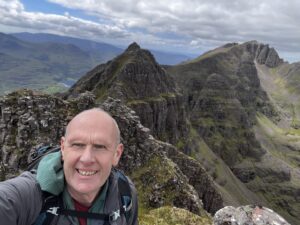
“I’m 62 years old and, until 2022, I’d always considered myself a very healthy person. I’ve spent my life being busy, both through my job in IT for a pharmaceutical company and through outdoor activities.
I’m a keen long-distance runner, climber and hiker. Being active has always been a huge part of my life, so I never expected that pancreatitis would become such a significant part of my story.”
Can you tell us about your first experience with pancreatitis? What symptoms did you have?
“It came on very suddenly. I woke up in the early hours of the morning with severe abdominal pain, nausea and sickness. The pain was unlike anything I’d ever experienced.
I went to A&E later that day. I was given painkillers, but it was clear that this wasn’t going to be something I would recover from quickly.
After around a day and a half, I was moved onto a ward where they carried out further investigations, including a CT scan. My blood tests had already shown that my lipase levels were extremely high, and the CT scan confirmed that I had necrotising pancreatitis, with what was described as a ductal blowout. Fluid had leaked out of my pancreas and collected around it.
I spent around a month in hospital in total, split roughly equally between Warrington and Liverpool hospitals. A consultant explained the possibility of having stents inserted and undergoing several procedures to drain the fluid.
Just before my first planned procedure, they carried out another scan and discovered that one of the largest pseudocysts had actually reduced in size. I didn’t need the drainage procedure after all.”

What was your recovery like after your first attack?
“I went home thinking I could start getting back to normal, but I was amazed by how fatigued I was. It was a real shock because I’d gone from being someone who regularly ran long distances to struggling with a short walk.
Gradually, I started building my strength back up, and after around three or four months, I was able to return to work.
The doctors had also concluded that gallstones were the likely cause of my pancreatitis. In early 2023, I had my gallbladder removed. When it was examined, they found that it was diseased and contained sludge and stones.
Towards the end of 2023, I became unwell again. This time, the symptoms felt different. My blood tests didn’t look particularly concerning, although my lipase was slightly raised. My CT scan revealed fluid in the tail of my pancreas.”

How did your condition turn into chronic pancreatitis?
“I was referred back to the specialists in Liverpool. The investigations showed that fluid was persistently collecting in my pancreas and that the tissue in the tail of the pancreas was essentially dead. One of the theories was that a fistula had formed.
By this stage, I was experiencing frequent flare-ups of chronic pancreatitis, sometimes every ten days or even more often. It became a really difficult cycle to live with.
My consultant explained that I had two options: I could continue living with the symptoms, or I could have an operation to remove the tail of my pancreas.
For me, it was a fairly straightforward decision. I simply couldn’t carry on living like that.”
Can you tell us about the surgery you underwent?
“I had the operation just before Christmas in 2024. During the surgey, they discovered that the damage from my original pancreatitis attack was more extensive than expected. They needed to remove the tail of my pancreas, my spleen and a section of my colon.
When the tissue was sent away for histology, the results confirmed that there had been a fistula between my pancreas and colon.
It was a major operation and I spent around three weeks in hospital.
In July 2025, I developed another episode of severe abdominal pain. The doctors concluded that I had a bowel obstruction, probably caused by scar tissue from my previous surgery. I needed another operation.
The surgeons performed a procedure called adhesiolysis, which involves cutting through scar tissue and freeing up the tissues and organs that have become stuck together.
Once again, I was back at square one with my fitness and had to rebuild my strength from scratch.”
How has pancreatitis affected your ability to stay active?
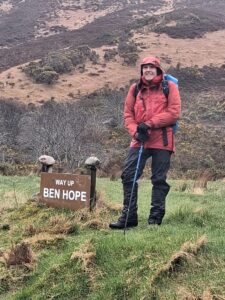
“When I say I enjoy running, I mean running for hours. I also love climbing, hiking and backpacking. These activities require a lot of stamina and physical strength, and pancreatitis has repeatedly taken that away from me.
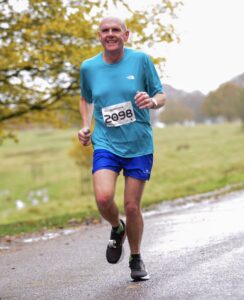
After my surgery in July 2025, I slowly worked my way back towards running. In March 2026, I managed to complete 44 kilometres in an event. I was really pleased with that achievement, particularly after everything I’d been through.
However, in May 2026, I noticed a lump on my abdomen, which I suspected was a hernia. I underwent hernia repair surgery in August 2026. The surgeon used a technique called component separation, which involves releasing the abdominal muscles to help close the hernia. I’m now back in recovery and have recently started doing a little running again.”
How are you now?
“I’ve experienced anaemia, which may have been related to the blood transfusions I received during my first major operation. However, there’s also a possibility that malabsorption has played a part. I’m hoping this has now returned to normal.
I’ve also developed osteoporosis, which is something I understand is likely to be linked to malabsorption associated with chronic pancreatitis.
It’s another example of how pancreatitis can have consequences beyond the immediate pain and digestive symptoms. There can be longer-term effects that you might not initially associate with the condition.”
What have you learnt about managing recovery?
“One of the biggest things I’ve learnt is not to set unrealistic expectations for recovery.
Even when you’re fit and healthy, your body still needs time to heal. You can’t force it.
I’ve also realised that doing too much can set me back. I recently went away to the Lake District for a couple of days of walking and found myself incredibly tired afterwards.
You have to listen to your body. It’s frustrating when you’re used to being active, but sometimes you just need to stop and let yourself recover.”
What would you like other people to understand about pancreatitis?
“There’s a lot of negativity and misunderstanding around the condition, and I think people can automatically associate it with heavy drinking.
I also think there’s a lack of understanding about just how debilitating chronic pancreatitis can be. The symptoms might sound relatively low-level to someone who hasn’t experienced them, but they can completely disrupt your life.
My appetite was also significantly affected. Sometimes, the only thing I could manage was something simple like toast and jam. It’s taken until recently to get back to around my ideal weight.
Pain, fatigue, digestive problems and nutritional difficulties can have a huge impact on someone’s ability to work, exercise and live their everyday life. Just because something isn’t immediately visible doesn’t mean it isn’t having a significant effect.”
What motivated you to join the Guts UK Expert by Experience (EBE) panel?
“There’s a lot of negativity and misunderstanding around the condition, and I think people can automatically associate it with heavy drinking.
I also think there’s a lack of understanding about just how debilitating chronic pancreatitis can be. The symptoms might sound relatively low-level to someone who hasn’t experienced them, but they can completely disrupt your life.
My appetite was also significantly affected. Sometimes, the only thing I could manage was something simple like toast and jam. It’s taken until recently to get back to around my ideal weight.
Pain, fatigue, digestive problems and nutritional difficulties can have a huge impact on someone’s ability to work, exercise and live their everyday life. Just because something isn’t immediately visible doesn’t mean it isn’t having a significant effect.”
About Guts UK
Pancreatitis is a priority area for Guts UK and we fund research into pancreatitis that has the potential to change lives. Our Kranky Panky Pancreatitis Awareness Campaign takes place each November and builds a community of those affected by pancreatitis, comforted in knowing they’re not alone. Our expert information allows those with acute pancreatitis and chronic pancreatitis to take control of their health, and make informed decisions.
Where to find support
Guts UK Helpline
We provide information and guidance for people affected by digestive conditions through our helpline, helping you understand your condition and find further support.
- Telephone: 0300 102 4887
Glossary of medical terms
- Adhesiolysis: A surgical procedure to cut through adhesions (bands of scar tissue) that cause organs or tissues to stick together.
- Adhesions: Areas of scar tissue that can cause organs or tissues in the abdomen to stick together.
- Component separation: A surgical technique that releases layers of abdominal muscle to help close a large hernia.
- CT scan: A non-invasive test that takes detailed pictures of the inside of your body.
- Ductal blowout: Damage to a pancreatic duct that allows fluid from the pancreas to leak into surrounding tissues.
- Fistula: An abnormal connection between two parts of the body that are not normally connected.
- Gallstones: Small, solid lumps that form in bile. They usually cause no symptoms, but can sometimes cause problems.
- Histology: The examination of tissue samples under a microscope to identify abnormalities or disease.
- Lipase: An enzyme produced by the pancreas that helps the body digest fats. Raised levels in the blood can indicate inflammation or damage to the pancreas.
- Malabsorption: When the body does not properly absorb nutrients from food.
- Necrotising pancreatitis: A serious complication of acute pancreatitis that occurs when part of the pancreas dies due to a loss of blood supply.
- Osteoporosis: A condition that weakens bones, making them fragile and more likely to break.
- Pseudocyst: A fluid-filled collection that develops around the pancreas, often following an attack of pancreatitis.