Darren’s story
Grace shares her dad, Darren’s, acute pancreatitis story to raise vital awareness of the condition in his memory.
“It just happened really quickly and we weren’t prepared for it. My dad was perfectly healthy. It can happen to anyone.”
Note: At Guts UK, we want our stories to be easy to understand for everyone. If any medical terms in Darren’s story are unfamiliar, you can find definitions in our medical glossary below.
Tell us a little bit about yourself, and your dad, Darren.
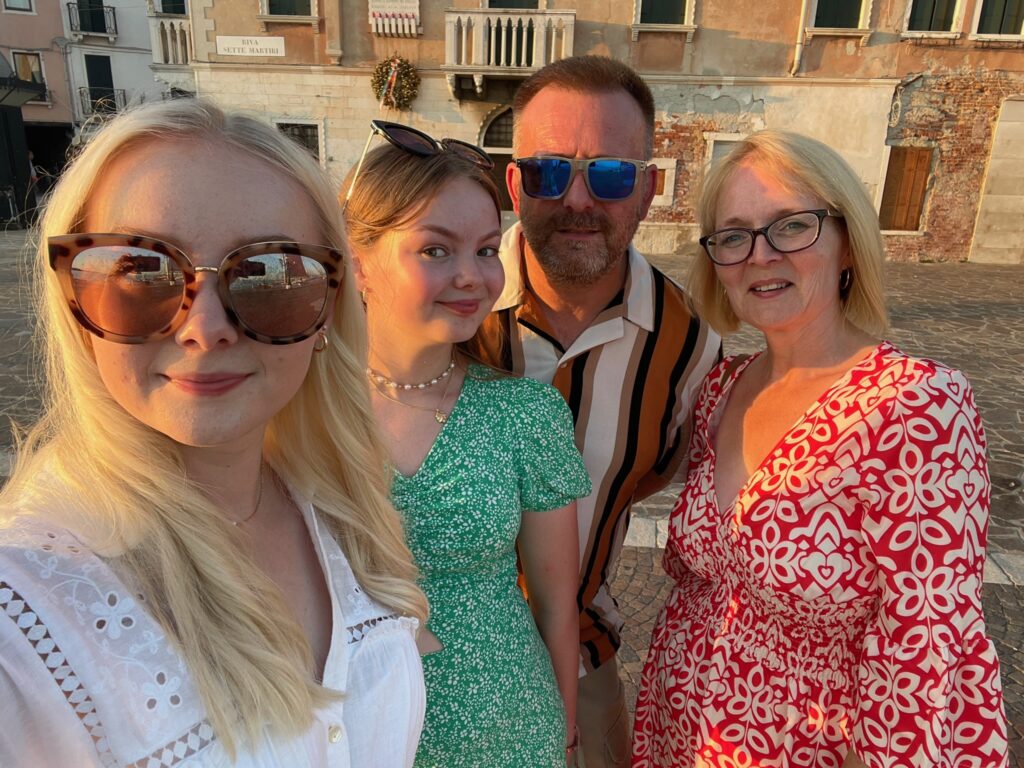
“My name is Grace, I’m 21 and I’m studying to become a primary school teacher. I have a little sister who is 15. We grew up with our mum and dad in our family home in Sheffield. We had a really nice childhood, with lots of great memories and holidays.
My dad loved working and had worked at DPD for over 20 years. He was an account manager and looked after a big team. They all loved him and he loved them.
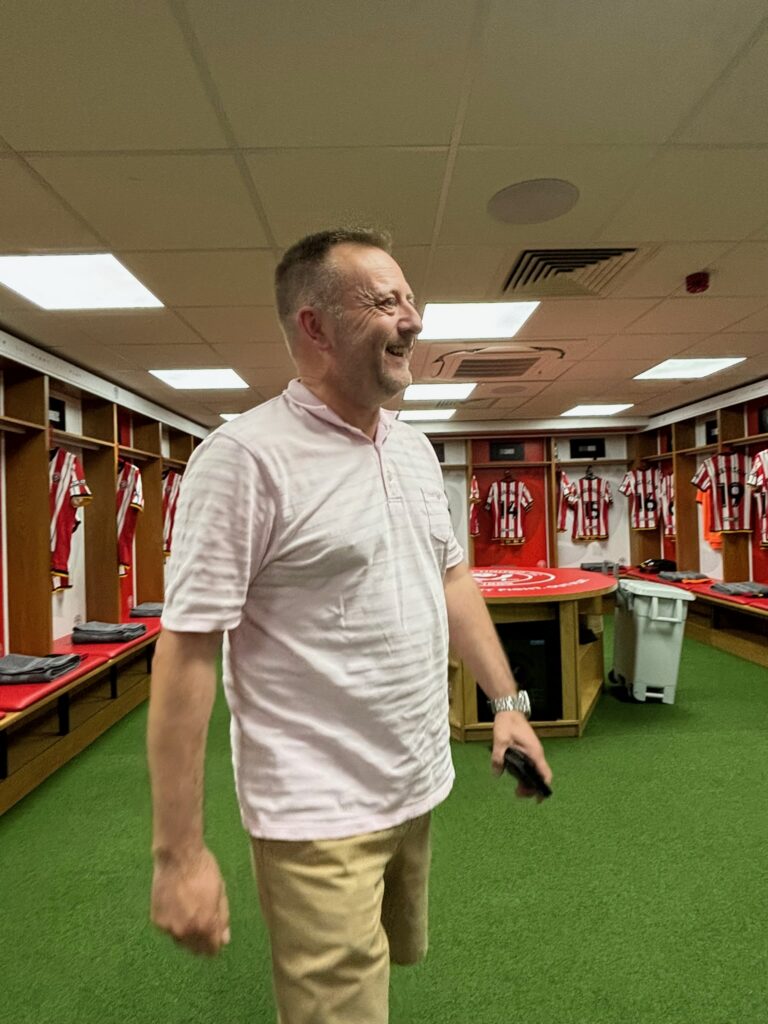
He was a big Sheffield United fan and he got me into football, we used to go to matches together. He was kind, funny and very sarcastic. Everyone always remembers his quick wit. He was just a really nice person.”
When did your dad’s symptoms begin and what were they?
“It was really sudden. It was a Wednesday in March. He’d gone to work and at around lunchtime he got a sharp pain in his stomach.
He was sweating profusely, shaking and had gone really pale. He was driving at the time, but he managed to get to a DPD depot where all his team were. They saw him and said, ‘We need to ring an ambulance.’
He was presenting signs of sepsis, but they said the ambulance would be at least a four-hour wait. One of his work friends kindly took him in his car to A&E. They got him through straight away, so he must have looked really bad.
When I saw him a few hours later, he was not himself at all. He was a completely different person. He couldn’t sit still because he was in that much pain.”
Talk us through your dad being admitted to hospital and his diagnosis.
“They began running tests in A&E because they thought it was sepsis, but they ruled that out. Then they were looking for markers for pancreatitis.
The doctors explained that his pancreas was really inflamed and his body couldn’t deal with it. He was put on the surgical assessment unit that night because they were originally thinking about taking his pancreas out.
Then, while I was there, the doctor told us that my dad’s pancreas was necrotising and that he was becoming very ill. They were worried about it getting really bad and moved him to critical care the day after his admission.”
What treatment did your dad receive for pancreatitis and what were the complications?
“He was in critical care and had lines and tubes fitted, but he was still conscious and able to talk to us. He had a big mask to help him breathe because his pancreas had become so swollen that it was compressing his lungs.
Dad was put into a coma on 6 March, after being admitted on 4 March. We said goodbye before he was put into the coma. He said that he loved us, but obviously we didn’t know that was going to be the last time we spoke to him. Looking back on that now, I wish there were so many things I’d said to him.
We visited dad every day for multiple hours. After a few days they tried to reduce the sedation to ease him into waking up, but it didn’t work and his condition stayed the same for a while.
Dad had his 53rd birthday while he was in the coma. We all went to the hospital to see him. We’d already bought his presents that he couldn’t open, which was really tough. We’ve still got them wrapped up at home now because we can’t bear to open them.
His pancreas continued to be very inflamed, so whilst he was in the coma he was having antibiotics and painkillers pumped through him constantly. He ended up having dialysis because it started to affect his kidneys as he wasn’t passing urine. I think that was the last hope that his condition was going to turnaround.
Dad was in a coma for 15 days. We were told there was nothing more they could do and they would keep his life support on for one more day to see if there was any improvement overnight. The next morning, at 5am, we got a phone call saying we needed to come in straight away to say goodbye because he was getting worse and they needed to turn his life support off.
It just didn’t seem real. You never think that’s going to happen to you. I can’t even put into words how it makes you feel.
Dad died of acute necrotising pancreatitis and multiple organ failure on March 21 2026.”
What do you wish others knew about pancreatitis?
“It just happened really quickly and we weren’t prepared for it. My dad was perfectly healthy. It can happen to anyone.
I want there to be more awareness of the illness and more understanding of the treatment. Even the doctors in intensive care didn’t really know what to do. They were faced with this problem that they’d seen, but not to this extent very often, and it was scary that they didn’t know what to do.
It’s crazy to me that there’s treatment for all these other things, but there isn’t for this. It’s really upsetting because it might have been prevented if there was more research into it.”
Why are you sharing your story with Guts UK?
“While he was in the coma, I was googling pancreatitis because we didn’t know much about it. I found Guts UK and read the information about pancreatitis. I read that you were the only charity in the UK that does research into it.
I knew straight away that I wanted to do something to raise awareness because it’s awful for anyone to go through, but if you’re more prepared for it, I think it would be easier.”
Tell us about your plans to fundraise for Guts UK.
“At the funeral we did a collection for Guts UK. We made the funeral more of a celebration of life rather than something really sad. Dad’s wake was at Sheffield United football ground, and we had chip butties because they were his favourite. He would have loved that.
We’re also doing the Sheffield Half Marathon in April 2027. We’re wearing Guts UK charity t-shirts, and we’ve set up a GoFundMe.
My dad would be really proud. He always supported anything that me and my sister did for charity, he was always the first to donate.
For anyone thinking about doing a challenge, I’d say throw yourself in the deep end and get started. It’ll all be worth it in the end. If you know you can make a difference and the money goes towards something really helpful, it’s something to be proud of. A half marathon has been on my bucket list anyway, so it’ll be nice to get that ticked off for a good cause.”
Glossary of medical terms
Dialysis: A procedure to remove waste products from your blood if your kidneys are not working properly.
Necrotised pancreas: Inflammation causing part of the pancreas and surrounding tissue to die due to a lack of blood flow.
Sepsis: A life-threatening condition in which the body responds improperly to an infection.
About Guts UK
Pancreatitis is a priority area for Guts UK and we fund research into pancreatitis that has the potential to change lives. Our Kranky Panky Pancreatitis Awareness Campaign takes place each November and builds a community of those affected by pancreatitis, comforted in knowing they’re not alone. Our expert information allows those with acute pancreatitis and chronic pancreatitis to take control of their health, and make informed decisions.