Emily’s story
“Having a serious health condition at a young age has made me much more aware of how easily your independence can change.”
At just 22, Emily experienced a severe episode of necrotising acute pancreatitis caused by gallstones while on holiday, which led to a 29-day hospital stay across three different hospitals. Emily is passionate about raising awareness of acute pancreatitis and using her lived experience to help others. She is also a member of our Guts UK’s Expert by Experience panel, where she hopes to make a difference for people living with digestive conditions.
Note: At Guts UK, we want our stories to be easy to understand for everyone. If any medical terms in Emily’s story are unfamiliar, you can find definitions in our medical glossary below.
Tell us a little about yourself, Emily
“I’m 23 and currently doing a social research degree apprenticeship with Race on the Agenda, alongside the University of Kent. It’s going really well, and I’ve been able to find a degree and an employer that fit with my interests.
I’m also involved in a few other lived-experience roles outside of Guts UK, which I really enjoy. I’ve been a young carer, now young adult carer, for an older sibling”.

Can you describe when your symptoms started and what they were?
“My symptoms started when I was around 16. I began experiencing lower back pain and went to my GP several times to try to get some answers. I had lots of different tests, including tests for coeliac disease, but nothing picked up on the gallstones.
Over time, I also started noticing discomfort after eating. I’d sometimes find myself rubbing just above my stomach, particularly after meals. We just thought certain foods weren’t agreeing with me, and I always assumed it was related to stress.
Gallstones are something that have affected other members of my family. My nan, great-aunt, and an auntie have all had them, although they were much older when they experienced problems. Their symptoms were quite different to mine, with severe pain and vomiting, so for me, it wasn’t something we immediately recognised.
In May last year, when I was 22, everything came to a head with one very severe attack.”
Talk us through your journey with acute pancreatitis and diagnosis
“We’d gone to Sorrento to celebrate my auntie’s 50th birthday, and it was a really lovely family holiday.

The day before the attack, I’d started feeling really sick after a boat trip. I felt better later that evening, but the following morning I woke up feeling awful. I thought I’d just sit out the day while everyone else went shopping. However, by the time my family had reached the town, I was in so much pain that I had to ask them to come back.
By the time the ambulance arrived, I remember feeling quite numb, apart from my hands, which felt twitchy.
Once at the hospital, blood tests indicated that something was wrong with my pancreas. We were told I would need to stay in hospital for at least six days, which was difficult news as I was supposed to fly home the following day.
I ended up spending around 29 days in Italy, across three different hospitals. My mum was repeatedly told that I wasn’t being truthful about what had happened and that my illness was alcohol-related. Eventually, we made the decision to leave and contact our travel insurance.
I was transferred to two other hospitals, but unfortunately, both experiences weren’t great. It wasn’t until a doctor and nurse travelled over from the UK on behalf of our travel insurance to assess me as fit to fly and support with the journey home, that they explained that they believed a gallstone had travelled and caused the pancreatitis before passing through. This was the first time someone had properly explained what they thought had happened.
I received that confirmation on 28 May, the day before I flew home.
I’d been hoping to see a sunset throughout the holiday, and I finally got one on the flight home, looking out over the mountains. It was a small moment, but it meant a lot after everything we’d been through.

We arrived back at London Heathrow and were driven two hours back to hospital near my home. I was initially going to be discharged the following day, until I mentioned my transfer papers and that I’d been diagnosed with necrotising pancreatitis. The doctor hadn’t realised how serious my condition was and quickly arranged for me to stay longer and have further scans.”
How did your life change after your diagnosis?
“It was a huge adjustment, both physically and emotionally.
When I first came home, I was only eating things like eggs and soup. After not being able to eat properly for so long, I was honestly just grateful to be eating anything at all!
I also found it quite challenging to understand how to take Pancreatic Enzyme Replacement Therapy (PERT) properly. I managed to get an appointment with a dietitian, who explained how PERT worked and helped me understand how to manage my diet. My Dad took me straight to get a Jamaican patty!
I also had to think about my future and what I wanted to achieve. I’d secured an internship through 10,000 Black Interns, being placed at UCAS, which was due to start in July. I was determined to make it happen, although I did give myself the month of June to rest and recover. And secured my apprenticeship messaging the CEO of my current organisation the day I had left hospital, waiting on confirmation all the way through to my last week on my internship.
I was told I couldn’t risk drinking alcohol or smoking, and initially, I found that difficult because it felt like the decision to choose that for myself had been taken away from me. With time, I came to term with this, it was a choice that would let me live a heathier life no matter what the reason behind stopping was, and meeting other young people who didn’t drink or smoke by choice helped me realise that you can still have fun without those things anyway.
Having a serious health condition at a young age has made me much more aware of how easily your independence can change and how important it is to have people around you who understand.”
How are you now?
“I’m doing much better, although it’s been a bit of a journey.
I was referred for surgery to have my gallbladder removed. The surgeon explained that I had a significant amount of pancreatic fluid that had leaked, and was a risk being so close to the bile duct, and they wanted to give it time to see whether it could settle before operating.
I was told that the tail of my pancreas had died, but that the rest of my pancreas could continue to function normally. Given my age, the outlook was encouraging, which was reassuring to hear.
I eventually had my gallbladder removed on 31 October last year. The surgery went really well, and my recovery was much better than I’d expected.
Things were going well until around March this year, when I started experiencing further episodes of sickness and pain. I had several trips to A&E, including a period when I was going in and out of hospital almost every day.
After seeing a consultant and having further discussions, I was told that they thought I had developed Cyclical Vomiting Syndrome (CVS). I’ve since been given medication, which seems to be helping. Luckily no more sickness and A&E visits since, but I do still experience back pain and shooting pains.
Alongside all of this, I’ve continued with my studies, work and lived-experience roles. I’m also moving into my own place, which is a really exciting new chapter for me.
It’s been a lot to navigate, but I’m proud of what I’ve managed to achieve.”
What is one thing you wish people knew about acute pancreatitis?
“I think one of the biggest things is how serious it can be, particularly when it becomes severe. Before experiencing it myself, I didn’t even know about pancreatitis, let alone understand the impact it could have.
I also think people need to understand how isolating it can feel, particularly when you’re young. You can suddenly find yourself unable to do things that other people your age take for granted, and it can be difficult to find people who understand what you’re going through.
Connecting with other people who have experienced pancreatitis has made a huge difference to me. I’ve met people through Guts UK and social media who have had similar experiences.”
Why are you sharing your story?
“When you’re going through something like this, it can make you feel as though you’ve lost your voice, particularly when you’re having to rely on other people or struggle to get the right information and support.
For me, having that lived experience has made me much more passionate about advocating for others. I have always wanted to for many reasons from where I grew up to different aspects of my background, but health is what has pushed me into using my voice.
I’ve learnt that being able to speak about your experience can be a real strength. There are people who might not be able to get into the room or speak up for themselves, and I want to help make sure their experiences are represented and heard.
If sharing my story helps someone feel less alone, understand their condition a little better or feel more confident speaking up about their care, then it’s worth doing.”
Why do you support Guts UK charity?
“Pancreatitis gets so little attention, and Guts UK are the only charity in the UK funding dedicated research into it. Without them, that research simply wouldn’t be happening here. But it’s not just the science. From the moment I first came across the charity, it has always been so clear how much they care about patients’ voices, from letting patients shape the research agenda to sharing real stories through Kranky Panky, and the awareness around many other gut conditions.
Finding other people with lived experience has made such a difference to me. It’s been reassuring to meet people who understand some of the challenges that come with digestive conditions, even when their individual experiences and even their diagnosis are different.
I also really enjoy being involved in discussions around research and grant assessments. It’s interesting to hear how people consider whether research could benefit not just one particular condition, but other gut conditions too.
Medical knowledge is essential, but it’s equally important to understand what these conditions actually mean for people in their everyday lives.
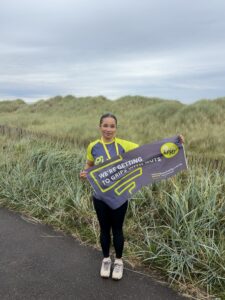
Since joining Guts UK, I’ve also connected with other people who are raising awareness and fundraising for pancreatitis. I’ve taken part in a 20-mile charity walk with my partner. And it’s more than raising awareness of pancreatitis. It’s about making sure that people living with digestive conditions have a voice and that their experiences help shape the future of research and care.”
About Guts UK
Pancreatitis is a priority area for Guts UK and we fund research into pancreatitis that has the potential to change lives. Our Kranky Panky Pancreatitis Awareness Campaign takes place each November and builds a community of those affected by pancreatitis, comforted in knowing they’re not alone. Our expert information allows those with acute pancreatitis and chronic pancreatitis to take control of their health, and make informed decisions.
Where to find support
Guts UK Helpline
We provide information and guidance for people affected by digestive conditions through our helpline, helping you understand your condition and find further support.
- Telephone: 0300 102 4887
Glossary of medical terms
- Necrotising pancreatitis: A serious complication of acute pancreatitis that occurs when part of the pancreas dies due to a loss of blood supply.
- Pancreatic Enzyme Replacement Therapy (PERT): Treatment using capsules containing digestive enzymes to help the body break down food when the pancreas cannot produce enough enzymes.
- Cyclical Vomiting Syndrome (CVS): A rare condition that causes repeated episodes of severe nausea and vomiting, followed by periods of feeling well.