Llinos’ story
"You often read stories about pancreatitis without happy endings or continuous struggles. I want to share a positive message. My body is stronger now, and I’m more determined to look after myself."
Note: At Guts UK, we want our stories to be easy to understand for everyone. If any medical terms in Llinos’ story are unfamiliar, you can find definitions in our medical glossary below.
Tell us a little about yourself
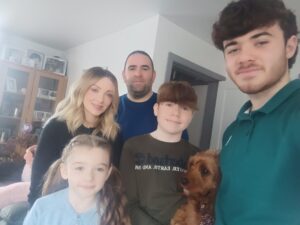
“I’m Llinos, I’m 45 and a mum of three from beautiful Anglesey, North Wales. I run my own facialist and skincare business from home. When I’m not working, I love family time, walking my dog Bella and going out for coffee.”
Can you describe when your symptoms started and what they were?
“I was around 26 when I started getting gallbladder attacks. They’d come and go, so I dismissed them as heartburn or wind. Now and again, the pain was so bad I nearly called an ambulance, but it would pass. Once, an ambulance crew even said it was just heartburn.
Then came the severe attack after a Halloween party in 2022. We went on holiday to South Wales, where I was vomiting bile constantly and couldn’t eat. I had a sharp pain in my right side radiating to my back. I just kept thinking it would clear up.”
Talk us through your journey with acute pancreatitis
“After ringing my GP to recheck my old MRI scans, he found gallstones and after hearing my symptoms, told me to get to hospital immediately. We were in South Wales, so my husband drove us straight home to A&E.
While waiting, it felt like an explosion in my abdomen, and I screamed for help. The ultrasound showed fluid everywhere. Given my history with stage one bowel cancer, that fear has always been present. When doctors said I had severe acute necrotising pancreatitis, I was in shock, but it answered years of unexplained pain.”
What happened after you were diagnosed?
“I was in intensive care and developed sepsis. While there, I needed a central line in my neck for medication, antibiotics, and multiple blood transfusions. There were pseudocysts everywhere around my pancreas. My local hospital was talking with a specialist hospital, waiting for things to settle down so they could transfer me.
I was in severe pain, felt sick, and had so much fluid that I could barely move. I weighed 15 stone due to fluid retention (my usual weight is 8½ stone). I needed help with toileting and washing. I felt I had lost all my dignity.
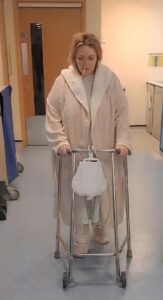
I could not tolerate feeding tubes, so I received nutrition through total parenteral nutrition (TPN). I became so weak that I needed physiotherapy to learn to walk again. I started eating small amounts but soon began feeling terribly sick again. I vomited every day and could barely keep anything down.”
Are there any hospital experiences that you particularly remember?
“Just before Christmas, I was transferred to the specialist hospital. My husband, mum, and kids stayed nearby to be close. I honestly thought I’d be home quickly, but the doctors explained it would take weeks, possibly months of treatment. I had weekly gastroscopies to drain the pseudocysts, followed by CT scans. I also had two abdominal drains fitted to reach difficult cysts.
On Christmas morning, having a feeding tube fitted felt like rock bottom. It was horrific because I couldn’t tolerate the tubes. They tried TPN again as I couldn’t keep anything down.
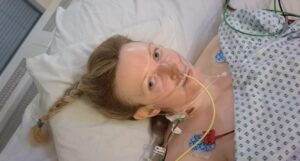
By early March, my appetite slowly returned and I felt I’d turned a corner. I spent four and a half months in hospital. I had my gallbladder removed in July 2023.“
How did this impact you physically when you came home?
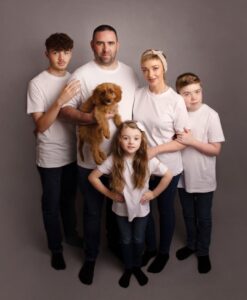
“I was so weak my husband had to carry me upstairs, and I couldn’t get out of the bath. Eating was terrifying because I feared triggering another attack. I dropped to 7 stone 10 and spent three years struggling to gain weight. One thing I really didn’t expect was that about 90% of my hair fell out, so I cut it into a tiny pixie.“
Can you tell us about the mental health impact?
“I was terrified for myself and my family, especially as I am a carer for my son, who has cystic fibrosis (CF). The psychological impact is a massive trauma to go through. I got help from a psychologist and was diagnosed with post-traumatic stress disorder (PTSD). Follow-up tests always cause anxiety.
Spending months in hospital leaves you grateful to be alive, but my life will never feel completely carefree again. In my mind, intensive care was terrifying because medication caused hallucinations where I saw monsters everywhere. My psychologist took me back there a year later, helping me see it was just a hospital room. That follow-up mental health support is so important.”
What is one thing you wish people knew about pancreatitis?
“I didn’t think I could’ve had pancreatitis as I didn’t fit the criteria like alcohol use or having an autoimmune condition. Hearing that part of my pancreas was dying was horrifying. They put me on pancreatic enzyme replacement therapy (PERT) for life, which is a constant reminder of what I’ve been through. They told me, “You’ll never be quite the same again.” At times, I felt I was never going to get better.“
How are you doing now?
“I try hard to look after myself now. I was told never to drink alcohol again, even though that wasn’t what caused it. You miss little things during holidays, but it’s the smallest price to pay for peace of mind.
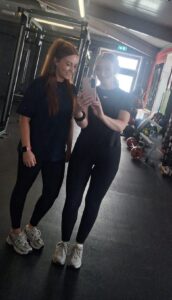
It’s been nearly four years since my diagnosis and took two and a half years of recovery. I’ve taken up weight training and recovered well. I get tired easily, but my body is stronger because I’m determined to look after it.”
What would be your advice for others?
“Advocate for yourself. When my sister developed the exact same symptoms, they were going to send her home on a waiting list for gallbladder removal. I spoke to one of my doctors and said, “If it happened to me, it could happen to her.” He kept my sister in and removed her gallbladder. If you think something is wrong, you need to advocate for yourself.

One mistake I made was going on forums and scaring myself, seeing what other people couldn’t tolerate and avoiding those foods unnecessarily. Get advice from a dietitian instead. Look after yourself, listen to your body, and seek professional help.”
Why are you sharing your story?
“You often read stories about pancreatitis without happy endings or continuous struggles. I want to share a positive message. My body is stronger now, and I’m more determined to look after myself and do things like weight training.”
Why do you support Guts UK?
“Guts UK is an amazing charity that raises awareness for digestive conditions. Campaigns like Kranky Panky are so important because pancreatitis isn’t something you hear about. Many people have gallbladder issues, but few realise gallstones can actually trigger severe pancreatitis. We need to talk about it more.”
Glossary of medical terms
- Central line (central venous catheter): a long, flexible tube inserted into a large vein in the neck, chest, or arm to deliver medications and other treatments.
- CT scan: a non-invasive test that takes detailed pictures of the inside of your body.
- Cystic fibrosis (CF): a serious, inherited genetic disorder that causes the body to produce abnormally thick and sticky mucus.
- Gastroscopy: a thin, flexible tube called a gastroscope is passed gently through the mouth and down into the stomach to inspect the lining of your oesophagus, stomach, and duodenum.
- Necrotising acute pancreatitis: A serious complication of acute pancreatitis that occurs when part of the pancreas dies due to a loss of blood supply to the pancreas.
- Post-traumatic stress disorder (PTSD): a mental health condition that can develop after you experience or witness a terrifying, shocking, or dangerous event.
- Pseudocysts: a fluid-filled cavity.
- Sepsis: A life-threatening condition in which the body responds improperly to an infection.
- Total parenteral nutrition (TPN): Nutrition administered via a thin tube into a large vein, directly into the bloodstream, to bypass the digestive tract.
About Guts UK
Pancreatitis is a priority area for Guts UK and we fund research into pancreatitis that has the potential to change lives. Our Kranky Panky Pancreatitis Awareness Campaign takes place each November and builds a community of those affected by pancreatitis, comforted in knowing they’re not alone. Our expert information allows those with acute pancreatitis and chronic pancreatitis to take control of their health, and make informed decisions.