Lucie’s story
“I knew that I wanted to put my story forward for the Kranky Panky campaign because I went through absolute hell in hospital. But today I am living a completely normal life."
Trigger warning: This content contains themes that readers may find distressing.
Note: At Guts UK, we want our stories to be easy to understand for everyone. If any medical terms in Lucie’s story are unfamiliar, you can find definitions in our medical glossary below.
Tell us a bit about yourself
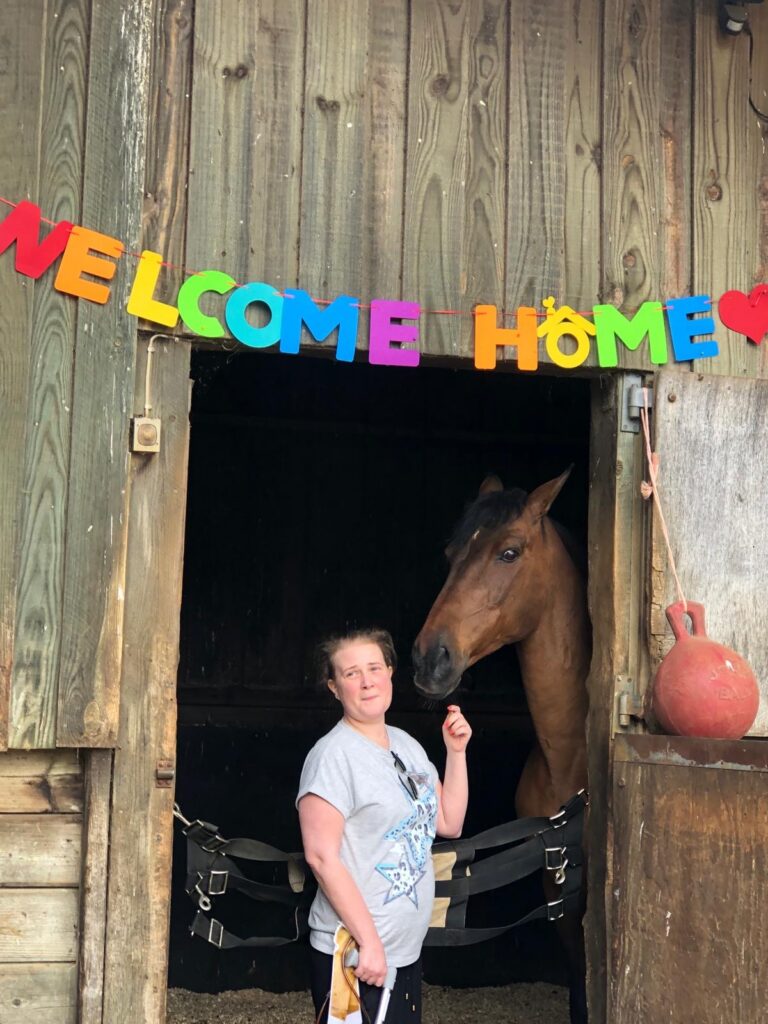
“My name is Lucie, I live in Surrey and I work in tech as an executive assistant. I’ve always been an active gym goer and before I was ill with pancreatitis I enjoyed horse riding and owned my own horse. I’ve got quite a large family, including some family members who live abroad, that I travel to see regularly.”
When did your symptoms of pancreatitis begin and what were they?
“The day before I became ill, I went to the gym in the morning, had a riding lesson after work and then went for dinner with a friend. I woke up at 4am and started being sick. I had no symptoms before that.
I was luckily working from home the next day, but by late morning I was so unwell I had to log off a call mid-meeting. I started being violently sick and thought that maybe I had a bug. As the day went on, I developed a pain in my back that got worse, to the point that I couldn’t sit up or lay down. I was in pain and called 111 but they agreed it was likely a bug and told me to have lots of fluids and rest. By the next evening, I was vomiting blood. I was in so much pain that I called 111 again, realising that I was in and out of consciousness. Every time I tried to stand up, I fainted.
A paramedic arrived and took one look at me before I was blue-lighted to hospital. When I arrived at A & E, I was swarmed by doctors. Luckily my local hospital has a HPB specialist unit because without that I probably wouldn’t have made it”
What happened when you were admitted to hospital?
“Within 24 hours of being admitted, they said, ‘We think you’ve got pancreatitis.’ But it wasn’t confirmed until I went to have a CT scan. I was moved to intensive care within 24 hours because I was in respiratory distress.
I couldn’t breathe because my pancreas was swelling. It made my whole body swell and put pressure on my lungs. At one point, my heart stopped and I collapsed. Luckily there was a nurse with me, and she gave me CPR and resuscitated me.
I was ventilated to support my breathing. They lifted the sedation to see if I could tolerate the tube, so I was completely awake. I tolerated this awful tube down my throat for a week, luckily I was able to be extubated 7 days later with just breathing support.
The doctors explained to me that we just had to wait for the pancreas to settle before they could do anything. Around 5 weeks after being admitted I had a stent put in internally and over the next couple of months I had four drains inserted, guided by CT, into pockets of necrosed pancreas to drain them around my pancreas. The longest one I had was almost 9 months, so I went home with it.”
What complications did you experience?
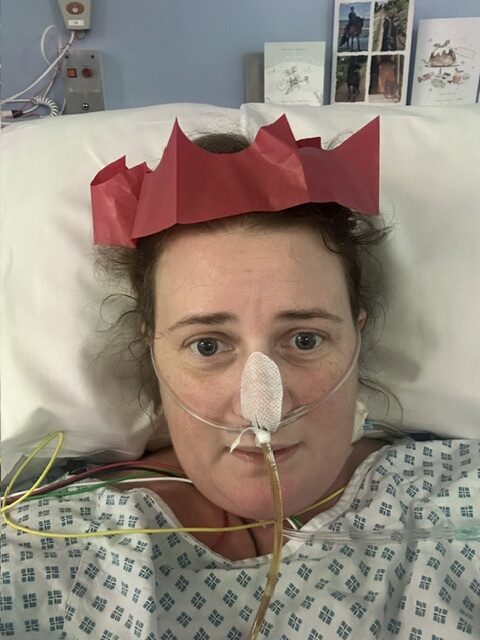
“I caught influenza while I was in hospital. I was already respiratory compromised and for that reason I was put into a medically induced coma. They didn’t think I was going to survive. They called my family to come in to say goodbye. They thought the flu was going to kill me.
I was in a coma for two weeks, but I woke up with a tracheotomy. Having a tracheotomy was one of the worst things I went through as it renders it impossible to speak.
My heart stopped again, I was resuscitated and ended up with an external pacemaker. I had that pacemaker for about two months while I was in hospital.
I still had four drains in the pockets around my pancreas when they were talking about sending me home, but one of the drains started bleeding. They tried to stop it with a guided CT, but overnight I had around six units of blood. They basically said to me, ‘If we don’t find the bleed and operate on you, you’re not going to make it’ so I was rushed down for emergency surgery, which luckily worked and stemmed the blood loss. The official term for what I had was acute haemorrhagic necrotising pancreatitis.
However the emergency surgery caused me to have an incisional hernia, which developed over a few months following my discharge from hospital. When investigated they found that I had 13cm of muscle separation. So, almost a year after getting out of hospital, I went back in and had a full abdominal reconstruction. I was very scared but with the help of my incredible surgeon and therapist I got through it.”
Talk us through your rehabilitation in hospital
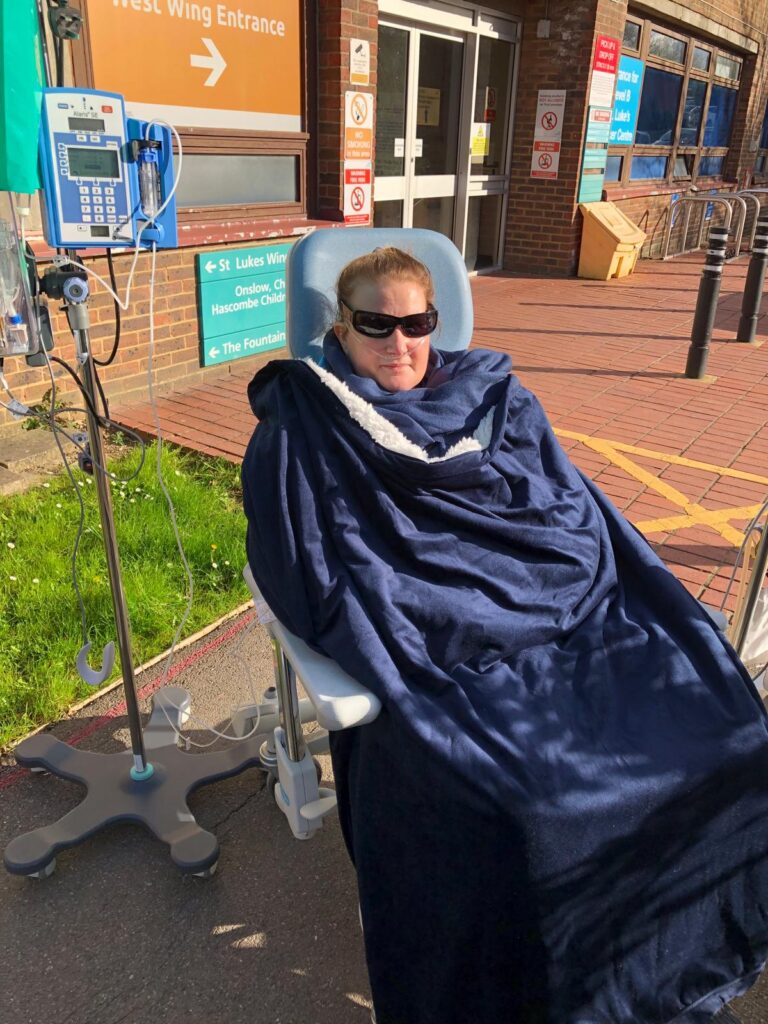
“Because I’d been in a coma then quickly had the abdominal surgery, I hadn’t used any of my muscles, so I had lost any strength to be able to even sit up let alone stand. I remember being hoisted out of bed and having to learn how to do everything all over again, from the beginning. The physios and nurses in intensive care were incredible.
I remember my physio saying to me, ‘Take one more step today than you took yesterday. That’s all I’m ever asking you to do. You can go and rest after but take one more step.’
It was really painful to walk and I was really unsteady. That mentality of ‘one more step’ is what got me through.
I couldn’t eat for a long time and was fed through a PICC line with TPN. When I eventually started eating again, I managed one spoonful of chicken soup that my mum had made me.
When I began eating more normally, they gave me Creon. The dietitian said, ‘You need to take Creon. This will be your life now.’ I take around 30 of the smaller 10,000 tablets a day.
I went to physio every week for a year after coming out of hospital. Now I’m going to a personal trainer because I am so thankful to my body and I want to keep as strong and healthy as possible.”
How are you now and how has life changed?
“After being admitted to hospital in November 2023, I came home in May 2024 and moved in with my mum. I was almost in a rush to get back to life because I felt like it had been stolen from me. I went back to work from home a month later and I wanted to get back on my horse, even though at that time I couldn’t walk upstairs.
I did get back on my horse 6 months after discharge, but it wasn’t long before I decided that it wasn’t right for me to have a horse any longer. My life and perspective on life changed a lot after being so unwell.
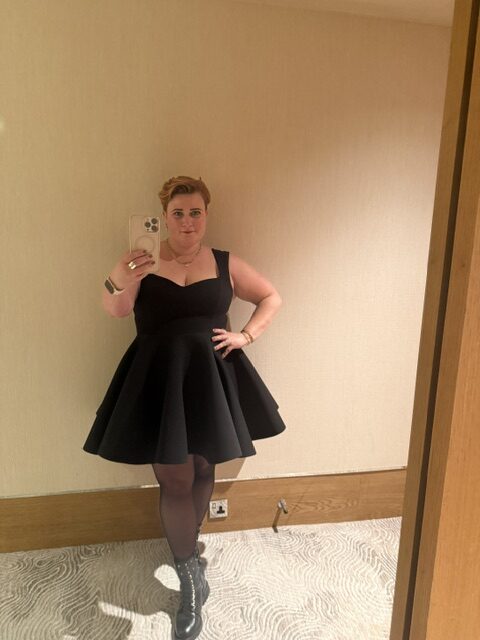
When I had TPN my hair got really thin and fell out, so that summer I bought wigs because I wasn’t ready to cut it all off. About two months later, I went to a hairdresser’s and I said, ‘I can’t, I need to cut my hair.’ It was almost like embracing it. I found a way to claim my identity and claim this ‘new’ person that I’ve become. Today, I still have my pixie cut and unless you know me, you wouldn’t know what I’ve been through. My consultant told me that lots of people get PTSD with what I’ve been through, so I’ve had quite a lot of therapy which has helped.
I am still under close observation from my consultant and see him annually. I also have regular blood tests. Luckily, I’m not in pain day-to-day. I get tired, I would say that’s my biggest ‘thing’. But I listen to my body and rest when I need to.
I’m lucky I’m still here. I’m lucky I can live a full life.”
Why are you sharing your story with Guts UK?
“The dietitian who worked with my consultant told me about Guts UK when I was still in hospital. I remember saying when I first came out, ‘What can I do to raise awareness or raise money?’ And she said Guts UK was the charity that really did something for pancreatitis. That’s how we got talking about it.
When you’re in the depths of despair and you think, ‘Am I ever going to get better?’, it’s nice to read positive stories too.
For me, if I can help others then it’s totally worth it. I’m able to give something back.”
Glossary of medical terms
Creon: A medication which helps people with pancreatic exocrine insufficiency caused by conditions such as pancreatitis digest food properly.
CT Scan: A non-invasive test that takes detailed pictures of the inside of your body.
Hernia: An incisional hernia happens when an abdominal wall wound from a previous operation does not heal completely, allowing tissue or bowel to push through the weak spot causing a visible bulge.
Necrosed pancreas: Inflammation causing part of the pancreas and surrounding tissue to die due to a lack of blood flow.
Pacemaker: A temporary medical device that sends electrical impulses to the heart muscle to keep it beating at a normal rate.
Total parenteral nutrition (TPN): Nutrition administered via a thin tube into a large vein, directly into the bloodstream, to bypass the digestive tract.
Tracheotomy: A surgical procedure that creates an opening in the front of the neck and into the windpipe, or trachea, to provide a direct airway for breathing.
Ventilation: Air goes through a tube placed directly into your windpipe, either through your mouth (intubation) or a small cut in your neck (tracheostomy).
HPB specialist unit – Hepato-Pancreato-Biliary operates as the designated tertiary surgical centre for complex liver, gallbladder, and pancreatic conditions.
About Guts UK
Pancreatitis is a priority area for Guts UK and we fund research into pancreatitis that has the potential to change lives. Our Kranky Panky Pancreatitis Awareness Campaign takes place each November and builds a community of those affected by pancreatitis, comforted in knowing they’re not alone. Our expert information allows those with acute pancreatitis and chronic pancreatitis to take control of their health, and make informed decisions.
We believe it’s time the UK got to grips with guts. Your support takes us one step closer. Donate today.