Keith’s story
“Acute pancreatitis completely turned my world upside down. At 34 years old, I thought I’d found the man that I’d grow old with, not trying to find a way to live without him.”
Keith’s story is told by his fiancée, Victoria.
Tell us a bit about Keith
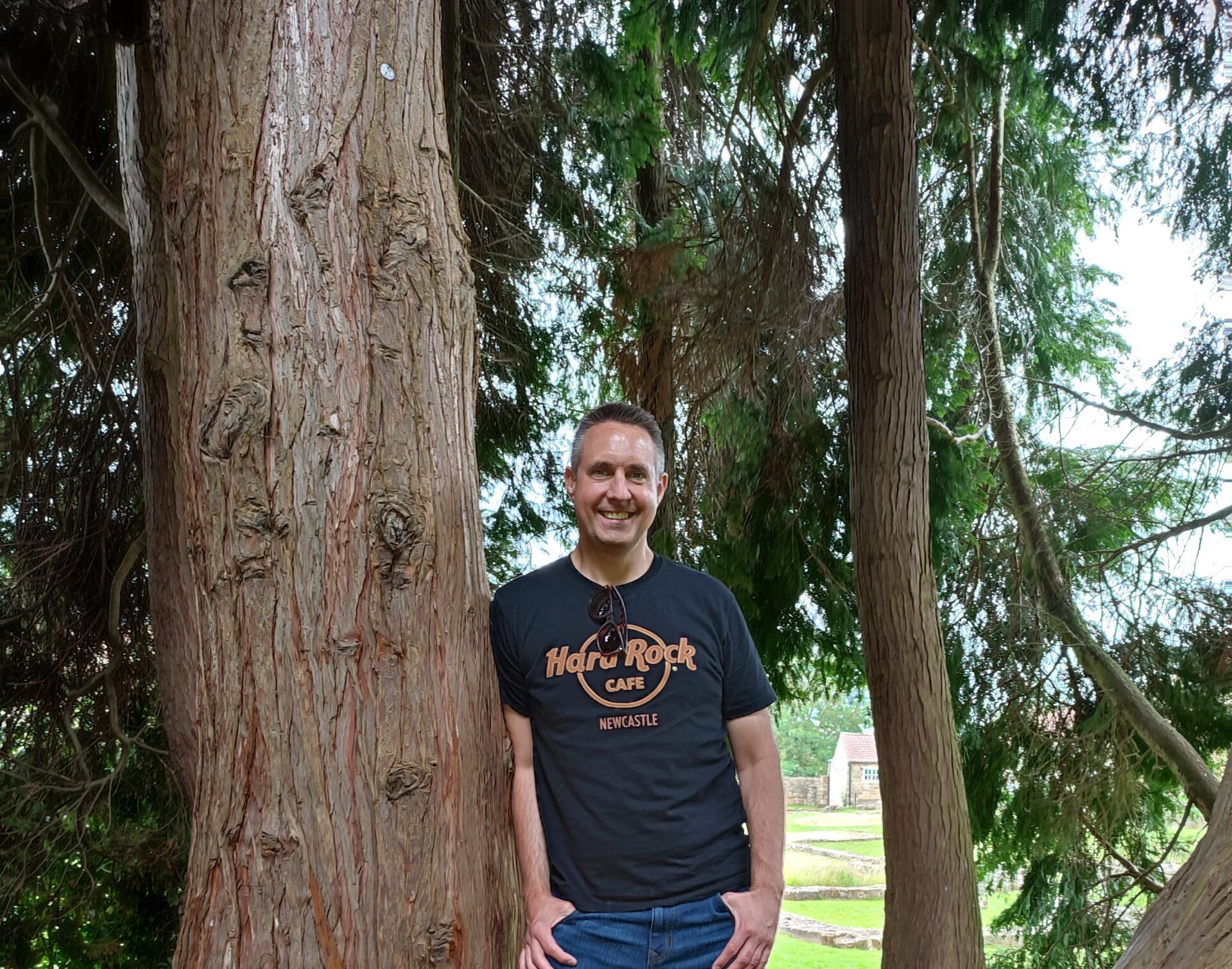
“Keith was 46 and lived in Stockton-on-Tees. He enjoyed being outdoors and went to the gym multiple times a week. He loved travelling, often telling funny stories about his trips. But he was most passionate about his work. Keith trained as a teacher and worked for the NHS within forensic mental health services. He was dedicated to his patients and wanted to drive change. He would always prioritise everyone else above himself.”
Can you tell us about you and Keith?
“We first met whilst working for the NHS in February 2009 and kissed at that year’s Christmas party. Keith asked me on a date, but I declined, although we stayed in touch over the years. Then, in December 2019, we had our first date. As things progressed, we both sold our own homes and moved in together. We loved walking and cooking together, and in the evenings, we’d listen to music and chat all night. Keith proposed to me on Christmas Day in 2021, whilst we waited for our first home together to complete. Everything was falling into place, and we began trying to start a family.

In March 2022, just days away from moving into our new home, Keith became unwell and was admitted to hospital. Despite this, he was incredibly excited for what our future would bring. He even tried to sign the completion paperwork for our home whilst in hospital!”
When did Keith’s symptoms start?
“Keith started to experience abdominal pain in the middle of the night. I found him pacing backwards and forwards in the spare room, doubled over in pain and sweating. Keith assured me these were symptoms of his irritable bowel syndrome (IBS), something he’d been diagnosed with years before. I wanted to phone an ambulance, but Keith didn’t. We tried heat packs and cold packs, and his pain eventually subsided.
Despite barely sleeping, Keith wanted to go to work – typical of his dedication to his patients. I convinced him he needed to phone in sick and call his GP, but there were no appointments. Keith told the receptionist he’d had IBS pain the night before, and she told him to call back the following day. I encouraged him to tell her about the severity of the pain and she overheard me. The receptionist spoke to a GP, and told us that if the pain reoccurred, to phone for an ambulance immediately.
This became a reality when Keith’s pain returned an hour later. Despite the ambulance crew’s initial hesitation, I urged them to take him to hospital, and they gave him morphine for his pain.”
What happened at the hospital?
“After being admitted to hospital, Keith was diagnosed with acute pancreatitis. This came after blood tests and a scan, and the news that he’d possibly need emergency surgery to remove his gallbladder after an ultrasound confirmed gallstones. Another scan confirmed there were no gallstones blocking the duct that drains the pancreas.
Due to Covid-19 restrictions, I was only allowed to visit Keith for an hour each day and it was difficult to find anyone to talk to. I felt helpless, relying on messages being passed from Keith, but also receiving conflicting information. This caused confusion down the line. Keith experienced excruciating pain and stomach cramps, heartburn and acid reflux, and eventually showed signs of jaundice. As his condition worsened, he found it hard to breathe, relying on oxygen through a mask.”
Did he receive any treatment?
“He had a CT scan, ultrasound, MRI and X-rays. Doctors prescribed pain relief, including morphine, and an IV drip with fluids to help support Keith’s body.”
How did you both feel at this time?
“Terrified, but hopeful. We were convinced Keith was in the right place with the correct treatment. Even when he was in ICU, doctors reaffirmed he was young, fit and healthy, and was likely to recover. We had no idea that there was no treatment for acute pancreatitis, or how important the pancreas is. Desperate to see him, I’d count down the hours until I could visit him again, frustrated with the limitations.
As his condition worsened, Keith found it increasingly difficult to communicate, and eventually had a tracheotomy (an opening in the neck into the windpipe) to help him breathe. Even then, he summoned the energy to write me a note telling me he loved me. I was exhausted and incredibly worried but always tried to remain upbeat for him and others.”
What happened when Keith’s condition began to deteriorate?
“Keith went from being able to walk to the hospital shop, to being given oxygen to help him breathe. Prior to his admission to ICU, I spent hours with him cleaning him up as he continually hiccupped and vomited. The next day, I arrived just as the ICU team rushed onto the ward and drew the curtain around him. Keith was then transferred to ICU.
What followed is so hard to think about. I relayed information to Keith, encouraging him to keep his oxygen mask on, and tried to make jokes to lighten the mood as he had more x-rays. He had to have a Continuous Positive Airway Pressure hood to help keep his airways open. After a while of being in the waiting room, a consultant explained to me that they’d had to insert a tube down his airway to help him breathe, but his heart stopped. Thankfully, they brought him back.
The next seven days were a rollercoaster. Anyone who’s been with a loved one in ICU will know that you don’t sleep or eat. You wait by the phone and the bed, and you pray that they pull through. Numerous times, I was told that Keith might not make it. I spent nights begging him to just stay with me. Keith rallied so many times, and I remember a consultant saying to me “we’ve got him, we’ve got him back.”
Keith died on 7 April 2022, just two weeks after being admitted to hospital. He fought so hard to stay with us, but his body had gone through so much and couldn’t cope anymore.”
How has pancreatitis impacted your life?
“Acute pancreatitis completely turned my world upside down. I thought I’d found the man that I’d grow old with, not trying to find a way to live without him. Determined to keep going, I tried to stay connected to people, joining a young widow’s support group, but I couldn’t sustain it. Five months after Keith died, I ended up in and out hospital in excruciating pain with gallstones. My liver function was impacted each time a stone escaped my gallbladder. I had surgery, almost a year to the date that we lost Keith. Some said that Keith protected me, because I might not have sought help without knowing what had happened to him.
I was unable to work in my role as a High Intensity Cognitive Behavioural Therapist and, being an unmarried widow, I had no income. I’ve lost many friendships and relationships because of the devastating impact that grief had on me. Three years on and I still experience flashbacks. I’m paying for therapy to help get on top of this, and I’m finally hopeful that I may one day be able to think of Keith with a smile, rather than think of the trauma of it all.”

Is there anything that would have been helpful for you to know about pancreatitis before this experience?
“I wish I had known how serious it can be, and how important it is to get help fast. I don’t think anything would be different if we’d gotten Keith to hospital sooner, but I wish I’d been prepared. It’s also made me realise how the digestive system is so interlinked, and how important it is to keep returning to your GP if your symptoms continue or worsen.”
Why is it important to you to share Keith’s story?
“After being diagnosed with gallstones myself, I joined an online forum for support. Every day, I see people asking for advice and posting red flag symptoms for the complications of gallstones, including gallstone pancreatitis.
I often signpost people to Guts UK’s website for information about gallstones, acute pancreatitis and bile acid diarrhoea (BAD). Many people I’ve spoken to have tried to manage at home but have gone to hospital on my advice and needed hospital treatment, some with pancreatitis. People are unsure whether to have surgery because of potential complications, so I think it’s important that there’s reliable information out there about the real, life-threatening risk of pancreatitis, so that people can make informed decisions.”
About Guts UK
Pancreatitis is a priority area for Guts UK and we fund research into pancreatitis that has the potential to change lives. Our Kranky Panky Pancreatitis Awareness Campaign takes place each November and builds a community of those affected by pancreatitis, comforted in knowing they’re not alone. Our expert information allows those with acute pancreatitis and chronic pancreatitis to take control of their health, and make informed decisions.
We believe it’s time the UK got to grips with guts. Your support takes us one step closer. Donate today.