Angel’s story
"I feel obligated to share my story as a young adult who developed pancreatitis, to raise awareness about the struggles that young people face when it comes to seeking a diagnosis and feeling heard."
Tell us a bit about yourself
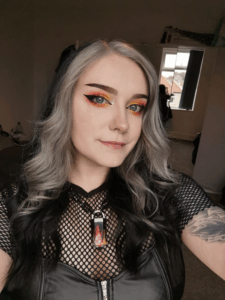
“I’m Angel. I’m 27 years old and I live in Cumbria with my partner, Alex. I am currently studying for an engineering degree while doing an apprenticeship alongside this. My hobbies include walking, going to the gym, drawing and painting.”

When did your symptoms start and what were they?
“In February 2021, when I was 23 years old, I started to experience symptoms, such as pain in my back and upper abdomen, vomiting and excessive sweating. I was losing consciousness, so I went straight to A&E.”
What happened at the hospital?
“During my first admission, I had an ultrasound which initially showed evidence of a burst ovarian cyst. I was admitted to the gynaecology ward and stayed there for four days.
Six days later, the same symptoms returned but felt much worse than previously. I returned to A&E where they conducted further blood tests, which showed I had severe acute pancreatitis. I was admitted to the surgical ward. During my stay, I had a CT scan which showed I had a pseudocyst (a pocket of fluid attached to the pancreas) and that a small area of the tail of my pancreas had begun to necrotise (a serious complication of acute pancreatitis that occurs when part of the pancreas dies due to a loss of blood supply to the pancreas).
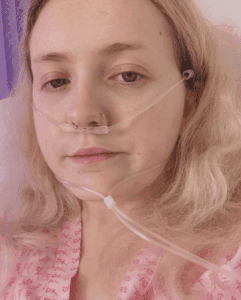
I was then transferred to an intensive care ward where I was hooked up to a machine that gave me strong painkillers when needed. I also had anti-sickness medication, antibiotics, and was given a catheter and oxygen due to the severity of my symptoms.
I was given IV fluids and couldn’t eat food for two weeks to allow my pancreas to heal. After that, I had Fortisips (a nutritional drink used under medical supervision for people who are unable to meet their nutritional needs) alongside slowly introducing food back into my diet. I also needed to use a wheelchair and required help with washing, changing, and going to the toilet due to the severity of the pain.
I was in hospital for approximately a month before I was able to go home without needing a high level of care. It took a further three to four months before I started to gain weight and feel like myself again.”
How did you feel during this time?
“I felt lost and scared. I had just started a new apprenticeship, and I was worried that whatever was happening to me might change everything. At the time this happened, it was during Covid, so I wasn’t allowed visitors which made the entire experience even worse. I felt very alone and isolated.”
How were you diagnosed with acute pancreatitis?
“I was diagnosed through blood tests which showed elevated levels of amylase and lipase (enzymes produced by the pancreas) in my bloodstream.
My pancreatitis was labelled as idiopathic (no cause) initially, before further tests were carried out. I had an endoscopic ultrasound carried out at a specialist hospital, which showed that gallbladder sludge (a build-up of bile in the gallbladder) was likely the cause of my acute pancreatitis.”
How did acute pancreatitis impact your life?
“It made me very scared to live my life the way that I did before my diagnosis. I waited almost three years to have my gallbladder removed, which had caused me to develop the pancreatitis in the first place.”
How are things for you now?
“Fortunately, I did not experience another attack after being in hospital. However, since having my gallbladder removed, I have been experiencing chronic pain, almost like pancreatitis/gallbladder pain. I have found that taking certain pain medication I used to be able to tolerate before my operation may be the main trigger of this pain, but it has also happened at randomised times too. I am currently waiting to see a gastroenterologist and have been on the waiting list for almost a year. As a result of this, my anxiety has increased when it comes to going into my place of work or travelling away. I have to plan ahead when it comes to doing anything in case I do get another flare up of this pain, as most of the time I have to go to hospital when I experience this.”
Is there anything that would have been helpful for you to know before being diagnosed?
“I’d never heard of pancreatitis before I was diagnosed, but now I know that it can happen to anyone. Because I was 23 when I was diagnosed, medical professionals quickly assumed that my pancreatitis was caused by excessive alcohol intake, but this wasn’t the case, as I rarely drank alcohol. I felt these assumptions were due to my age, as they seemed surprised that someone as young as me was so poorly.”
Please note: 8 in 10 cases of acute pancreatitis in adults is caused by either gallstones or excessive alcohol consumption. Whilst it’s important that a question about a person’s typical alcohol intake is asked once by healthcare professionals to ensure appropriate diagnosis and treatment are given, it shouldn’t be asked multiple times.
Why is it important to you to share your story?
“I feel obligated to share my story as a young adult who developed pancreatitis, to raise awareness about the struggles that young people face when it comes to seeking a diagnosis and feeling heard.
I want to educate others on why it can be dangerous to make assumptions about the causes of pancreatitis based on age. Just because I’m young, it doesn’t mean that I can’t have a potentially underlying issue that caused me to develop pancreatitis in the first place.”
About Guts UK
Pancreatitis is a priority area for Guts UK and we fund research into pancreatitis that has the potential to change lives. Our Kranky Panky Pancreatitis Awareness Campaign takes place each November and builds a community of those affected by pancreatitis, comforted in knowing they’re not alone. Our expert information allows those with acute pancreatitis and chronic pancreatitis to take control of their health, and make informed decisions.
We believe it’s time the UK got to grips with guts. Your support takes us one step closer. Donate today.