Charlotte’s story
"Chronic pancreatitis affects my life in so many ways. It comes into so many decisions: what I eat and drink, exercising, my work life and social life, and it impacts my sleep."
Tell us a little bit about yourself
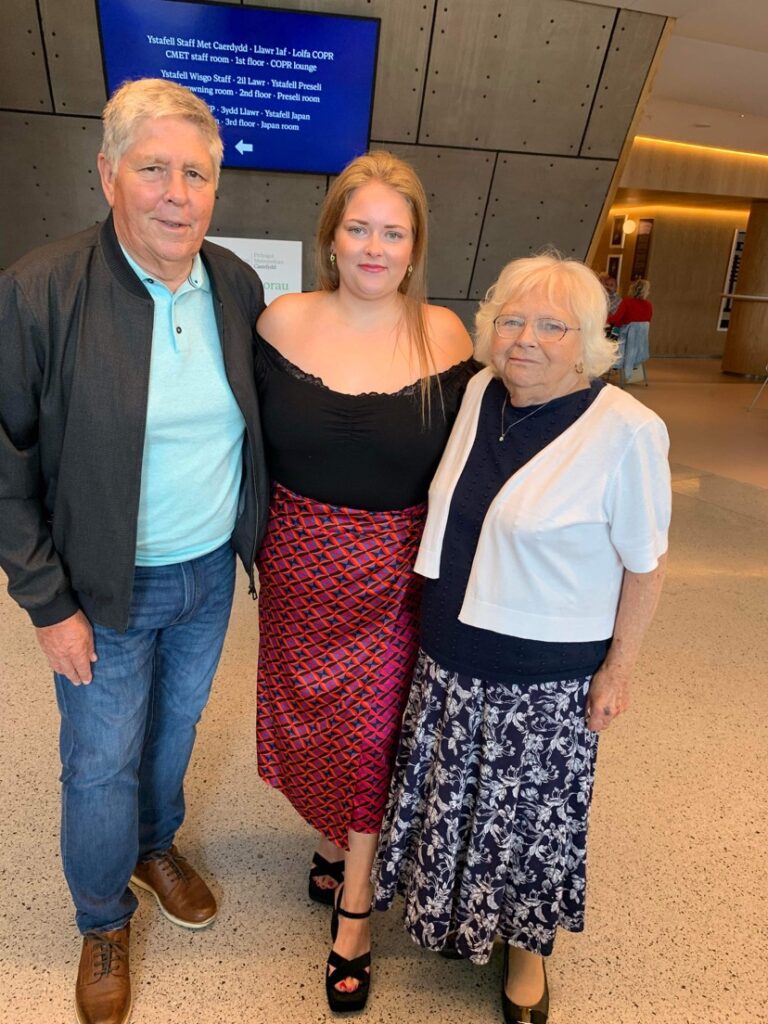
“I’m Charlotte and I’m 27 years old. I have three sisters and a brother, and I live in Harrogate with my grandparents and cockapoo, Sandy. Currently, I’m unemployed due to chronic pancreatitis. I love painting and more recently, I’ve started going to the gym.”
Can you describe when your symptoms started and what they were?
“I first started experiencing symptoms of biliary colic and cholangitis in 2022 with a fever, severe abdominal pain, nausea (feeling sick) and vomiting (being sick) and fatigue numerous times over a period of 11 months. The pain was so intense. It was mainly in my upper abdomen, and it also radiated to my shoulder blades.”
What led to your pancreatitis diagnosis?
“After waiting a few hours in A&E, a blood test followed by a CT (a non-invasive, x-ray-based test) of my pancreas revealed pancreatitis.”
Note: If the pancreas has been damaged, pancreatic enzymes called amylase, and lipase can show in these blood tests. Sometimes, the early diagnosis of acute pancreatitis is not clear, so a CT scan is often done to assess the extent of the damage to the pancreas.
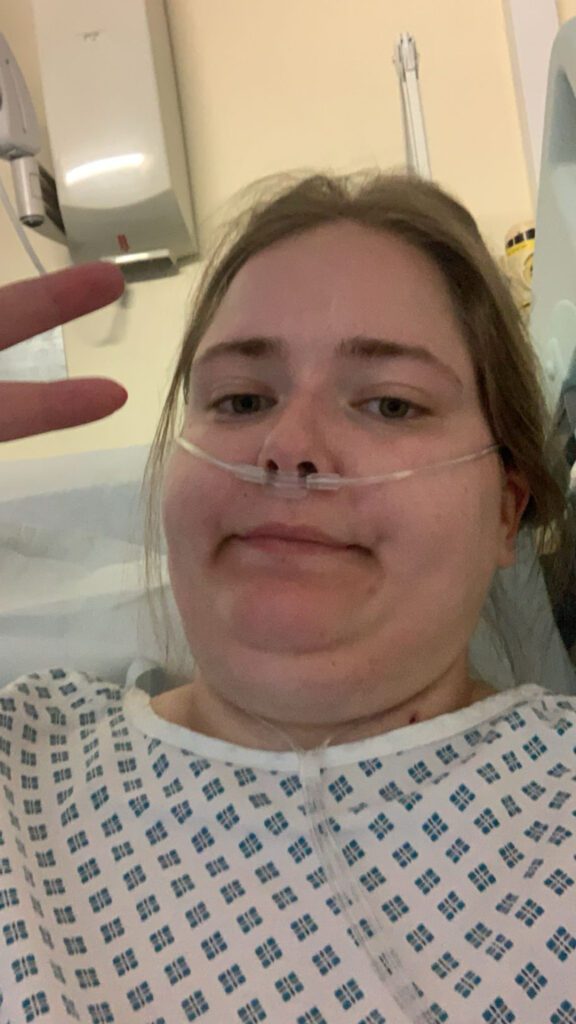
Is there anything that stands out to you from your time in hospital?
“Whilst I was in hospital, my condition escalated quickly. Over 60% of my lungs collapsed, I developed pneumonia, and my kidneys also began to fail. My family were told I might not survive. I had to be admitted to the Intensive Care Unit (ICU) for six days, and after this, I was weak and in a lot of pain.
I will always remember the pain and how scared I was, but I don’t remember it all. I got told that when your body is focusing on healing, it can almost lose focus on other parts of your body like your brain, hence my memory being poor of my time spent in the ICU. I shouldn’t have made it through, but somehow, I did. I do remember that the hospital staff were amazing.”
Can you tell us about your gallbladder surgery?
“During this hospital admission, it was decided that surgery to remove my gallbladder was necessary. Doctors felt strongly about getting my gallbladder out before another gallstone became stuck in my bile duct.
Recovery was slow. I was up walking soon after surgery but recovering from the side effects from pancreatitis was long. Even walking a few steps would make my heart race. I was given plenty of fluids intravenously (given via a vein) that included vitamins and minerals as I was unable to eat.”
How does pancreatitis impact your daily life?
“Since my second pancreatitis attack, I’ve had two more attacks, a pancreatic pseudocyst (a fluid-filled pocket around the pancreas that develops due to inflammation of the pancreas), and I’ve lost over six stone in weight. I’ve also had so many CT scans, showing serious inflammation and necrosis of the pancreas (where half of the pancreas has died off and isn’t functioning). I now take prescribed pancreatic enzymes (Pancreatic Exocrine Replacement Therapy) to help my body break down and digest food.
Chronic pancreatitis affects my life in so many ways. It comes into so many decisions: what I eat and drink, exercising, my work life and social life, and it impacts my sleep. Alcohol wasn’t the cause of my pancreatitis, but I choose not to drink it now. Alcohol did play a big part in a lot of my social activities before pancreatitis, so I’m still adjusting to living without it, but there are worse things to go without.
I often feel sad and angry. My whole life has been flipped like a coin. I try to be positive and focus on the fact that I survived.”
Note: 3 in 10 cases of chronic pancreatitis are not caused by alcohol.

Why would you like to share your story with Guts UK charity?
“It’s vital to talk about pancreatitis and how severe it can be, to raise awareness about the condition and show how important it is that a cure is found. I’d never heard of pancreatitis before I was diagnosed and didn’t know how serious it can be. It was extremely scary being in a situation I wasn’t sure I was going to survive.
After nearly three years of living with pancreatitis, I’ve only just found Guts UK and believe so many more people need to know about this charity. My doctors never told me such a charity existed.”
How do you feel now you’ve found Guts UK?
“I have learnt so much. I found out about the ‘This Can’t Wait’ card. It’s such a great idea as sometimes I need access to a toilet urgently. I’ve also spoken to a few people who support Guts UK. It’s a great community to be part of. Even if we don’t all have the same illness, we still have so many similarities!”
About Guts UK

Pancreatitis is a priority area for Guts UK charity. We fund research into pancreatitis that has the potential to change and save lives. Our Kranky Panky Pancreatitis Awareness Campaign each November builds a community of those affected by pancreatitis, comforted in knowing they’re not alone. Our expert information allows those with pancreatitis to take control of their health, and make informed decisions.
We believe it’s time the UK got to grips with guts. Your support takes us one step closer. Donate today.