Chris’ story
"It was a relief to finally have an answer, but then I realised there’s no way back from it when it’s chronic (lifelong) inflammation of the pancreas."
Tell us a little about yourself
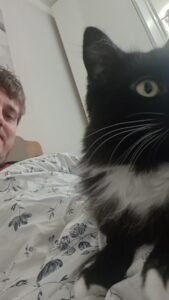
“I’m Chris. I’m 36 and I live with my amazing wife Rachel, our daughter Ella-Rose, and our cat Cola. I used to work as an arborist, a job I absolutely loved, before my pancreatitis journey changed everything.”

Can you describe when your pancreatitis symptoms started and what they were?
“In December 2024, I started having severe abdominal pain that wouldn’t go away. I had numerous tests, but nothing explained what was happening. Two weeks later, the pain got worse, and I ended up back in hospital. After a colonoscopy (a thin tube with a camera on the end inserted up the back passage to look inside the rectum and colon) and gastroscopy (a thin tube with a camera on the end inserted through the mouth to look inside the oesophagus, stomach and first part of the small intestine), I was told I had gastritis, a hernia (when part of the stomach slides upwards into the chest by pushing itself through a hole) and haemorrhoids (swellings containing enlarged blood vessels found inside or around the bottom (the rectum and anus)).

By January 2025, things got worse. I could barely function and returned to hospital. An ultrasound scan showed my gallbladder was full of gallstones, like a bag of Skittles. They planned to remove my gallbladder, but during surgery, I went into anaphylactic shock (a severe, life-threatening allergic reaction). The cause was unknown. I waited two months for allergy tests to pinpoint what was causing the allergic reaction while the pain worsened.“
Talk us through your journey with gallstone pancreatitis
“Throughout 2025, the abdominal pain kept moving one side to another, and it became excruciating. Doctors think the tiny gallstones had moved out of my gallbladder into my pancreas. In August 2025, I was diagnosed with gallstone pancreatitis and referred to surgeons to discuss how to move forward.“

How did this impact you emotionally?
“I’m still taking it all in. It’s very hard. Hearing the diagnosis was horrible, but it was also a turning point. It was a relief to finally have an answer, but then I realised there’s no way back from it when it’s chronic (lifelong) inflammation of the pancreas.
However, without the diagnosis on paper, I would have struggled to move forward with treatment. Since then, I’ve been referred to the surgical team to discuss ways to relieve the pain. That moment helped me accept what was happening and start to understand how I can make my life as comfortable as possible through my lifestyle choices. I’ve learnt to be realistic. I find ways to work around things and still enjoy life.”
How are you now?
“I was prescribed multiple painkillers. They help, but they make me feel unlike myself. Now I only take my stronger medication once in the evening and use lighter pain relief during the day. I still live with pain, but with attention to diet and exercise, I’m learning to manage it better.
There’s so much beyond the diagnosis. It’s more than just a medical condition. It has completely changed my life. I lost the career I loved, and my mental health has spiralled. Five months on, I don’t think I’ll return to that job again, but I’ve started a new job, bringing some stability for my family. I also completed a six-week therapy course, which gave me tools to help manage pain, stress, and daily challenges. I want to discuss the possibility of digestive enzymes (Pancreatic Exocrine Replacement Therapy) before any possible surgical route.

I used to train at the gym. When you’re not as physically strong, you’re not as mentally strong either. Now, I walk every other day and started skateboarding again with friends, which helps my mental health. The distraction also helps with the pain. I can’t go out for meals, but staying active and connected has helped me stay present. I feel more present with my family now. It’s like a blessing in disguise.”
Note: Around 8 in 10 people with chronic pancreatitis develop pancreatic exocrine insufficiency (PEI), where the damaged pancreas cannot produce enough digestive enzymes. This affects how food is absorbed. People with chronic pancreatitis should ask their healthcare team about faecal elastase tests (a stool test) to check for this and get help if needed.
What is one thing you wish people knew about chronic pancreatitis?
“I wish there were more clarity about pancreatitis. Too often, people are dismissed or left without clear guidance. Everyone should be given practical advice on what to eat and avoid, which could reduce hospital visits and ease pressure on families and the NHS. Ten years ago, I had an acute pancreatitis attack and forgot about it because no one explained how serious it could be. If I had known, things might have been different.”
Why would you like to share your story with Guts UK charity?
“I want to help others see they’re not alone and raise awareness of what life with this condition is really like. By sharing my story, I hope people feel supported and understood. It’s also important that people’s pain and emotions are recognised, because without that, it becomes a mental battle as well as a physical one.”
Why do you support Guts UK charity?
“I support Guts UK because there needs to be more research into pancreatitis. It is difficult to diagnose and treat, making it quite a grey area in the medical world. If we start with the basics and help people get information to understand it, maybe we can reduce future hospital trips and help with the bigger picture.”
What are your hopes for the future?
“I want to challenge the stigma around pancreatitis and alcohol. My condition was caused by gallstones, and it’s frustrating how people are judged.
Whether someone has a history of alcohol addiction or not shouldn’t affect the care they receive either. Everyone deserves understanding and proper support. No one should be knocked down when seeking help. I hope future patients get fair treatment and access to the information and care they need from the very beginning.”
Getting support
If you are worried about alcohol use disorder or feel you may need help, it’s important to speak to a doctor. Also, the NHS has a useful resource on alcohol support.
About Guts UK

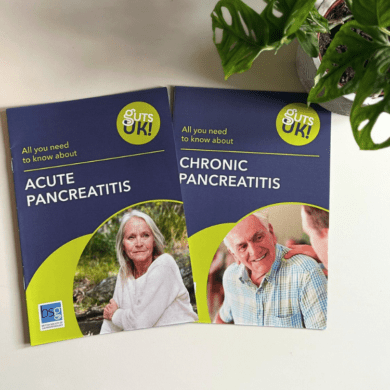
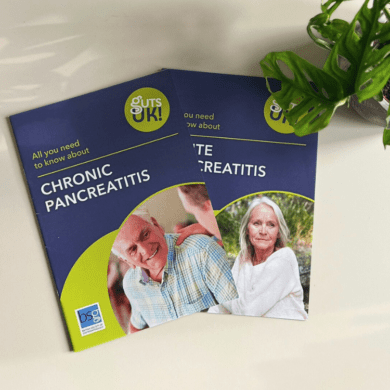
Pancreatitis is a priority area for Guts UK charity. We fund research into pancreatitis that has the potential to change and save lives. Our Kranky Panky Pancreatitis Awareness Campaign each November builds a community of those affected by pancreatitis, comforted in knowing they’re not alone. Our expert information allows those with pancreatitis to take control of their health and make informed decisions.
We believe it’s time the UK got to grips with guts. Your support takes us one step closer. Donate today.