Andrew’s story
“I can’t describe him in three words, because there were two Andrews: before pancreatitis and after. Before, he was happy, athletic, and full of energy. After, he was a shadow of his former self.”
Trigger warning: This content contains themes of mental health and self harm.
Andrew’s story, as told by his mum, Brenda.
Tell us a little bit about yourself
“I live in Somerset now, but I was born in London. I was married to a musician who sadly died five years ago. My husband was a double bass player in, and around the studios of London. He was also trained in violin making and made double basses.
We moved to Somerset for a quieter life, and we brought up our two adopted children, April and Andrew, then 17 years after we married, we had Stephen biologically.”
Tell us a little bit about Andrew
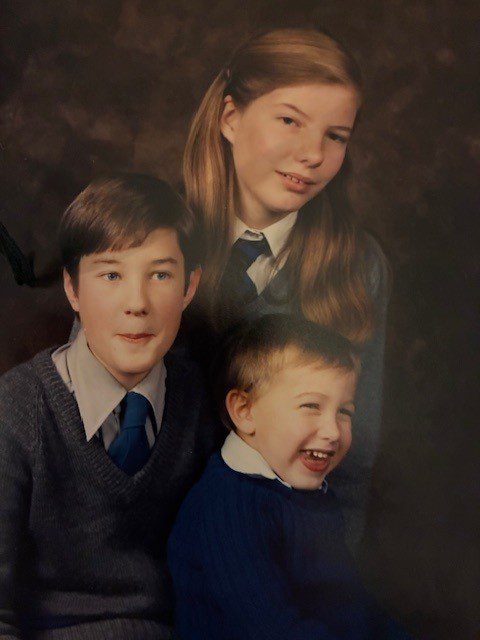
“We adopted Andrew when he was just four months old. Andrew was very lively; he enjoyed athletics and rugby. I would describe him as a happy and loving child.
Andrew became ill with pancreatitis at age 15, so life became difficult for him. He did manage to get his O and A levels, and he went on to study in Plymouth, but sadly, he was in and out of hospital for so long and so often that he didn’t finish his course.
He initially stayed in Plymouth because his girlfriend was there, and he got a part-time job in an electrical shop, which he enjoyed.
As Andrew grew older, he and his girlfriend married and tried to build a quiet, steady life together. But his health continued to decline, limiting the things he loved. When his condition worsened and he was unable to work full-time, he struggled to find employers who understood. He was sacked from one job after another, not because he couldn’t do the work, but because of his illness. His marriage to his wife also sadly broke down.
Eventually, Andrew became diabetic after losing his pancreas, and although his life was filled with challenges, he remained determined to be independent for as long as he could. He tried to live a normal life, even when the pain was unbearable.”
Note: 25 to 80 people in 100 with chronic pancreatitis will develop diabetes within 10 to 20 years.
When did Andrew’s symptoms of pancreatitis begin?
“Andrew’s symptoms first started when he was 15 years old. He woke me at 4am one morning and said, ‘Mum, I’m in such pain.’ I gave him paracetamol, but by 7am, he was no better. When I took him to the doctor, he didn’t move, didn’t open his eyes. Andrew told me later, ‘Mum, it even hurt to blink.’
Andrew was sent to the hospital, where doctors first thought it might be appendicitis. They took out his appendix and afterwards said there was nothing wrong with it, but there was fluid in the cavity. Tests revealed he had pancreatitis. His amylase level was around 8,000, and when I asked the doctor what it should be, he said 100 or even lower. I was stunned.
I don’t think the doctors expected him to live, but he did. He gradually recovered and came home, but he was out of school for over four months.
Some months later, Andrew told me he had that same pain again. I phoned the doctor, and he said, ‘It can’t be pancreatitis. You don’t get it twice.’ He was wrong. That year, Andrew was in and out of the hospital on ten occasions.”
Talk us through your thoughts and feelings around Andrew’s diagnosis
“I went to the library and looked up a book, which said pancreatitis usually affected older men and people with increased alcohol intake. I don’t know how long before reading it that the book had been published, but when I mentioned this to the doctor after, he said, ‘We know a little bit more now, it can happen in childhood.’ Andrew was diagnosed with hereditary childhood pancreatitis, but as he was adopted, it’s something we couldn’t really help with. Over the years, Andrew would quietly carry that burden. He once said to me, ‘Mum, I must have done something awful in a previous life to be saddled with this.”
What treatment did Andrew receive for pancreatitis?
“Andrew was prescribed morphine (a strong painkiller) and was told to wait until it passes. We were told he needed to be nil by mouth and just to let it settle. Over time, Andrew learned to try to manage it himself because he hated being in the hospital. He would rest, sometimes taking sleeping pills, alongside the morphine to try and sleep through the pain. Despite the pain, he kept working when he could.”
What complications did pancreatitis cause for Andrew?
“They took out part of his pancreas when he was 17. They said what was left of it was in the condition they’d expect after 50 years of alcohol misuse. Around ten years later, they took out the rest of it, and Andrew became diabetic.”
What was life like for Andrew following his surgery?
“Without a pancreas, Andrew’s life changed completely. When he passed a stool, it would come out as a pale substance that floated on the water. You needed to flush several times to get rid of it. It’s a horrible thing for a young man to deal with, and Andrew was embarrassed by it. We had a septic tank, and it used to clog up the drains. We even bought our own drain rods to clear it.
Andrew had to take a medication called Creon (a type of Pancreatic Exocrine Replacement Therapy) to dissolve his food. You have to weigh your food, work out the fat content, and then measure out the Creon you need to take. At first, you weigh everything, every meal, every snack, until you get so used to it, then you can just look at your plate and know how much to take.
Because the pancreas also produces insulin, removing it meant Andrew was suddenly insulin-dependent. He became a brittle type 3 diabetic, a condition no one had heard of.
Managing his diabetes was incredibly demanding. He had to inject himself up to four times a day, testing his blood sugars constantly to try to keep them stable. His readings could swing dangerously, sometimes without warning. It made life unpredictable and frightening.”
How did having pancreatitis affect Andrew’s mental health and emotional well-being?
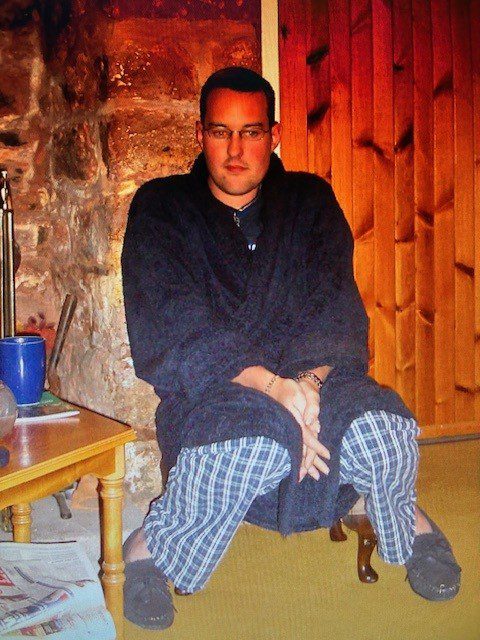
“He became very depressed after his marriage broke down. Andrew felt his wife couldn’t cope with the illness and subsequently, Andrew’s mental health declined. He began self-harming and was eventually moved into a mental health facility. All this was due to his physical condition, which brought on the mental health problems.”
How did Andrew pass away?
“He used to blackout for no apparent reason. One day he blacked out and didn’t recover. That was it. We’d expected this for quite a long time, but when I went round to where he was, there was poor Andrew stretched on the floor. I wasn’t even allowed to cuddle him. I could bear the pain better if I thought there’d been any sympathy for him, but there wasn’t.”
What was Andrew’s funeral like?
“We expected it to be family only, but I was dumbfounded when we got there, it was full. It was full of people we knew, some from the hospital, some musicians from my husband’s circle. It was lovely.”
Why do you want to support Guts UK?
“I’m pleased your organisation is there. All the information, awareness, and research, that’s good. I wish you’d been around for Andrew. Maybe it would have been different.”
About Guts UK
Pancreatitis is a priority area for Guts UK and we fund research into pancreatitis that has the potential to change lives. Our Kranky Panky Pancreatitis Awareness Campaign takes place each November and builds a community of those affected by pancreatitis, comforted in knowing they’re not alone. Our expert information allows those with acute pancreatitis and chronic pancreatitis to take control of their health, and make informed decisions.
We believe it’s time the UK got to grips with guts. Your support takes us one step closer. Donate today.