Beth’s story
"I was confused at first because no one had explained how severe pancreatitis could be or how gallstones could lead to it. I didn’t have the time or energy to process emotions then. I was just focused on staying alive."
Tell us a bit about yourself
“I’m Elizabeth, but most people know me as Beth Sarah or just Bee. I’m 43 and live in Worthing with my two grown-up children. I’m a full-time musician, spending my weekends performing gigs and my weekdays writing, recording, and managing everything that comes with my music career.”

When did your symptoms start and what were they?
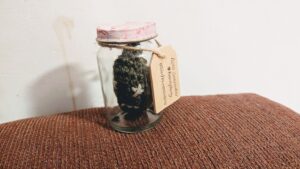
“In August 2023, I started waking up at night with pain that took a while to dissipate. I didn’t know what it was at first, and it really scared me. I kept ending up in A&E every few weeks, but after a clear ECG (a test that records the electrical activity of the heart), they kept dismissing my symptoms. My GP finally sent me for an ultrasound scan (an imaging test that uses sound waves to see the inside of your body), and the sonographer described my gallbladder as ‘a bag of marbles’.
I was prescribed codeine (a painkiller) for the pain, but even that wasn’t enough, and I still had to go back to A&E every few weeks for pain management. In December 2023, I was admitted to hospital with severe acute pancreatitis after a gallstone blocked my bile duct.”
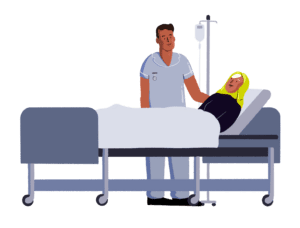
Note: 8 in 10 cases of pancreatitis in adults are caused by either excessive alcohol consumption or gallstones.
Talk us through your journey with pancreatitis
“Once I was admitted, I had blood tests to check my pancreas and a CT scan (a test that takes detailed pictures of the inside of your body). I was confused at first because no one had explained how severe pancreatitis could be or how gallstones could lead to it.
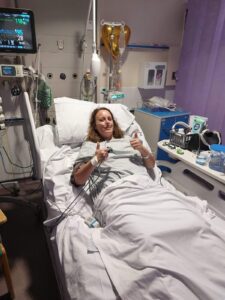
I was given so many strong painkillers and antibiotics that I can only remember snippets from that time. During this time, excess pancreatic enzymes damaged my body, leaving lesions on my liver, a blood clot on my spleen and a collapsed lung. I spent a while in intensive care and the high dependency unit, floating between units for a few weeks while my body stabilised. I didn’t have the time or energy to process emotions then. I was just focused on staying alive. I even drifted off briefly and felt completely peaceful before waking to a room full of medical staff.”
How did you feel during this time?
“I developed a 6 cm pseudocyst (a pocket of fluid attached to the pancreas) that sat between my pancreas and stomach and adhered to my colon. At one point, I couldn’t swallow food and lost a lot of weight. I was tube-fed, and I needed a stent to drain the pseudocyst. However, the first stent got infected, leading to sepsis and surgery to remove the infected areas.
I met dietitians, a diabetes nurse, and a physiotherapist because my mobility was affected after being laid up for so long. After 14 months since diagnosis, I eventually had my gallbladder removed in February 2025, and my pain reduced dramatically.”
How are you now and can you tell us how acute pancreatitis impacts your everyday life?
“Almost two years on, I still have weakness, pain and take prescribed medication daily, but I’m learning how to manage and keep going. I take pancreatic enzyme replacement therapy (PERT) (a medication that helps people digest food by replacing the enzymes their pancreas is unable to produce) with my food, but my bowel movements are still inconsistent. I often feel pain in my digestive system.
I have to be careful about what and when I eat, sticking to little and often with a dietitian-prescribed nutritional supplement each morning. I try to live a healthy lifestyle, but fatigue hits when my bowels act up. I push through for work and weekend gigs, and I haven’t had to cancel a gig for over two months now, which is an amazing achievement for me.
Since having my gallbladder removed, I’ve been able to enjoy so much of what I love again. While I will rely on enzyme replacement for life, it’s a small price to pay for being able to live again.”
Is there anything you’d say to someone with digestive symptoms or conditions?
“I’d say really try with your diet. It’s hard to summon the energy to make something suitable for you when you’re feeling exhausted, but it’s worth it in the long run. I’m talking to myself here as well!
During hospital stays, I found it hard when well-meaning friends told me, “It would all be okay; cheer up, chin up.” But the most reassuring and helpful moments were when friends and family just sat with me, held my hand and said, “Well, this is awful”. There is a time and place for positivity, but also a time and place for climbing into a hole and someone to be there while you weather the storm.”

Why are you sharing your story today?
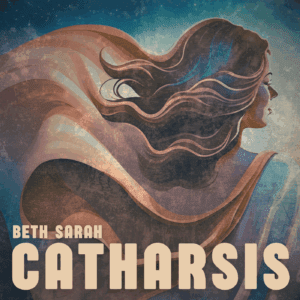
“In May 2024, as I was rebuilding my strength, I came across the Sanctuary in the hospital, a multi-faith space. The small chapel had a piano, and as I played, my tears flowed, and I felt my heart start to heal. I visited as often as I could, playing and praying while slowly recovering my singing voice and breath. I started writing songs inspired by my illness. They capture what it’s like to struggle with being unwell and say it’s okay to feel that this is awful. Instead of telling you to cheer up, they sit with you in the moment and commiserate with the pain.
Playing these songs in front of people made me feel stronger and helped me process everything. I decided to release them as an EP called ‘Catharsis’ to share the healing power of music with others who might find solace in it.”
Why do you want to support Guts UK charity?
“I love that Guts UK provides information and real stories from people with similar experiences. Community is everything. It opened a world I hadn’t considered, and accessing the information made me feel less alone.”
About Guts UK
Pancreatitis is a priority area for Guts UK and we fund research into pancreatitis that has the potential to change lives. Our Kranky Panky Pancreatitis Awareness Campaign takes place each November and builds a community of those affected by pancreatitis, comforted in knowing they’re not alone. Our expert information allows those with acute pancreatitis and chronic pancreatitis to take control of their health, and make informed decisions.
We believe it’s time the UK got to grips with guts. Your support takes us one step closer. Donate today.