Have you been asked to change how much fibre you eat? Perhaps you’ve been told to “bulk up” to help with constipation or to “cut back” for other reasons. Or maybe you’re just staring at the back of a cereal box, wondering what “soluble fibre” and “insoluble fibre” mean for your insides. Confused? You’re certainly not alone!
We’ve all got guts. Around 25ft of them, in fact. That’s a lot to get your head around.
In this post, we’re getting to grips with fibre. This post follows on from getting to grips with healthy eating.
Please note that this is general information on fibre for the digestive system. The information may not be appropriate for someone diagnosed with a specific digestive condition. Where there is general information on diet for specific digestive conditions, this can be found on the relevant symptom or condition pages.

What is fibre?
In simple terms, fibre is the part of plant foods, such as fruits, vegetables, grains, pulses and seeds. It is something that your body simply can’t digest. While other nutrients are absorbed in the small intestine, fibre travels all the way to your large bowel (colon).
You could think of fibre as the ultimate multitasker for your gut. Some types of fibre add bulk to your poo and keep things moving smoothly to prevent constipation. Others act as a prebiotic, providing a feast for your gut bacteria. In return, these bacteria “pay rent” by producing essential nutrients that help to keep your gut healthy.
Whether it’s soluble, insoluble or resistant starch, fibre is vital for our health. However, most of us in the UK aren’t getting quite enough. Getting to grips with fibre is all about finding the right balance for your unique digestive system.
What about fibre and your gut bacteria?
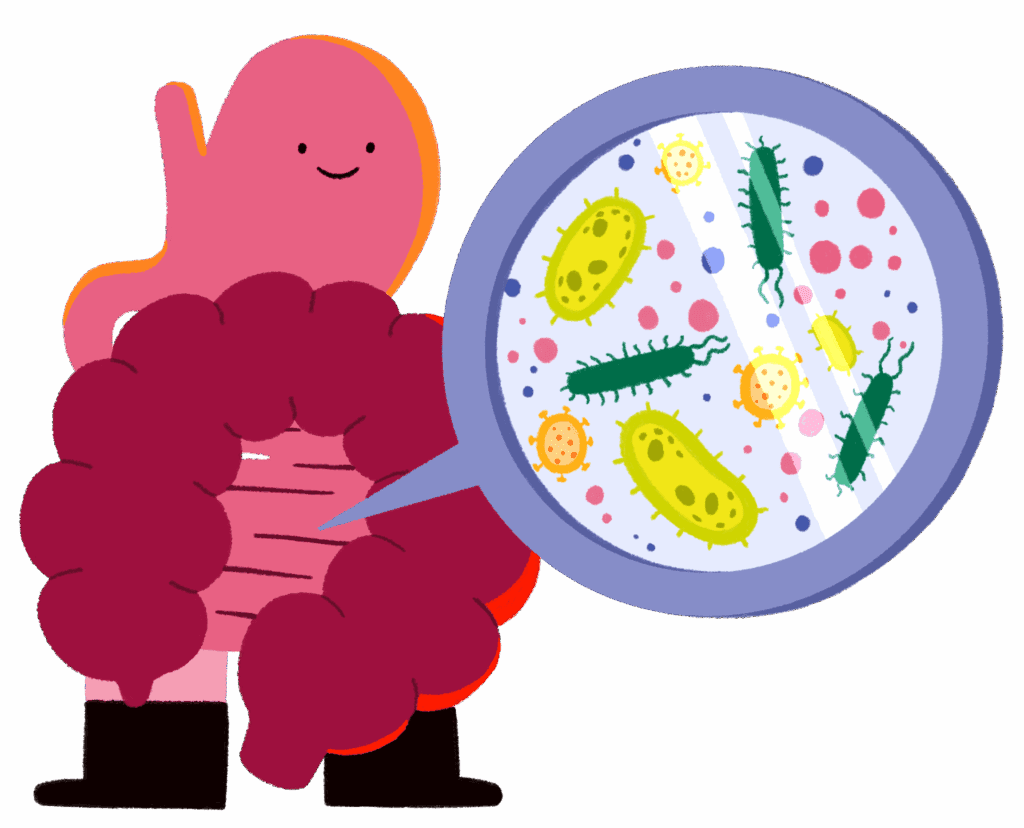
Your large bowel is home to trillions of microbes, known as your gut microbiome. Many of these bacteria are fussy eaters that thrive on specific types of fibre. While they struggle with the tougher, insoluble stuff, they find soluble fibres (like those found in oats) irresistible.
When these fibres reach the bowel, your bacteria get to work fermenting them. In exchange for this meal, as we mentioned above, our bacteria “pay rent” by producing:
- Short-chain fatty acids: Small fat molecules that nourish the cells lining your bowel.
- Essential vitamins: Helping your body function from the inside out.
We call these beneficial fibres prebiotics. By feeding our “gut garden” the right things, we encourage helpful bacteria to grow and flourish. Think of it as an example of “you scratch their back, they scratch yours”: we feed our bacteria, and in turn, they look after us!
Why is fibre important?
Fibre is vital for more than just keeping us “regular”. While it certainly helps prevent constipation by speeding up the time it takes for food to travel through the bowel, the benefits of fibre reach far beyond the bathroom.
Research shows that people who eat more fibre are less prone to heart disease, Type 2 diabetes, and bowel cancer. In fact, for every extra 7g of fibre you add to your daily diet (which is the same as around two slices of wholemeal bread), you significantly reduce your risk of chronic disease:
- 8% reduction in colon cancer risk.
- 9% reduction in cardiovascular disease.
- 7% reduction in strokes.
By eating plenty of fibre, you increase beneficial bacteria like Lactobacillus and Bifidobacteria, which support your immune system and overall wellbeing. Essentially, a healthy intake of fibre helps you maintain a healthier weight, lower blood pressure and quite literally can lead to a longer life.

How much fibre should you eat?
On average, adults consume around only 16g of fibre a day, falling well short of the recommended 30g. That means most of us need to find an extra 10g, which is roughly the amount in a large jacket potato and a portion of peas, to reach our goal.
Children also need plenty of fibre. But they are still not getting enough. 1 in 3 children have constipation.
However, their targets are slightly lower:
- 2-5 years: 15g per day
- 5-11 years: 20g per day
- 11-16 years: 25g per day
When you’re shopping, have a look at the labels. A high fibre product has 6g or more per 100g, whilst a good source contains between 3g and 6g per 100g.
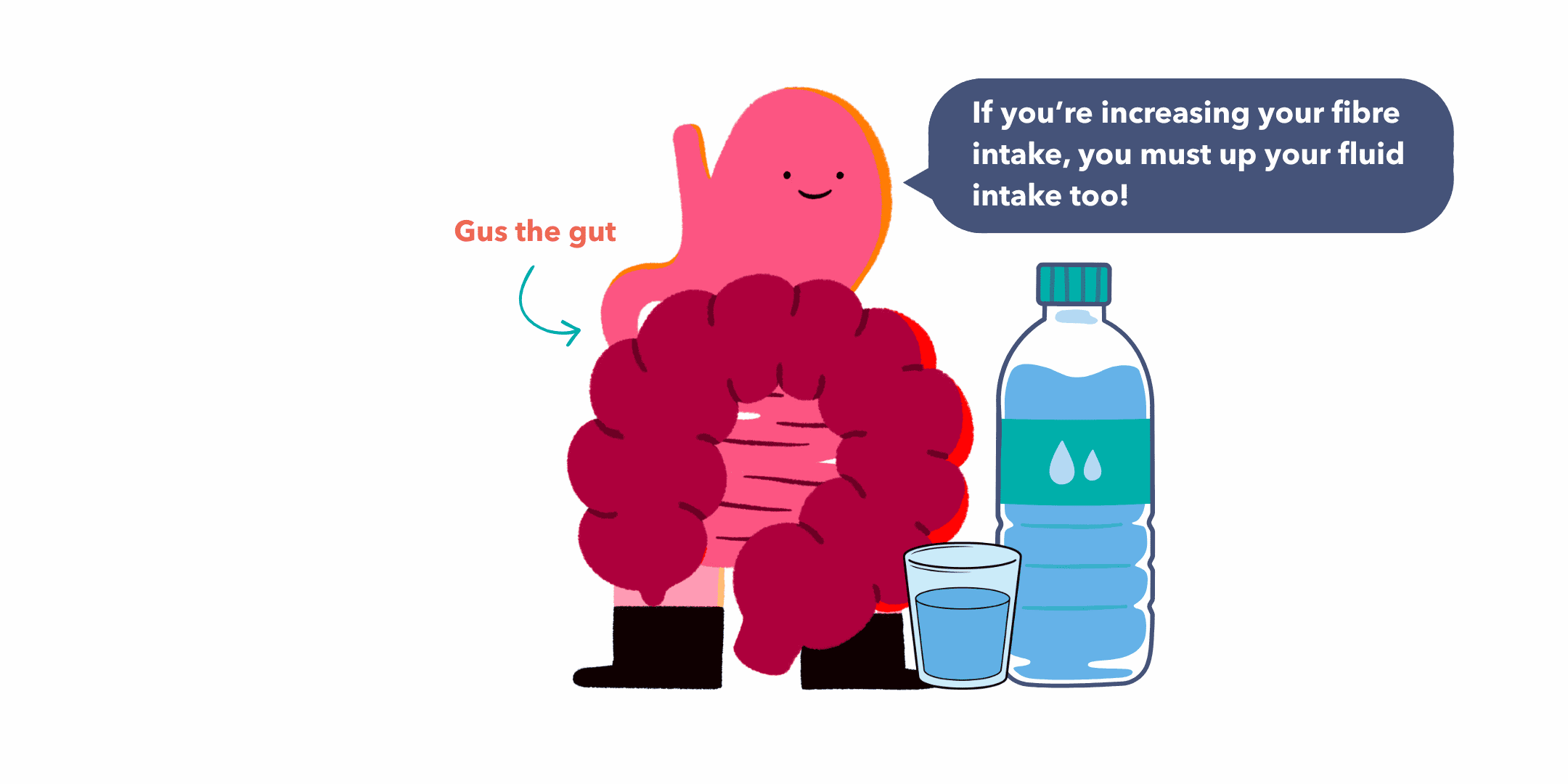
Top tip: If you’re increasing your fibre intake, you must up your fluids too. Fibre needs water to move through your digestive system smoothly. Adults should aim for 8 to 10 cups (about 2 litres) of fluid a day to avoid getting “backed up”.
Consider lifestyle changes before taking laxatives. An increase in dietary fibre also means there is less chance of developing long-term conditions too. This is partly due to the micronutrients contained in fruit and vegetables.
 Fibre for those without a digestive condition
This section is for those without a digestive condition. Having a variety of fibre sources in the diet is important. There are ways of increasing how much fibre you can eat, which can be found in our detailed, fibre information.
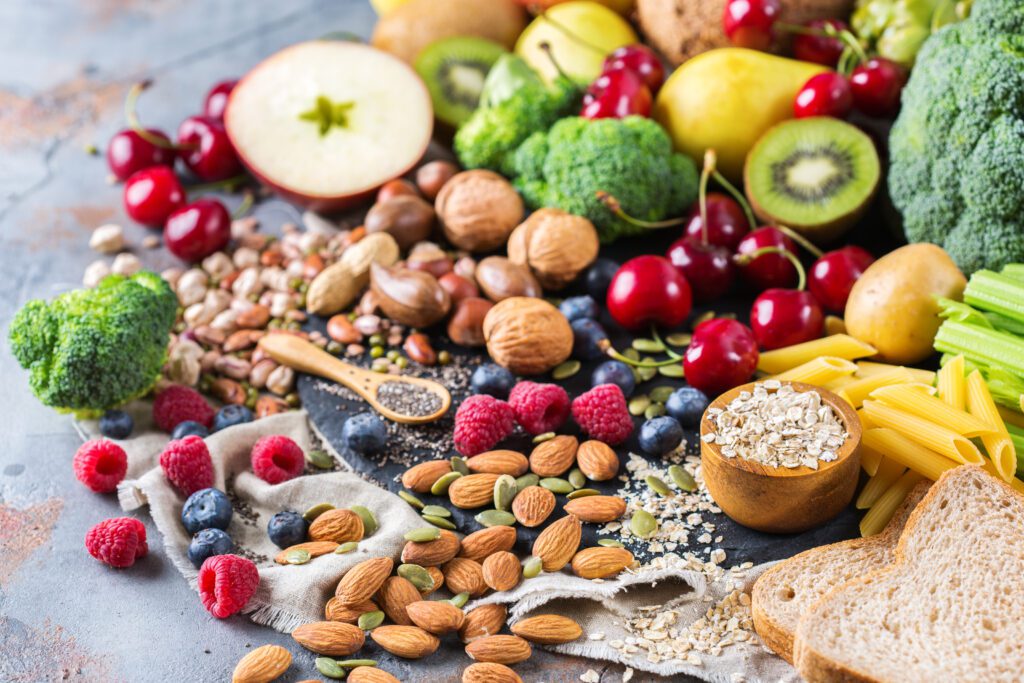
Some examples of higher fibre meals and snacks include:
- Porridge topped with nuts, seeds and fruit.
- Wholegrain toast with banana and peanut butter.
- Lentil curry with brown rice.
- Warm sweet potato salad with quinoa.
- Wholegrain pasta with pesto & chopped vegetables.
- Sliced carrot/cucumber/red pepper with hummus.
- Sliced apple dipped in peanut butter.
- Oven-roasted chickpeas with a sprinkling of cumin.

Fibre for those with a digestive condition
This section is for those with a digestive condition. Fibre can contribute to a long and healthy life, and most of us should increase the amount in our diets. However, people who are affected by digestive conditions sometimes have a tricky relationship with fibre. To find out more, visit our detailed fibre information.
What do the different types of fibre do to our gut?
Insoluble fibre: Can help with constipation and should be increased slowly with plenty of water as fluids (this applies to all fibre types). However, it may worsen diarrhoea by making the bowel secrete more water.
Soluble fibre: Excellent for softening poo or soaking up excess liquid if things are too loose. However, it can also produce gas, which can lead to discomfort and bloating in some people.
Resistant starch: A type of soluble fibre. It is called resistant because it resists digestion. The process of cooling or freezing increases the resistant starch some foods contain. Resistant starch can help insulin resistance and reduce blood sugar for people with diabetes.
In reality, many foods contain a mix of both insoluble and soluble fibre. It’s often more helpful to focus on the diversity of your diet rather than get tangled up in categories.
Finding your fibre balance
If you’ve been diagnosed with a digestive condition, your tolerance of fibre is unique to you.
While fibre offers long-term health benefits, the “how” and “when” of eating it might need to be tailored. If you’re struggling to find your balance, it’s important to speak to a gastroenterology dietitian. They will be able to help you keep your diet as varied and as nutritious as possible without triggering symptoms.
Conditions where people may need to modify their fibre intake, with the help of a gastroenterology dietitian, include:
Find out more about their impact on these conditions in our detailed fibre information.

Where can I find more information on healthy eating?
For more information on healthy eating and fibre, including how stress can affect our diet, food monitoring and food hygiene, visit our healthy eating information in the health and lifestyle section of our website.
What have we learnt so far?
You can catch up on our ‘Get to Grips with the Digestive System’ series by using the links below:
Eager to learn more?
We have information about the digestive system and over 40 digestive conditions and symptoms, which can be found here. You can also follow us on social media by searching ‘gutscharityuk’ to learn more, keep up to date with the work we do and take part in vital awareness campaigns to help us spread the word that our guts deserve better. It’s time for the UK to get to grips with guts!

About Guts UK
Guts UK is the national charity for the digestive system. We are the only UK charity funding research into the whole digestive system.
People are suffering. People are dying. All because of a lack of knowledge about our guts. Guts UK exists to change that.
You can find out more about what we do here.