We’ve all got guts. Around 25 feet of them, in fact. That’s a lot to get your head around!
In this post, we’re getting to grips with healthy eating. This post follows on from getting to grips with probiotics and prebiotics.
Please note that this information is general information on healthy eating for the digestive system. The information may not be appropriate for someone diagnosed with a specific digestive condition. Where there is general information on diet and specific digestive conditions, this can be found on the relevant symptom or condition pages.
An introduction to healthy eating
To keep your body healthy, it is important to follow a healthy, balanced and varied diet. But what does a balanced diet mean? A balanced diet includes a good variety of different foods, and healthy eating is part of a healthy lifestyle, which can benefit your gut. Other lifestyle factors, such as keeping active, limiting alcohol and avoiding smoking, all contribute to a healthy digestive system.
Why is healthy eating important?
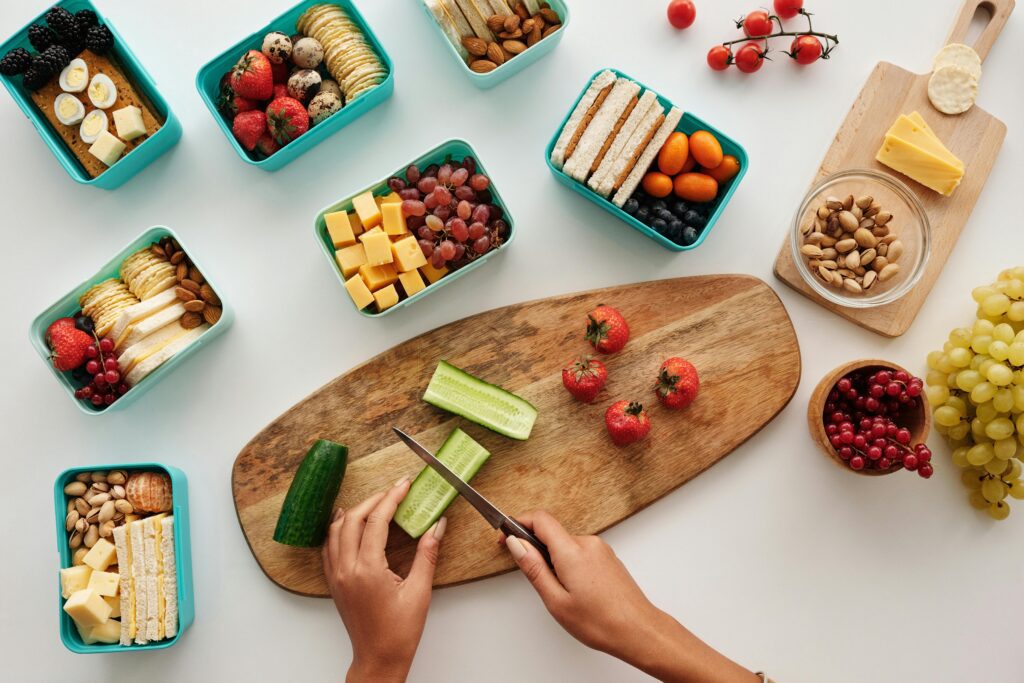
Eating a healthy, varied diet helps your body work at its best and supports your overall wellbeing. It gives you the nutrients you need to stay healthy and helps you maintain a healthy weight. Along with regular physical activity, eating well can lower your risk of long-term conditions such as heart disease, diabetes and stroke. It may also reduce the risk of some cancers and types of dementia. Poor diet, on the other hand, can lead to weight gain and increase the risk of long-term health problems, which can affect your quality of life over time.
What is a healthy diet?
A healthy diet is really about finding the right balance. Eating a wide range of foods from different food groups, and keeping portions sensible, helps your body get what it needs to stay well.
Try to make starchy foods, vegetables and fruit the main part of your meals. These foods are full of fibre, which plays an important role in keeping your gut healthy and your bowels working well. Fibre can also help reduce the risk of conditions like heart disease, Type 2 diabetes and bowel cancer.
Let’s take a look at the Eatwell Guide…
The Eatwell Guide shows the ratios of different food groups you should eat every day for a balanced diet.
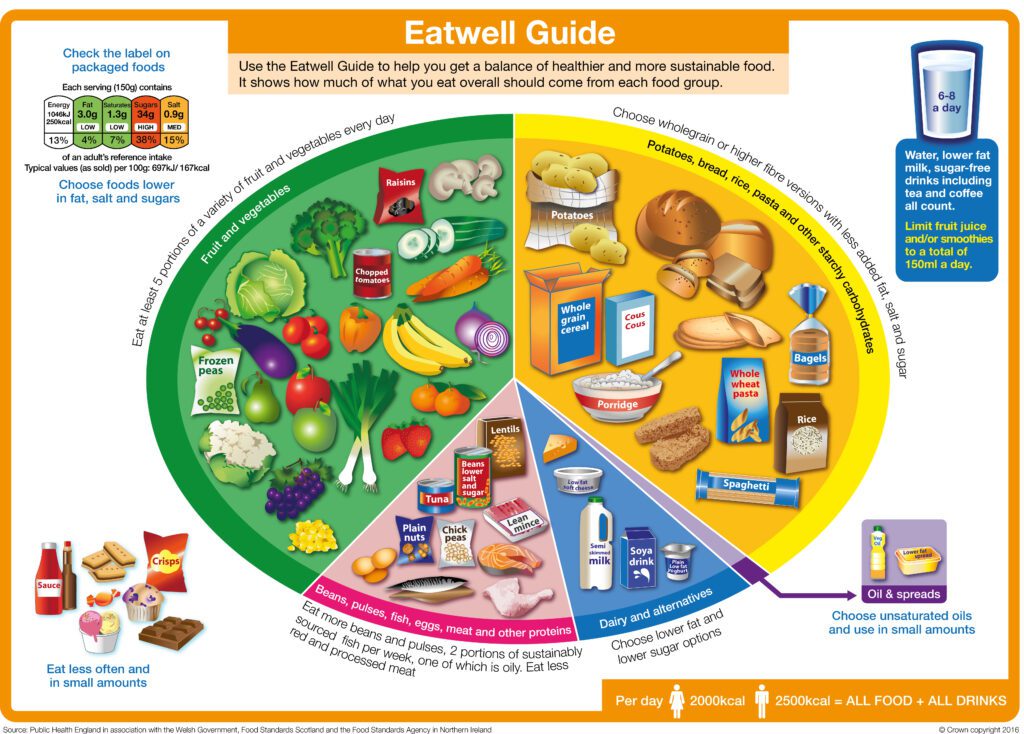
Green section: Fruit and vegetables
Try to eat fruit and vegetables regularly, aiming for at least five portions per day. A portion is around 80g, which is a small handful or two to three tablespoons. The more variety you can include, the better. Fresh, frozen and tinned options all count, but try to choose tinned fruit in natural juice. Mixed frozen fruit and vegetables are an easy and convenient choice.
Yellow section: Starchy carbohydrates
Starchy foods should be part of your daily diet. Aim to include one starchy food with each meal, such as bread, rice, potatoes, oats or pasta. Choosing wholegrain versions can help boost fibre intake and support your gut health too.
Pink section: Protein
Protein foods include beans and pulses, which are also great sources of fibre, as well as fish, eggs and meat. The World Health Organisation recommends avoiding processed meats like sausages, ham, bacon and salami, as these increase the risk of bowel cancer. Red meat should be limited to no more than three portions a week. This is around 70g a day or 160g three times a week. To reduce fat, choose lean cuts of meat and remove excess fat and the skin from chicken.
Blue section: Dairy
Dairy foods provide calcium, which is important for healthy bones and teeth. Aim for around three servings a day from this food group.
High-fibre foods
Fibre plays an important role in gut health, but different types of fibre work in different ways. Some help keep stools soft and regular, while others feed gut bacteria and support digestion. It’s important to note that high-fibre foods can cause bloating in some people. Everyone responds differently.
Many foods contain more than one type of fibre, so it’s best to increase fibre gradually and see how your gut reacts. Current guidelines suggest aiming for 30g of fibre each day for adults and young people aged 16-18.
Purple section: Fats and spreads
Foods that are high in fat should make up only a small part of your diet.
Other helpful tips for a healthy lifestyle
- Aim to drink around two litres of fluid each day.
- Watch portion sizes. A simple guide is a fist-sized portion of carbohydrates and a palm-sized portion of protein.
- Cut back on fizzy and sugary drinks, and aim to limit fruit juice to a small glass (100ml).
- Limit alcohol intake to no more than 14 units a week.
- Reduce intake of foods high in sugar and high in fat.
- Aim for less than 6g of salt per day.
- Try to eat two portions of fish a week, including one oily fish such as salmon, mackerel or sardines.
- Swap butter and lard for olive or vegetable oils, which are healthier fats.
Do I need to take vitamins or supplements?
A healthy diet is vital for a balance of vitamins and minerals. Supplements, however, have no value for healthy people. They can also cause side effects. Vitamin D is an exception for UK residents, especially in autumn and winter, as the sun is not strong enough for skin to produce enough of its own. The NHS recommends adults take a vitamin D supplement containing 10 micrograms/400IU.
Other people who may need more vitamin D include:
- Those who cover up.
- People who live in care homes or shared accommodation.
- People who have darker skin, for example, people of African, African Caribbean or South Asian descent.
- Those who have been told by a doctor or dietitian to take it.
Where can I find more information on healthy eating?
For more information on healthy eating, including how stress can affect our diet, food monitoring and food hygiene, visit our healthy eating information in the health and lifestyle section of our website.
What’s next?
In February, we’ll be looking into fibre and how vital it is for our gut health. If you have a diagnosed digestive condition, then this may not be for you. If you have any concerns about your digestive health, it’s always best to speak to a healthcare professional.

What have we learnt so far?
You can catch up on our ‘Get to Grips with the Digestive System’ series by using the links below:
Are you eager to learn more?
We have information about the digestive system and over 40 digestive conditions and symptoms, which can be found here. You can also follow us on social media by searching ‘gutscharityuk’ to learn more, keep up to date with the work we do and take part in vital awareness campaigns to help us spread the word that our guts deserve better. It’s time for the UK to get to grips with guts!
About Guts UK
Guts UK is the national charity for the digestive system. We are the only UK charity funding research into the whole digestive system.
People are suffering. People are dying. All because of a lack of knowledge about our guts. Guts UK exists to change that.
You can find out more on what we do here.