Have you ever wondered why a night out can lead to a burning sensation in your chest or a sudden change in your poo? Or perhaps you’re trying to calculate units whilst wondering how alcohol actually affects your insides. You’re not alone.
We’ve all got guts. Around 25ft of them, in fact. That’s a lot to get your head around.
In this post, we’re getting to grips with alcohol and the digestive system. From what happens when you take a sip to how alcohol interacts with the organs in your digestive system, we’ll be looking at how you can find a balance with alcohol that keeps your gut happy.
Please note that this is general information on alcohol and the digestive system. The information may not be appropriate for someone diagnosed with a specific digestive condition. Where there is information on digestive symptoms, more details can be found in our online symptoms information.
What happens in your digestive system when you drink alcohol?
The moment you swallow a drink of alcohol, it starts its journey through your digestive system. Unlike food, which takes time to break down, alcohol is absorbed quickly.
- The stomach: A small amount of alcohol is absorbed directly through the stomach lining.
- The small intestine: The majority of the alcohol moves into the small intestine, where it is rapidly absorbed into your bloodstream.
- The liver: Once in your blood, alcohol travels to the liver. This is your body’s processing plant. The liver can only process about one unit (10ml) of alcohol per hour.
If you drink faster than your liver can work, the excess alcohol continues to circulate in your blood, affecting your brain and other organs. This is why you still feel the effects long after you’ve stopped drinking an alcoholic drink.
How can alcohol impact your digestive system?
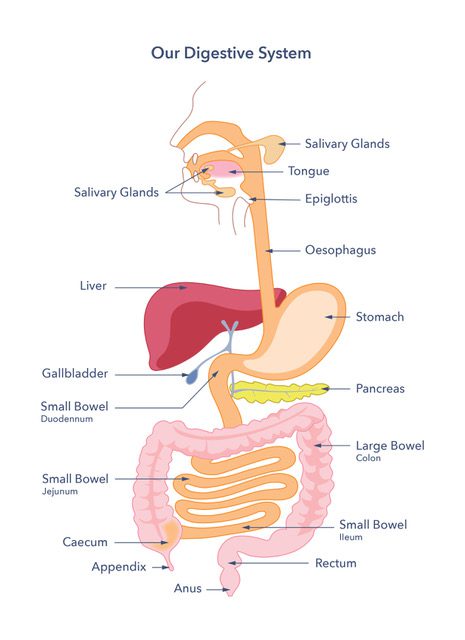
Because alcohol travels through your entire digestive system, it can cause irritation and damage from top to bottom. Here is how it can affect each section:
The throat
In the larynx, a part of the throat, long-term alcohol use carries a cancer risk, particularly in those who smoke cigarettes. Alcohol can also be a factor in other types of head and neck cancers, including mouth cancer.
The oesophagus (gullet)
Alcohol can be a major trigger for heartburn and reflux. It relaxes the ring of muscle at the bottom of the oesophagus (known as the sphincter), allowing stomach acid to creep back up. It can also irritate the lining of the oesophagus, leading to inflammation known as oesophagitis. In severe cases, this can cause painful ulcers.
The stomach
Alcohol can speed up the time it takes to pass food through the digestive system, which is why many people experience diarrhoea after drinking. It can also affect how the stomach empties and alter the amount of stomach acid that is produced. Also, alcohol increases the long-term risk of stomach cancer.
The bowels
In the first part of the small bowel, alcohol can cause inflammation (duodenitis) and ulcers. It can also increase the risk of developing bowel cancer. This is because the bacteria in the bowel change the alcohol into other substances.
The liver
The liver performs over 500 functions. Because it is the primary site for alcohol processing, it is often the first organ to suffer. Alcohol is the leading cause of death from liver disease in the UK. The “silent” nature of liver disease is what makes it so dangerous, as early scarring often has no symptoms. It is only when the liver stops functioning properly that symptoms such as jaundice (yellowing of the eyes), ascites (abdominal swelling) or confusion appear. Often, these symptoms can be managed in hospital. Excessive alcohol intake can also be a factor that increases the risk of liver cancer.
The pancreas
The pancreas produces enzymes that help us digest food. Heavy drinking is the second most common cause of acute and chronic pancreatitis, though there are other causes you have no control over. The more you drink, the higher the risk. The risk of pancreatic cancer can also increase with excessive alcohol intake.
How does alcohol impact our bodies beyond our digestive systems?
Whilst we focus on the digestive system at Guts UK, alcohol’s reach is much wider. It can impact:
- The brain: While it might feel like a relaxant, alcohol is a depressant. It can worsen anxiety and depression and, in the long term, increase the risk of dementia. Excessive alcohol intake can also lead to a stroke.
- The heart: Heavy drinking is linked to high blood pressure, which can increase the risk of a stroke. It can also lead to irregular heart rhythms and cause a disease of the heart muscle. Harmful levels of alcohol consumption can also increase a person’s risk of having a heart attack.
- Our bones: Alcohol dependency interferes with the body’s ability to build new bone, increasing the risk of brittle bones (osteoporosis), which can lead to fractures.
- Our body weight: It can cause an unhealthy body weight, either underweight or overweight.

What is considered a “low-risk” drink?
Drinking alcohol is a common part of social life in the UK, with roughly half of the population having had an alcoholic drink in the last week. However, understanding how much you are actually drinking can be tricky.
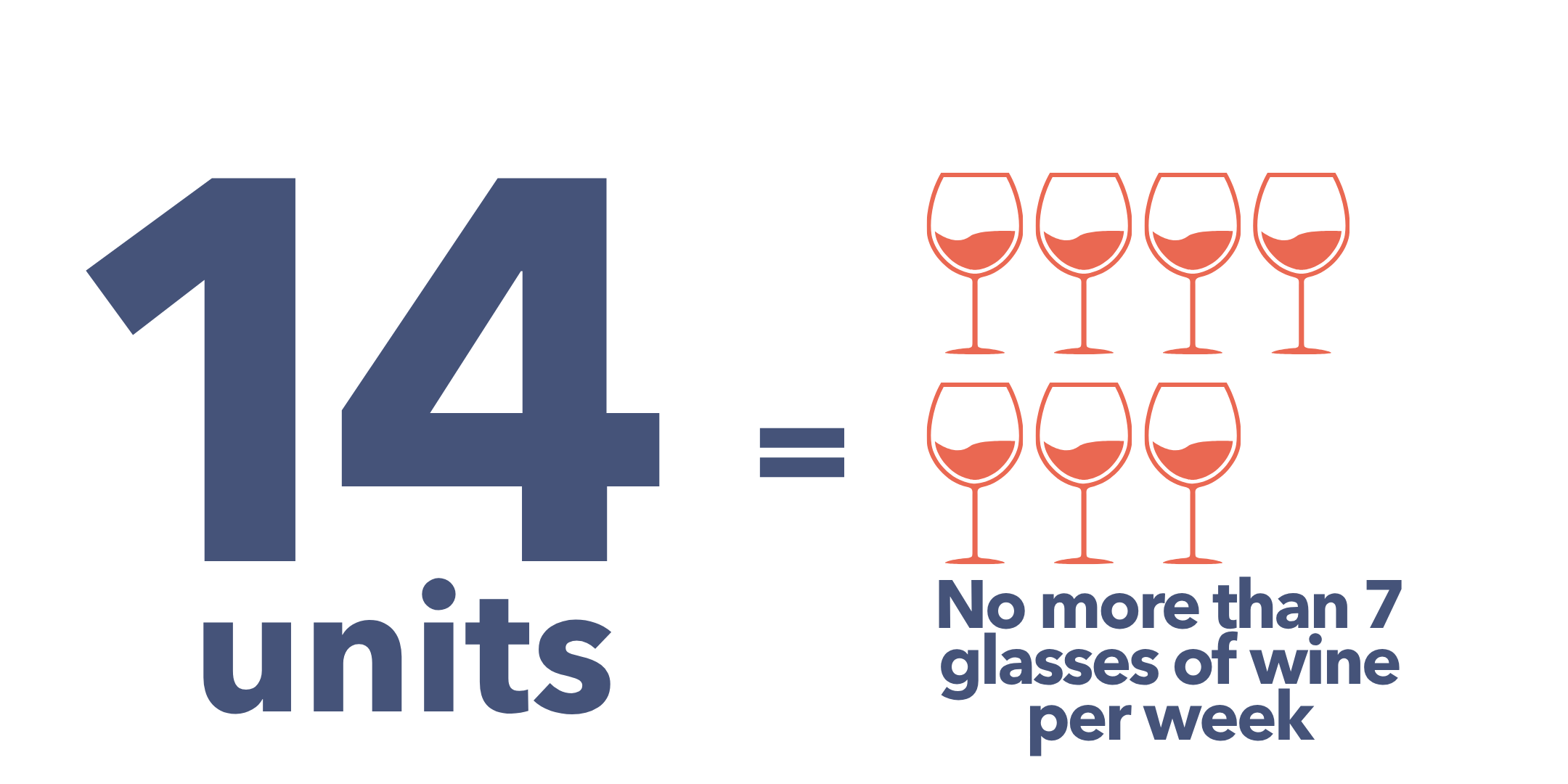
In the UK, alcohol is measured in units. One unit is 10ml (or 8g) of pure alcohol. To keep health risks at a low level, the UK Chief Medical Officers advise:
- Drink no more than 14 units per week.
- Spread these units over three or more days.
To put that into perspective, 14 units is roughly equivalent to six pints of beer or seven glasses of wine. You can calculate how many units you are drinking by using Alcohol Change UK’s online unit calculator. However, it’s important to remember that there is no perfectly safe level of drinking. Even within these guidelines, individual risks can vary.
What are “empty calories”?
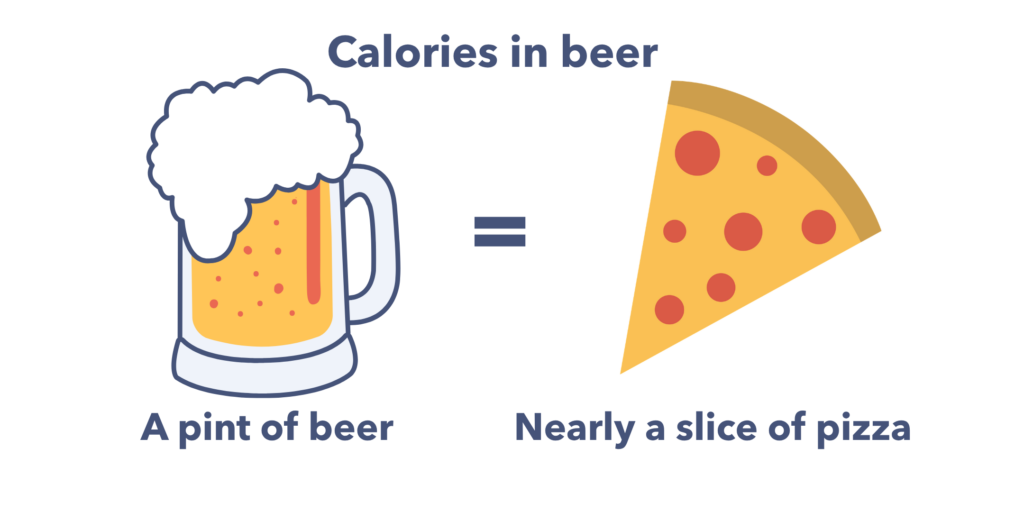
We often focus on the units, but not so much on the energy alcohol provides. Alcohol contains roughly 7 calories per gram, and because it offers no nutritional value, these are known as “empty calories”.
- A large glass of wine (250ml) contains approximately 190 calories. This is the same as a plain glazed doughnut.
- A pint of beer contains approximately 240 calories. This is nearly as much as a slice of pizza.
For those of us trying to maintain a healthy weight for our gut health, these liquid calories can add up surprisingly quickly.
The benefits of reducing or stopping drinking alcohol
Reducing your alcohol intake is a vital step in looking after your health and also allowing your body to heal. While conditions like alcoholic hepatitis and early liver damage are often reversible, continuing to drink alcohol can lead to permanent harm. Ways to reduce your alcohol intake include:
- Alcohol-free days: Incorporate alcohol-free days and swap alcoholic drinks for high-quality, non-alcoholic alternatives.
- Having a break between drinks: Having a non-alcoholic drink in between your alcoholic drinks. It’s also fine to say no.
- Safety first: If you drink heavily, stopping abruptly can be life-threatening. If you experience sweating, tremors, changes to your mental health or hallucinations when you don’t have an alcoholic drink, consult a doctor immediately. Your GP can provide a supervised plan and link you with support charities to help you navigate this safely and comfortably.

When to see a doctor
You should seek medical advice if you experience:
- Jaundice (a yellowing of the eyes or skin).
- Swelling in the abdomen (ascites).
- Vomiting blood or passing black, tarry stools. This is a medical emergency.

Support
For more information, you can visit our detailed information on alcohol and the digestive system or call our Helpline. There are also useful resources such as Drinkaware and Alcohol Change UK.
What have we learnt so far?
At Guts UK, we believe that knowledge is power.
You can catch up on our ‘Get to Grips with the Digestive System’ series by using the links below:
Eager to learn more?
We have information about the digestive system and over 40 digestive conditions and symptoms, which can be found here. You can also follow us on social media by searching ‘gutscharityuk’ to learn more, keep up to date with the work we do and take part in vital awareness campaigns to help us spread the word that our guts deserve better. It’s time for the UK to get to grips with guts!
About Guts UK
Guts UK is the national charity for the digestive system. We are the only UK charity funding research into the whole digestive system.
People are suffering. People are dying. All because of a lack of knowledge about our guts. Guts UK exists to change that.
You can find out more about what we do here.