Have you ever wondered why a simple change in diet is so often recommended for a healthier life? Or perhaps you’re curious about how the food on your plate actually interacts with the trillions of tiny residents in your gut. You’re not alone.
We’ve all got guts. Around 25ft of them, in fact. That’s a lot to get your head around.
In this post, we’re getting to grips with the Mediterranean diet and its relationship with our digestive systems. From the power of fibre to how this way of eating supports your gut microbiome, we’ll be looking at how you can adopt Mediterranean-style habits to help your gut be happy.
Please note that this is general information on the mediterranean diet and the digestive system The information may not be appropriate for someone diagnosed with a specific digestive condition requiring specific diets (such as the low FODMAP diet). Always consult a medical professional, such as a doctor or dietitian, for personalised advice. Where there is information on digestive symptoms, more details can be found in our online symptoms information.
What is the Mediterranean diet?
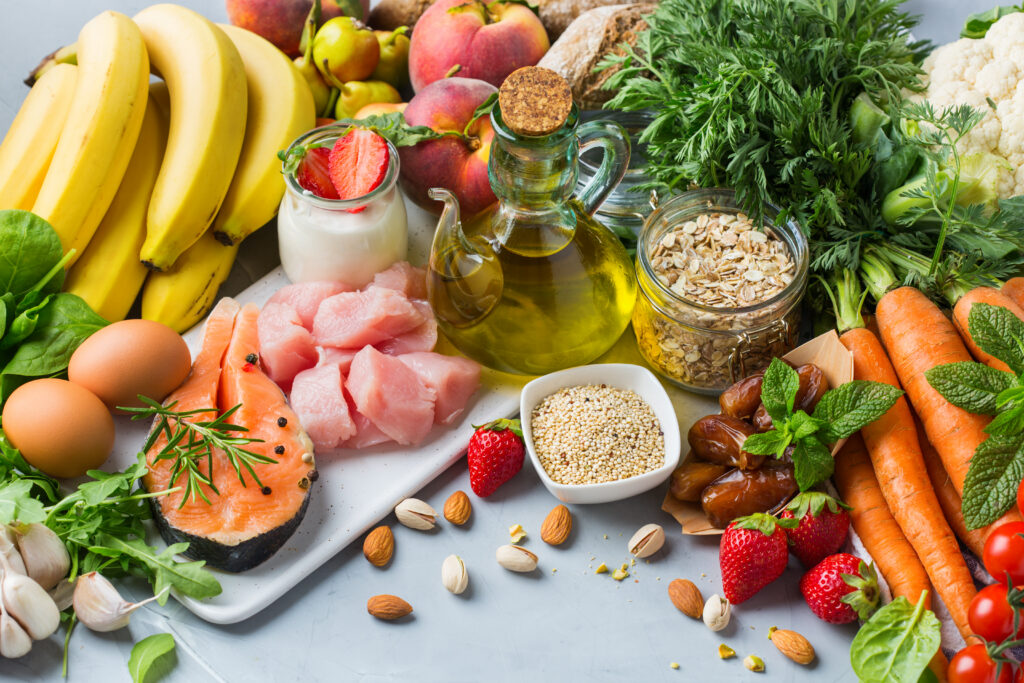
Inspired by the traditional eating habits of people in countries like Greece, Italy, and Spain, the Mediterranean diet isn’t a strict regime. It is a lifestyle. While a typical Western diet is often high in saturated fats, sugar and ultra-processed foods, the Mediterranean approach focuses on:
- Plant-based variety: Plenty of vegetables, fruits, legumes and wholegrains.
- Healthy fats: Swapping butter for olive oil and including nuts and seeds.
- Lean protein: More fish and poultry, with much less red and processed meat.
- Fibre-rich: Higher daily fibre portions than in the Western diet.
How does the Mediterranean diet impact your digestive system?
Because the Mediterranean diet is packed with diverse, fibre-rich foods, it provides benefits from the moment you take your first bite:
Bowel cancer
Bowel cancer is the second leading cause of cancer death in the UK. Research shows that for every extra 10g of fibre you eat daily, your risk of developing bowel cancer decreases by 11%. By choosing wholegrains and legumes over processed meats, you’re actively protecting your long-term bowel health.
The gut microbiota
The Mediterranean diet is high in fibre, which acts as fuel (prebiotics) for beneficial species like Lactobacillus and Bifidobacteria. While the average UK adult eats about 16g of fibre a day, this diet helps you reach the recommended 30g, fostering a more diverse and resilient gut microbiome.
General gut health and immunity
Beyond the gut, the high levels of antioxidants and monounsaturated fats (like those in olive oil) help reduce inflammation throughout the body. Following this diet is also linked to lower risks of heart disease, heart attacks, strokes and type 2 diabetes.
What to aim for?
If you’re looking to transition, here is what a typical “Mediterranean” week looks like:
- Vegetables: Three (or more) 80g portions a day (think broccoli, peppers, and greens). This should contain a wide variety, if possible, including fresh and frozen. Soup can also be another option, but check that the salt levels are within healthy guidelines.
- Fruit: Three 80g portions a day (fresh, frozen, or tinned in juice).
- Legumes: For women, one generous 50g portion a week and for men, one generous 70g portion a week (think lentils, chickpeas, peas or beans).
- Nuts and seeds: One (or more) 28g portion a week (sunflower seeds, peanuts, poppy seeds, sesame seeds, walnuts, pumpkin seeds and cashew nuts).
- Wholegrains: One (or more) serving a day (wholemeal bread, pasta, oats and brown rice).
- Fish: Four (or more) 100g portions a week (with at least one being oily fish like salmon or mackerel).
- Fats and oils: More unsaturated fats (think olive oil – around 40g per day) instead of saturated fats.
- Alcohol: Limit alcohol to no more than 14 units a week, spread over 3 or more days. Have several drink-free days every week. Read more in our accredited information on alcohol and the digestive system.
- Red and processed meat: For women, fewer than two servings a week and for men, fewer than three a week. This is equivalent to around 90g daily for women and 120g daily for men. However, in the UK, the NHS advise a lower maximum for women of 70g daily.
Top tips to start the Mediterranean diet:
The good news is that you don’t have to move to the coast of Italy to reap the rewards of the Mediterranean diet. Using frozen and tinned vegetables is also a great way to get more variety in winter in the UK.
To make a start, try the following:
- Slow and steady wins the race: If you aren’t used to much fibre, it’s a good idea to increase it gradually. A sudden increase can lead to temporary bloating or wind. Our fibre information goes into more detail.
- Swap your fats: Use olive oil for cooking and dressings, instead of butter or lard.
- Think ‘plant-first’: Try to make meat the side dish and vegetables or legumes the main event in your meal.
Eager to learn more?
Our detailed information on the Mediterranean diet and gut health tells you more.
We have information about the digestive system and over 40 digestive conditions and symptoms, which can be found here. You can also follow us on social media by searching ‘gutscharityuk’ to learn more, keep up to date with the work we do and take part in vital awareness campaigns to help us spread the word that our guts deserve better. It’s time for the UK to get to grips with guts!