Nikhil Mistry
Project: "Investigating the Role of Regulatory T cells (Tregs) in Perianal Fistulising Crohn's Disease."
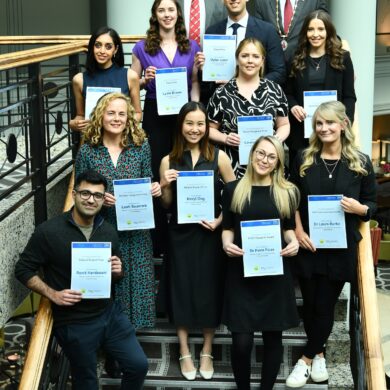
Medical Student Prize Winner 2025

Mr Mistry explains:
“Perianal fistulas are a severe and debilitating complication of Crohn’s Disease (CD). Patients have a poor quality of life and typically suffer with pain, bleeding, infection and faecal incontinence. On a personal level, I have had a longstanding interest in Gastroenterology and specifically Crohn’s Disease, stemming from my own personal struggle with disease.
There is an unmet need to better characterize the immunopathology of perianal fistulising Crohn’s disease (pCD). The role of regulatory T cells (Tregs) has been well researched within the context of luminal CD, with the adoptive transfer of Tregs already being investigated as a potential therapy in this cohort of patients. However, the role of Tregs in the development of perianal fistulas in Crohn’s Disease is not yet understood.

Previous work at this lab showed that unsupervised clustering analysis of single-cell RNA sequencing data identified two distinct Treg populations in pCD and cryptoglandular fistula (CGF) patients. These populations differentially expressed Helios, a transcription factor thought to be important in Treg stability and function. Differential gene expression analysis of Helios Low Tregs indicated that this subpopulation expressed more pro-inflammatory transcripts than their Helios High Tregs counterparts at the gene level.
Building on these findings, my project aimed to understand the potential role of Tregs in the development of perianal fistulas in Crohn’s Disease. To do so, we assess the phenotypic profile of Tregs within perianal fistula tissue of both Crohn’s Disease patients and non-IBD (cryptoglandular fistula) patients at protein level using flow cytometry studies. In doing so, this work highlights a potential role of Tregs in the development of perianal fistulas in Crohn’s Disease.

This study established that Tregs are preferentially enriched within fistula tissue compared to peripheral blood and contain a higher proportion of cytokine-producing Tregs, namely IL17A. We also demonstrated that a significantly
higher proportion of IL17A-producing Tregs were found to have low levels of Helios expression in fistula tissue, compared to Tregs with high levels of Helios expression, suggesting potential pro-inflammatory plasticity. Despite our limited sample size due to time constraints, these findings offer preliminary evidence for the presence of pro-inflammatory Tregs at protein level within the fistula environment that warrant further investigation.”
What did it feel like to win this award?

It is a tremendous honour to be recognised with this award for my research. Through experiencing the ups and downs of research, I have gained a deep appreciation for the process and receiving this prestigious award serves to reaffirm my commitment to pursuing research in this discipline. While I am still in the early stages, I am eager to grow further as both a scientist and clinician as I work towards a career as an academic clinician.’
Read more about Mr Mistry’s project, focused on the gut, by downloading the PDF below.