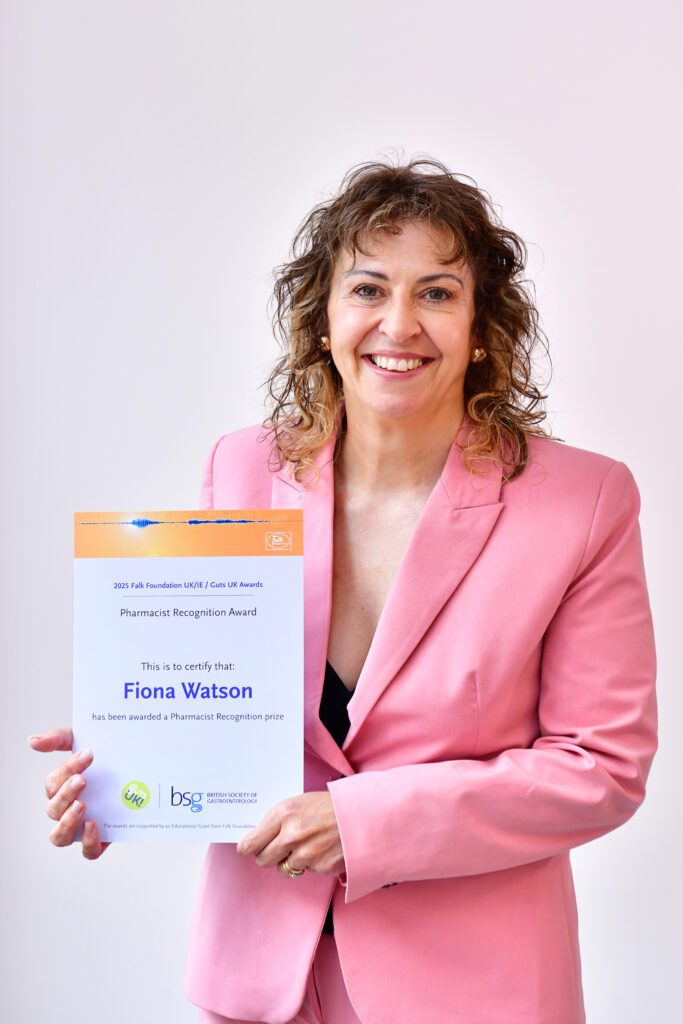
Fiona Watson
Project: "Improving Discharge Timelines and Patient Care: The Impact of an Embedded Prescribing Pharmacist (EPP) in a Gastroenterology Team."
Pharmacist Recognition Prize Winner 2025
Mrs Watson explains:
“Timely patient flow is a universal problem in UK hospitals. If flow is improved, patients experience more efficient care with fewer delays, quicker treatment and smoother transfer home, with all the benefits this brings. It has been found that late orders for “To Take Out” (TTO) prescriptions by medical staff can be a major cause of discharge delay. With all the demands on resident doctors, these prescriptions are often the last task of the day, after all urgent clinical duties are complete.
In 2020, the Medical Director requested support by independent pharmacist prescribers (IPPs) to improve TTO turnaround times within our trust. During the pandemic, ward closures within my specialist area of Gastroenterology provided the opportunity for me, as an IPP, to perform a pilot role focusing on prescribing, particularly of discharge medication. I was also trained to write the letter section of the discharge summary, helping to eliminate another common bottleneck in the discharge process.
On collation of the data, it soon became apparent that the ability of a pharmacist prescriber to “Get it Right First Time” delivered significant benefits. We found that the mean overall process time for TTOs reduced by 3.3 hours. This was partly due to my availability to produce TTOs promptly, but also due to the high level of accuracy in my prescribing. In contrast, the TTO error rate by resident doctors was 9.5%, often causing delays due to the need for amendments.
The success of the project has led to permanent funding for four “Embedded Prescribing Pharmacists” (EPPs), who now work within Respiratory, Diabetes, and myself in Gastroenterology. I also lead the EPP team and have been driving the initiative forward for over two years. Most recently, we piloted a “Weekend Discharge Pharmacist” initiative, where we supported the Discharge Registrar. This proved highly successful—not only in facilitating patient discharges, but also in freeing up the registrar’s time to review and manage more patients.

As well as tracking benefits to help validate the service and help with business cases, it is rewarding to see the growing day-to-day impact of my Gastro role. Working so closely within the team, I can be a constant resource to support resident doctors. I frequently contribute to discussions during ward rounds and team huddles, challenging therapy choices where appropriate and working to fully optimise medication during the inpatient stay to achieve the best clinical outcomes.
The EPP role has undoubtedly had a positive effect on patient care in terms of quality and safety of prescribing, as well as supporting flow. It demonstrates a modernised approach to secondary care by fully utilising the specialist knowledge and skills of prescribing pharmacists. From a personal perspective, I find the role extremely rewarding and feel valued by both the medical and wider multidisciplinary team.”
What did it feel like to win this award?

I’m honoured to have been awarded the Dr. Falk Guts UK Pharmacist Prize. I owe so much to the incredible medical team I work alongside, whose support and knowledge have shaped my practice. While I find daily fulfilment in seeing the positive impact of my role on patient care, having this recognised by the panel is truly humbling.
I hope this prestigious award raises awareness and support for the EPP initiative and that we can further expand the role within our trust and perhaps similar models for IPPs can be developed elsewhere in UK.
Read more about Mrs Watson’s project, focused on the gut, by downloading the PDF below.