Sophie’s coeliac disease story
“Nobody wants to hear that they have to change everything they eat for the rest of their life. But at the same time, it was a relief to finally know I wasn’t imagining it.”
Note: At Guts UK, we want our stories to be easy to understand for everyone. If any medical terms in Sophie’s story are unfamiliar, you can find definitions in our medical glossary below.
Tell us a little bit about yourself
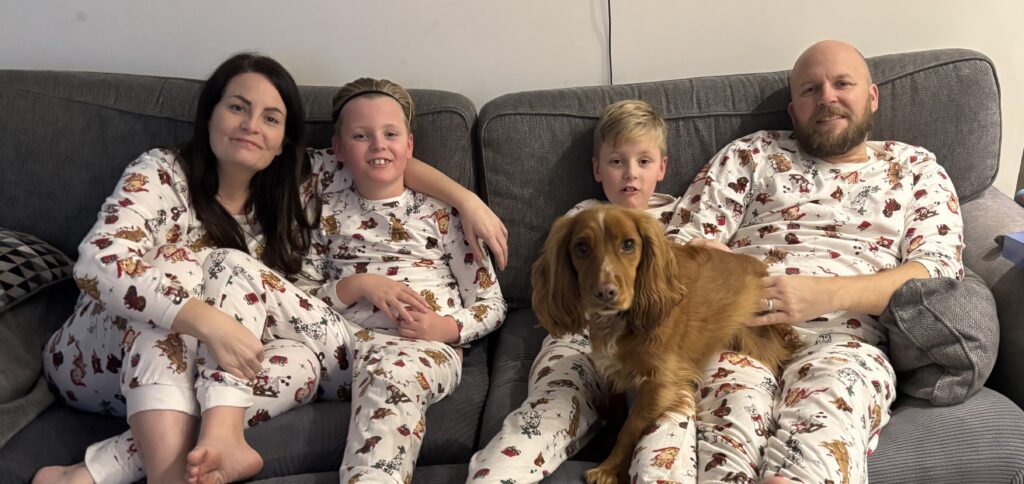
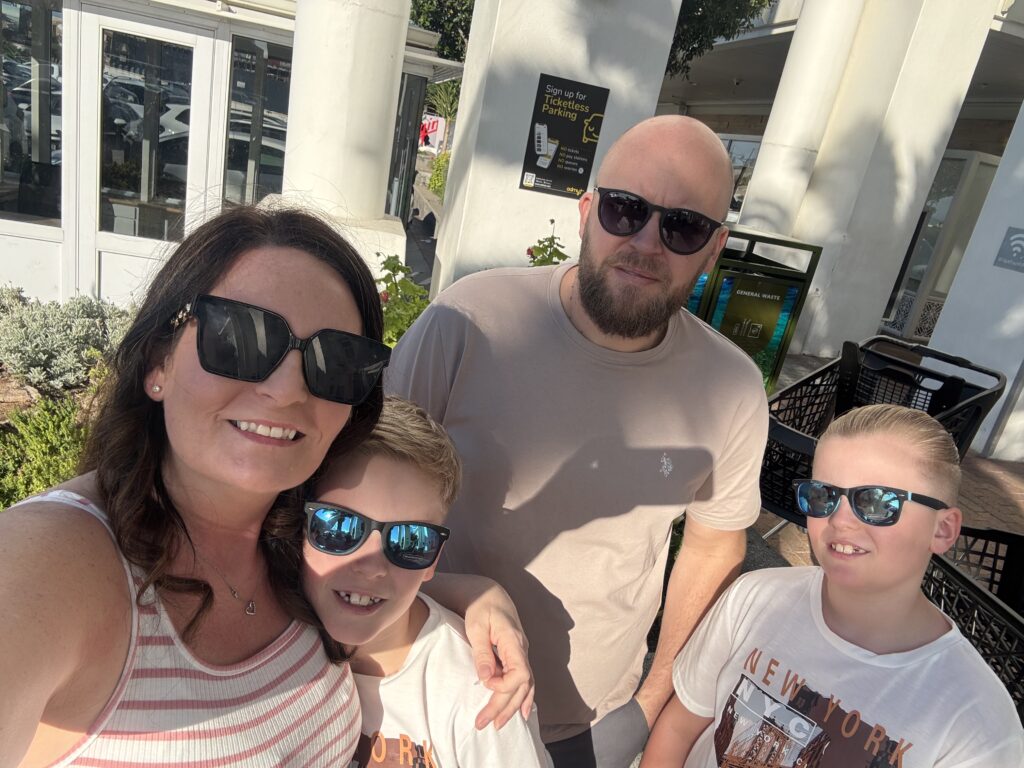
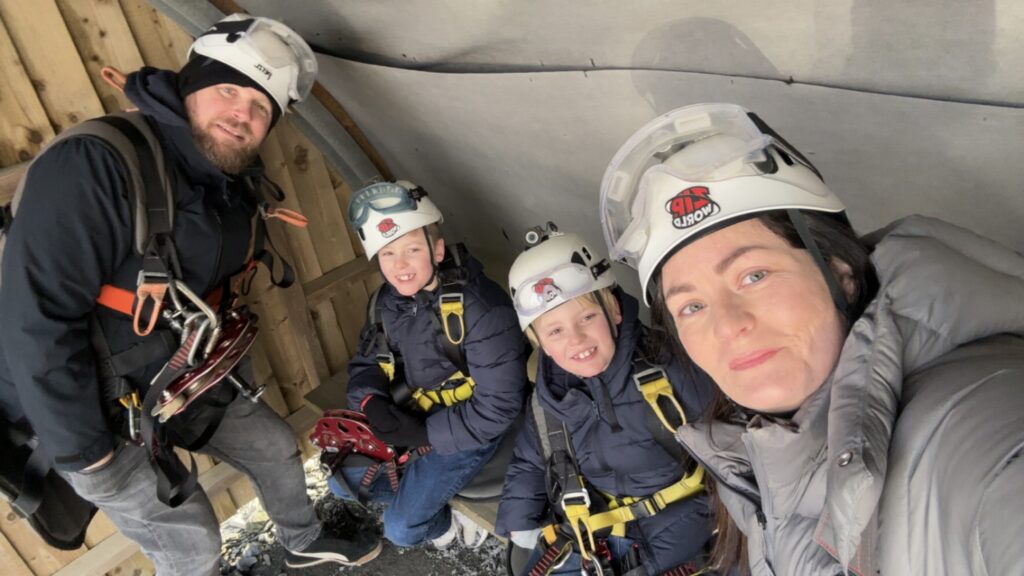
“My name is Sophie, and I live in York with my husband, Andrew, twin boys George and Stanley, and our dog, Buddy. I work in fundraising for a hospice care charity, which I really enjoy. In my spare time, I love spending time with my family, whether that’s holidays abroad, bike rides, walking Buddy, watching football or playing mini golf.”
When did your symptoms of coeliac disease first begin, and what were they?
“When I look back, I’ve probably had symptoms since I was a teenager, so basically for around 30 years.
Over the years, the symptoms became impossible to ignore. I had agonising pain and horrific diarrhoea, to the point where I sometimes couldn’t get to a toilet in time. I also had constant urgency, bloating and exhaustion.”
Tell us about your journey to diagnosis
“After I had my twins by C-section, my appendix burst and perforated my bowel. I became seriously ill and needed emergency surgery. Then, two years later, I ended up back in hospital with an infected gallbladder that had to be removed.
After multiple stomach surgeries, every symptom I explained to a doctor was blamed on scar tissue, lesions, or my gallbladder removal.
Eventually, I went back to the doctors again with agonising stomach pain and severe diarrhoea, and I happened to see a locum doctor who asked me, “Why have you never been tested for coeliac disease?”
I had a blood test that came back positive, and they sent me for an endoscopy, which confirmed coeliac disease.
When I got the diagnosis, I was absolutely gutted. Nobody wants to hear that they have to change everything they eat for the rest of their life. But at the same time, it was a relief to finally know I wasn’t imagining it. For years, being dismissed had made me feel like I was going mad.”
Note: When it comes to diagnosing coeliac disease, two antibody blood tests are usually carried out. These must be done whilst gluten is still being eaten for at least six weeks before each blood test. The first-choice test is known as a Tissue Transglutaminase (TTG) test, and if this is weakly positive for coeliac disease, then an Endomysial Antibody (EMA) test is done.
Tell us about the difficulties of managing coeliac disease day to day?
“Managing coeliac disease day to day is hard work as it takes a lot of planning. I can’t just grab food when I’m hungry like other people can. If I want something safe to eat, I need to have it in.
I’m a vegetarian as well, so that makes it harder. There are restaurants I can’t go to, and meals out can become stressful because I’m Googling menus beforehand, and then sometimes when you get there, they still don’t have anything you can eat.
The food itself is different, too. I eat the gluten-free versions of bread, pasta, and pizza, but they don’t taste great.
Cross-contamination is another huge issue. I recently had blood tests showing gluten, even though I hadn’t knowingly eaten any. That’s the scary thing with coeliac disease; gluten is hidden in so many places.
You also have to think about ingredients people wouldn’t even think of, like soy sauce or vinegar containing gluten. It’s not just swapping your bread or pasta. You have to think about every single ingredient.”
How does having coeliac disease affect you physically and emotionally?
“Physically, my symptoms are definitely better than they were before diagnosis. I have a lot fewer toilet problems now, but I still get pain and reactions if I accidentally eat gluten. I can end up with severe diarrhoea almost immediately, and I’m in excruciating pain.
Coeliac disease also affects my body in other ways. I’m constantly deficient in vitamins or minerals. Every blood test seems to show I’m low in something, so I regularly need supplements like vitamin D, B12 or iron.
Emotionally, it can feel really isolating. I feel like ‘the awkward one’ all the time, even though it’s completely outside my control.
Social situations can be embarrassing, too. I’ve literally had to run across restaurants halfway through meals because of symptoms. I laugh about it now, but at the time, it was awful.
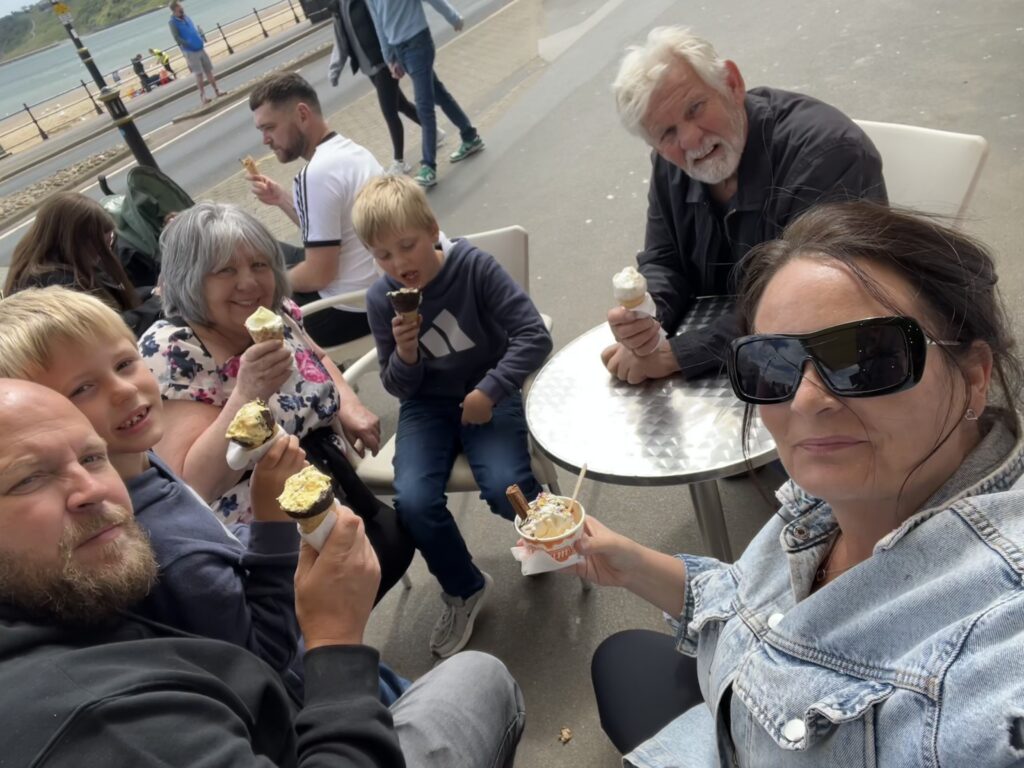
Even simple days out can feel quite sad sometimes. The best way I can describe it is going to the coast and everyone wanting to ‘just grab some chips and grab an ice cream,’ and I can’t. When I can’t have something, it makes everyone feel that they shouldn’t have it either, and I end up saying, “No, you have them, it’s fine,” because I just want everyone else to enjoy themselves. But it does make you feel left out sometimes, even in those small moments.”
How did you navigate changing your diet when you were first diagnosed, and do you have any tips for others?
“When I was first diagnosed, it felt like there was nothing I could eat. It takes a long time to get your head around it all.
One of the biggest things I learned quite quickly is not to just search for ‘gluten-free food,’ because loads of foods are naturally gluten-free but aren’t labelled in those sections. At first, I was looking online at the free-from aisle thinking, ‘Is this all I can eat?’ and it really overwhelmed me.
I’d also say don’t give up on enjoying food. Find things that still make you feel included when everyone else is eating together.
My favourite gluten-free foods are probably sweet things. Some supermarkets sell gluten-free cakes, and they’re really nice. I love having them with custard because I can still have that when everyone else is having pudding.”
What do you wish others knew about coeliac disease?
“I wish people understood that coeliac disease is an autoimmune condition, it’s not me being fussy or choosing not to eat gluten.
People often say things like, “Can’t you just have it this once?” But they don’t see what happens afterwards, the pain, exhaustion, diarrhoea and the long-term damage it can cause.
I also think more people need to understand the difference between coeliac disease and a food intolerance. This isn’t just an upset stomach. Eating gluten can cause real damage to my body.
Awareness is getting a bit better, especially in restaurants where staff now ask whether it’s coeliac disease or a food intolerance, but there’s still a long way to go.”
Why are you sharing your story with Guts UK today?
“I want people to understand what it’s like to have coeliac disease, and to do that, I know that I need to be willing to talk about what it’s actually like to live with it.
I hope that if somebody else is feeling the way I felt before I was diagnosed, they might read my story and recognise something in it. If it helps someone push for answers or feel understood, then that’s really important to me.”
Glossary of medical terms
- Autoimmune condition: When your immune system mistakenly attacks your own body instead of defending it.
- Cross-contamination: For those with coeliac disease, cross-contamination is where food can become contaminated with small amounts of gluten during production or processing if gluten encounters gluten-free foods.
- Endoscopy: A thin tube with a small camera on the end inserted via the mouth.
- Locum doctor: A doctor who temporarily steps in for another doctor.
About Guts UK and the Let’s Talk Guts campaign
Guts UK is the national charity for the digestive system, providing information and support for people affected by digestive conditions and symptoms, including a dedicated Helpline.
Our Let’s Talk Guts campaign is aimed at reducing the stigma that so often surrounds digestive health by encouraging people to get to know their guts and feel more comfortable talking about them.