Grace’s coeliac disease and bile acid diarrhoea (BAD) story
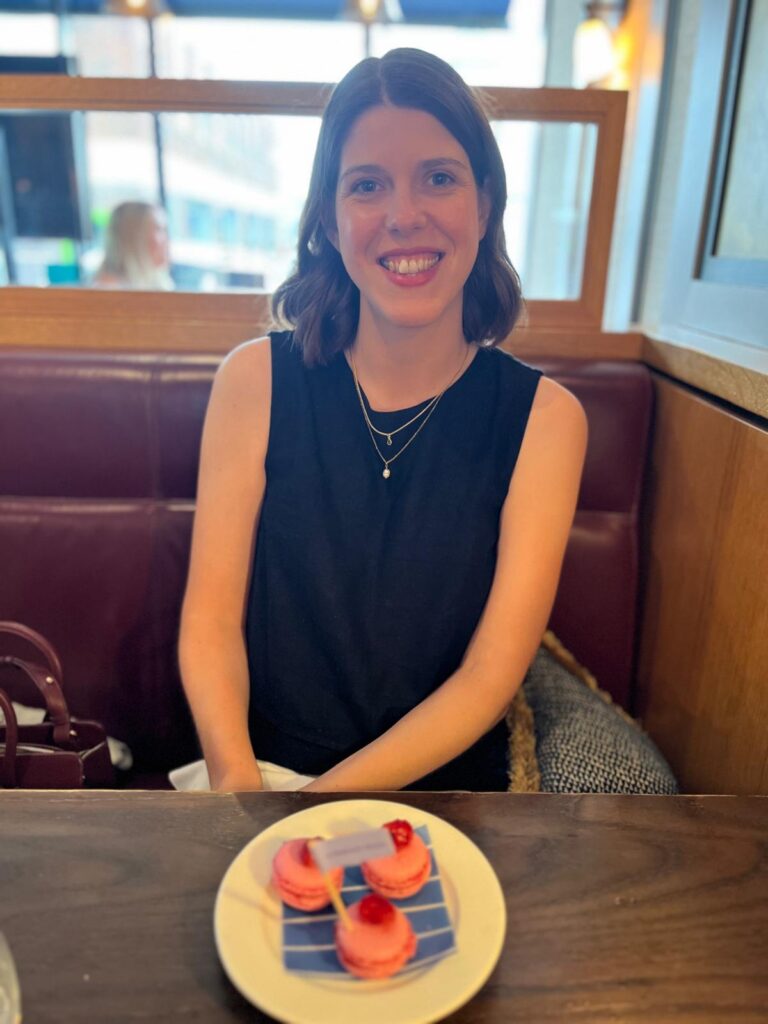
"My friends and family have shown me what true support looks like. From helping me to seek out gluten-free treats, recipes and restaurants, they really show their love towards me."
Note: At Guts UK, we want our stories to be easy to understand for everyone. If any medical terms in Grace’s story are unfamiliar, you can find definitions in our medical glossary below.
Tell us a little bit about yourself
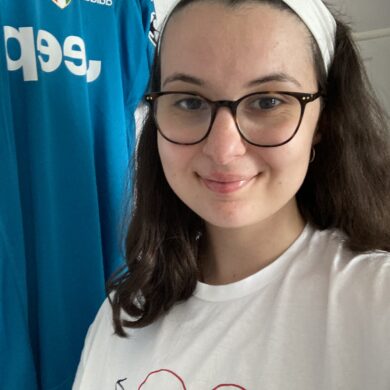
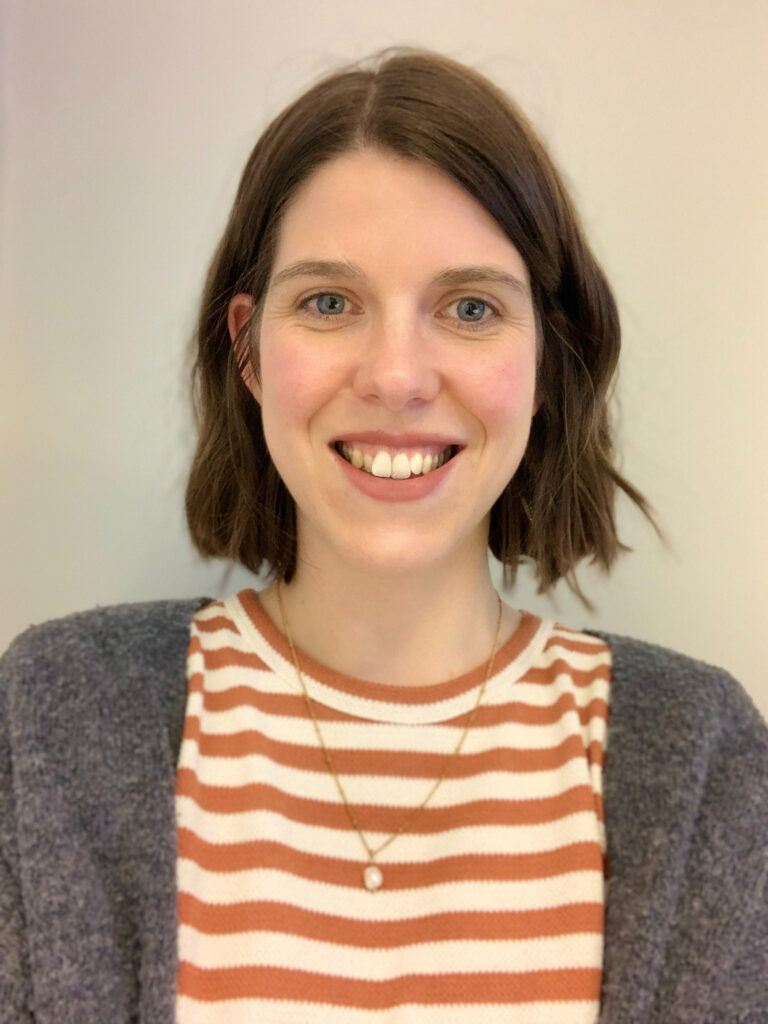
“I’m Grace, and I’m 34. I live in Hertfordshire with my husband and work in charity campaigning. Outside of work, I love sewing and making some of my own clothes. I’m also a big football fan, and I can often be found exploring gluten-free eateries!”
When did your coeliac disease symptoms begin, and what were they?
“When I was around 15 years old, I started getting bad stomach aches and diarrhoea, accompanied by urgency to get to a toilet.”
Talk us through your journey to diagnosis
“My GP initially diagnosed me with irritable bowel syndrome (IBS), but my symptoms never really improved. A couple of years later, when I was 18 and started university, I went to a different GP. She arranged a blood test for me to be tested for coeliac disease. I then had an endoscopy, which confirmed I had coeliac disease.
Navigating going gluten-free whilst settling into university life was an experience with mixed emotions. I gradually learnt how to manage a gluten-free diet, and annual monitoring showed that my coeliac disease was under control. However, I was still experiencing symptoms: diarrhoea with urgency to use the toilet, bloating and stomach cramps. I was told I likely had IBS alongside coeliac disease, and under the supervision of a dietitian, tried the low FODMAP diet twice.”
When were you diagnosed with bile acid diarrhoea (BAD)?
“I was diagnosed with being coeliac in 2009 and then I didn’t get my bile acid diarrhoea diagnosis until 2021. So there was a long time between my diagnosis of having further tests.
At an annual monitoring appointment, a gastroenterologist asked me if I’d ever been tested for bile acid diarrhoea (BAD). He referred me for a SeHCAT scan, which confirmed I had severe BAD.
Getting the diagnosis was incredibly validating. For years I knew something wasn’t right, but I didn’t have an explanation. Suddenly there was a reason for what I’d been experiencing and, most importantly, there was treatment.
I was prescribed Colesevelam, a bile acid sequestrant medication, to manage the condition changed my life in a good way.”
How are you now?
“My symptoms are now more under control, although I still have some symptoms. However, after more than a decade of digestive symptoms, things finally feel more manageable. The physical symptoms can be painful and tiring, but I’ve been impacted the most emotionally.
The biggest difference is that I no longer feel like my gut controls my life. I can enjoy going out for meals, travelling and spending time with friends without constantly worrying about where the nearest toilet is. That’s been incredibly freeing.”
Can you tell us about your anxiety?
“My anxiety around living with digestive conditions has been hard to navigate. I have avoided social events or doing certain things for fear of not being able to access a toilet, alongside worrying about feeling unwell and not being able to get home easily. I had cognitive behavioural therapy (CBT), which did help somewhat.
For a long time, I wasn’t open about my anxiety with any of my friends or family. I worried they’d think I was being silly. My therapist encouraged me to be open with them about my anxiety, and once I did, my loved ones were so supportive and helped to put things in place that made me feel more comfortable attending social events.”
How does living with digestive conditions, like coeliac disease and BAD, impact your daily life?
“Having coeliac disease can be tough in general. From making sure food is safe for me to eat to understanding the risk of cross-contamination, it’s hard to switch off, especially when it comes to visiting new places to eat. Travelling is also harder as it involves a lot of planning, which often takes the spontaneity out of things.
It can also impact me financially. My food shop costs more because I have to buy gluten-free products. Having said all that, the positive of having digestive conditions is that my friends and family have shown me what true support looks like. From helping me to seek out gluten-free treats, recipes and restaurants, they really show their love towards me. It’s so lovely seeing the excitement on their faces when they find something new (and safe) for me to try! “
What would you say to others to encourage them to join the conversation as part of our Let’s Talk Guts campaign?
“Digestive symptoms can have a huge impact on your confidence, your relationships and your quality of life, but they’re still something many people struggle to talk about.
The more we talk openly about gut health, the more likely people are to recognise symptoms, seek help and get the answers they need.
The consultant who recognised that I should be tested for BAD changed my life. It shows the difference that awareness and knowledge can make.
You don’t have to just put up with symptoms because you’ve been living with them for a long time. Keep asking questions, keep advocating for yourself and don’t be afraid to talk about what you’re experiencing. Those conversations could make all the difference.”
Why did you join Guts UK’s Experts by Experience (EBE) panel?
“When I was diagnosed with BAD, I had no idea what it was. I searched online and found Guts UK’s information. It was so helpful, and I’ve always wanted to give back to Guts UK for being there when I needed them. Since being involved as an EBE, I’ve seen the amazing work the charity does to both support people with digestive conditions and symptoms and help improve vital research.
Through sharing my experience as an EBE and sharing my story, I hope to help others with digestive conditions and symptoms feel less embarrassed and alone. It’s also so important to highlight the need for improving diagnoses of digestive conditions. “
Glossary of medical terms
- Bile acid sequestrant: A medicine that binds to the bile acid in the small intestine, stopping it from causing symptoms in the large bowel.
- Cognitive behavioural therapy (CBT):
- A psychological therapy that helps people manage mental health problems by identifying and changing negative thought patterns and behaviours.
- Cross-contamination: For those with coeliac disease, cross-contamination is where food can become contaminated with small amounts of gluten during production or processing if gluten encounters gluten-free foods.
- Low FODMAP diet: A particular form of diet, often used in people with IBS, under the supervision of a dietitian, which excludes short-chain fermentable carbohydrates. This type of carbohydrate may be a cause of symptoms for some people.
- SeHCAT scan: A two-part nuclear medicine test, used to measure how well your body retains bile acids.
About Guts UK and the Let’s Talk Guts campaign
Guts UK is the national charity for the digestive system, providing information and support for people affected by digestive conditions and symptoms, including a dedicated Helpline.
Our Let’s Talk Guts campaign is aimed at reducing the stigma that so often surrounds digestive health by encouraging people to get to know their guts and feel more comfortable talking about them.