


Michael’s diverticulitis story
Michael shares his story as part of our 2026 Diverticular Disease Awareness campaign, keen to share hope and to emphasise why patient-led research is so vital for chronic digestive conditions.
5th October 2026
Posted: 15th September 2026
Updated: 1st September 2026
Researcher: William Dalleywater
Guts UK grant recipient: Early Career Research Development Grant
Location: University of Nottingham
Start date: 1st March 2026
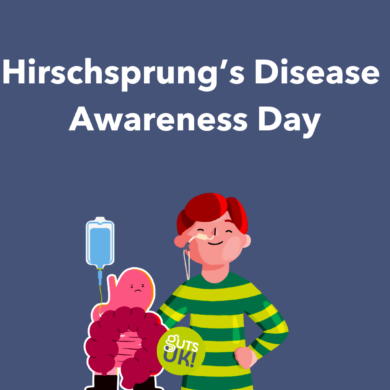
Hirschsprung’s disease is a rare digestive condition that affects babies and children. It happens when part of the bowel is missing important nerve cells. These nerve cells help poo move through the bowel. When they are missing, poo can get stuck. This can cause severe constipation, swelling, infection and sometimes serious illness.
The current treatment is an operation to remove the part of the bowel that does not work. This operation can save lives, but it does not always solve all the problems. Some children still have constipation, infections, tummy pain or problems controlling when they poo. This can make everyday life harder, including school and family life. For example, children may worry about having an accident, needing the toilet suddenly, missing lessons or sleepovers, or feeling different from their friends.
Rather than simply removing the damaged bowel, this project explores whether it could one day be repaired using healthy bowel tissue grown in a lab.

The project uses stem cells. Stem cells are special cells that can be turned into different types of cells in the body. The team will use a type called induced pluripotent stem cells, or iPSCs. These are adult cells that have been altered in the lab so they can grow into other cell types.
The aim is to grow a small patch of bowel tissue. This patch would include the main cells found in the bowel, including muscle and lining cells, and the nerve cells that are missing in Hirschsprung’s disease. The researchers will first work out the best way to grow these cells together. Then they will test the patch in mice to study how the tissue behaves in a living body rather than just in a lab dish. This will show whether the cells survive, stay organised and begin to act like bowel tissue.
This is early research, so it is not a treatment yet. But it could be an important step towards a new way to help children with Hirschsprung’s disease. In the future, doctors may be able to repair the part of the bowel that does not work, rather than remove it.
Guts UK is the national charity for the digestive system. We are the only UK charity funding research into the whole digestive system.
People are suffering. People are dying. All because of a lack of knowledge about our guts. Guts UK exists to change that.
You can find out more about what we do here. For helpline details, please click here.






Michael shares his story as part of our 2026 Diverticular Disease Awareness campaign, keen to share hope and to emphasise why patient-led research is so vital for chronic digestive conditions.
5th October 2026
Bloating is that uncomfortable, tight or full feeling inside your tummy. It is a subjective sensation, meaning it is something you feel inside your gut, even if your gut doesn't look any different on the...
5th October 2026

By submitting this form, you are consenting to Guts UK contacting you by email as detailed above. To make any changes to your preferences you can email us on [email protected] or by calling us on 020 7486 0341. Your details are safe with us. Please read our Privacy Policy for more details.