Did you join our webinar? It’s not too late to get to grips with diverticular disease

Guts UK was delighted to host a free webinar to help people get to grips with diverticular disease, a common but often misunderstood condition that affects between 1 in 3 and 1 in 2 people in their lifetime. 

What was it about?

The event covered all things diverticular disease, including an overview of the condition, symptoms and treatment options.

We were joined by expert panellists including healthcare professionals and two experts by experience who live with the condition. There was also a short Q&A, with lots of interesting questions asked by our audience. We didn’t get round to answering all of them, so we’ll  be sharing a follow up to answer more of the questions soon.

Where can I watch it?

You can watch the video here! It’s on our Guts UK YouTube channel to view at any time.

Who is the event recording for?

The event recording is suitable for anyone affected by diverticular disease who didn’t make it to the webinar, including people with symptoms of the condition and people who have a diagnosis, as well their family, friends and carers.

It’s time we got to grips with our guts and learning about digestive conditions and symptoms is for anyone who’s interested. Even if you don’t have the condition or know anyone who does, you might still find it useful.

What is diverticular disease?

Diverticula are permanent pockets that develop in the bowel and in some people, they can cause symptoms. Having symptoms is diagnosed as diverticular disease. But the terminology surrounding diverticular disease can get a little confusing, so let’s break it down:
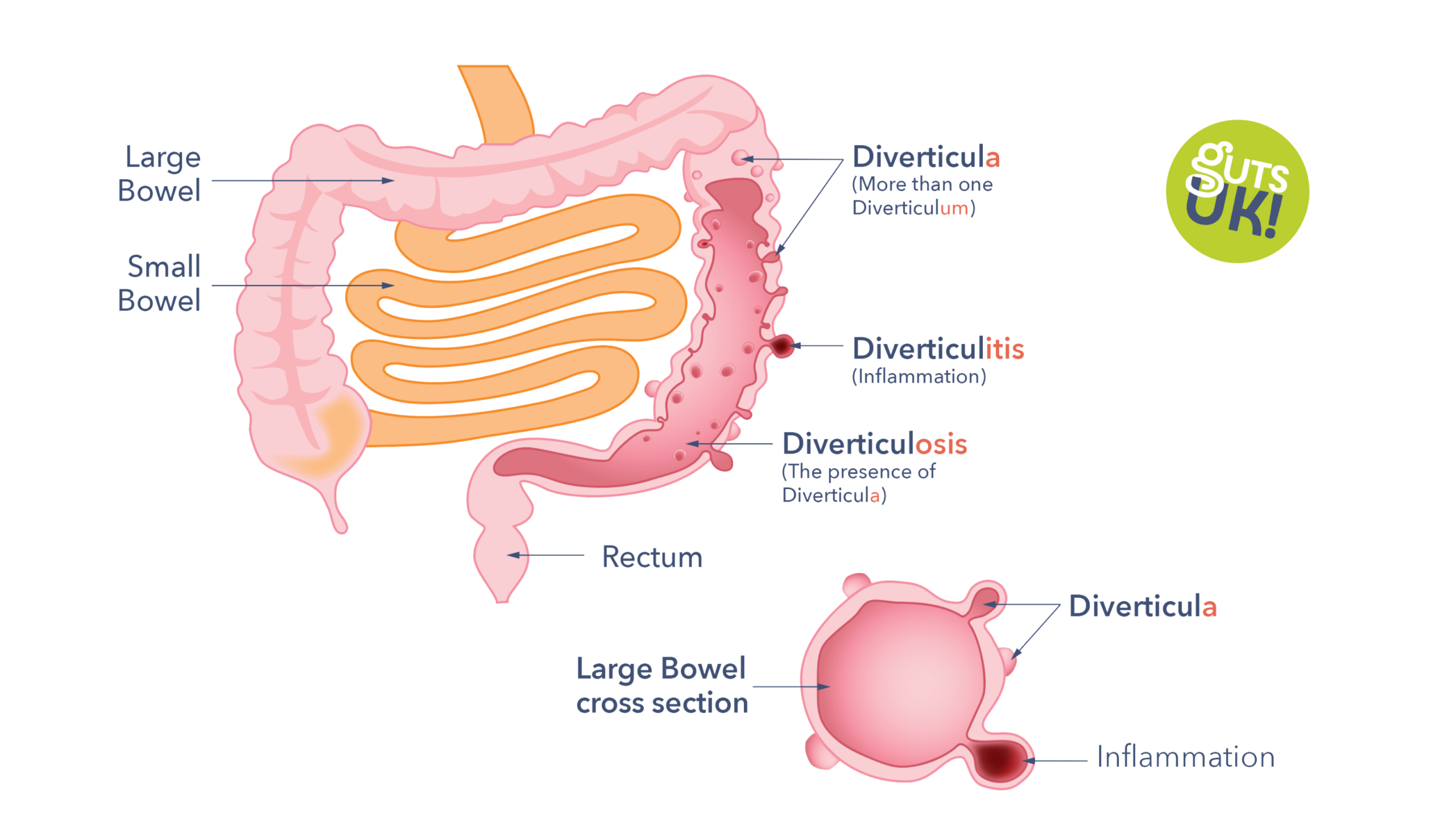
 

The diverticular disease glossary:

  • Diverticulum: A diverticulum is a small pouch about 1cm in size which sticks out from the wall of the large bowel.
  • Diverticula: This refers to more than one Diverticulum. The most common site for diverticula is on the lower part of the large bowel on the left-hand side. They are permanent unless the affected part of the bowel is surgically removed.
  • Diverticulitis: Diverticulitis means the condition that occurs when a single diverticulum or several diverticula become inflamed or infected.
  • Diverticulosis: You may have heard the term diverticulosis, which means the presence of diverticula. This is not the same as diverticular disease. Most people with diverticulosis do not have, or go on to develop, diverticular disease. The great majority of people with diverticulosis will live out their lives never having symptoms. Having symptoms is diagnosed as diverticular disease.

Learn more about the condition with our patient information, available to read online or download.

Contact our Helpline

Guts UK’s Helpline can provide information, support, guidance and signposting. Call us on 0300 102 4887 (Monday to Friday, 10am to 2pm) or complete our online form here.


  • twitter
  • facebook
  • linkedin
  • youtube
  • tiktok
  • instagram

Read more posts...

New: Mia’s acute pancreatitis story

In 2023, Mia was four and was crying in pain and kept touching her belly. A few days later, Mia woke up curled in pain, and she kept vomiting, her belly swelling, and she looked...

Larissa stands beside Mia, who is sitting on some stones. Larissa is wearing sunglasses, a pink jacket, and black trousers. Mia is wearing a pink floral jacket and pink trousers, with a pink toy stroller next to her. They are outdoors, surrounded by greenery, with a stone structure in the background.

New: Mark’s chronic pancreatitis story

Mark, from Shropshire, was just 46 years old when he died at home from pancreatitis. His mum, Margaret, shares his story with us in the hopes of raising awareness and helping other families affected by...

Mark is outside at dusk at wears a white Led Zeppelin t-shirt, with a black and white floral short-sleeved shirt on top, partially buttoned up. He has a sleeve of tattoos on his left arm and short, light brown hair which is spiked up. He smiles slightly at the camera.