Scarlett’s story – Crohn’s disease
"At my follow-up appointment, I was diagnosed with Crohn’s disease and told it’s a lifelong condition. I wondered what my life would look like. I was so terrified."
Tell us a little about yourself
“I’m Scarlett, I’m 31 and I live in Somerset. I work as a model specialising in vintage fashion, beauty and lifestyle. I have a degree in dance and drama and have recently started aerial silks classes. I have a sister who sadly passed away when she was young. She is my drive and inspiration, to live life to the fullest for her.”

When did your Crohn’s symptoms begin and what were they?
“Looking back now, I think I was showing symptoms of Crohn’s in primary school. I had trouble passing poo, and the GP explained to my parents that it was because I was rushing my time in the toilet. We didn’t think anything else of it.
As a child, I was so active between dance shows, Brownies and more. When I was 13, I noticed I needed to nap before doing anything and felt constantly sick, along with stomach pain. I also went to the bathroom a lot more, and I noticed blood in my poo. I panicked and told my mum I was going to die!“

Talk us through your journey to diagnosis
“The GP I saw acted fast. They took blood and explained clearly what might be going on. The results showed high inflammation markers, and an ultrasound scan and more blood tests were arranged. After these results, I was referred to a children’s hospital for an MRI scan, colonoscopy and endoscopy. Immediately after my colonoscopy, I was told that signs of Crohn’s disease had been found. Coming round from anaesthetic, along with never having heard of Crohn’s before, I remember thinking “a disease?! What is this?!”
At my follow-up appointment, I was diagnosed with Crohn’s disease and told it’s a lifelong condition. I wondered what my life would look like. I was so terrified. I felt so confused and didn’t feel it was explained at a level I could understand. I learnt a lot from other people’s experiences and a neighbour’s daughter who has Crohn’s.“
What treatment have you received for Crohn’s disease?
“Shortly after diagnosis, I had my first flare-up, which made me understand it more and the impact on my body. I was put on anti-inflammatory tablets for a few months before things got much worse. I was trying to fit in dance shows whilst revising for my GCSEs and sitting my exams.
I soon learnt that stress is one of my biggest triggers, and Crohn’s just took over. I had an emergency appointment, and my options were explained: go on a liquid diet (elemental diet) for ten weeks to give my bowel a rest or have steroids.
I opted for the liquid diet, which consisted of taking prescribed supplement drinks. I vividly remember going into my history exam with heat patches taped around my tummy on prescribed pain relief, feeling so spaced out. Because everything happened so quickly, not many of my teachers knew about my diagnosis. Looking back, my Mum and I would have fought for more support.
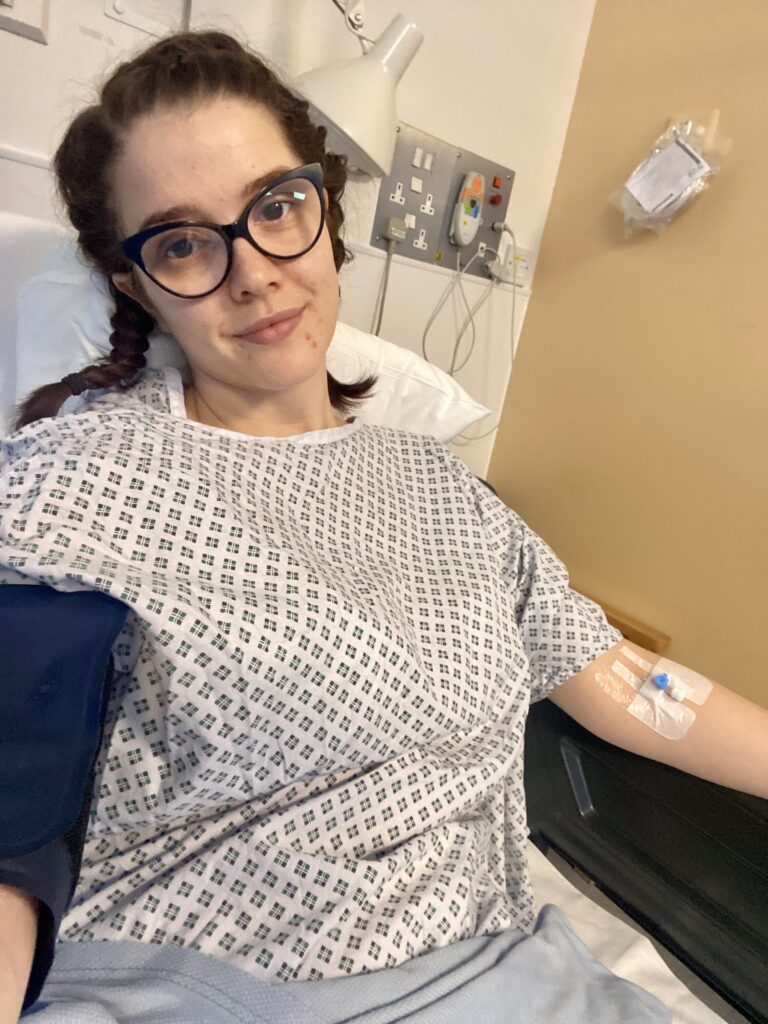
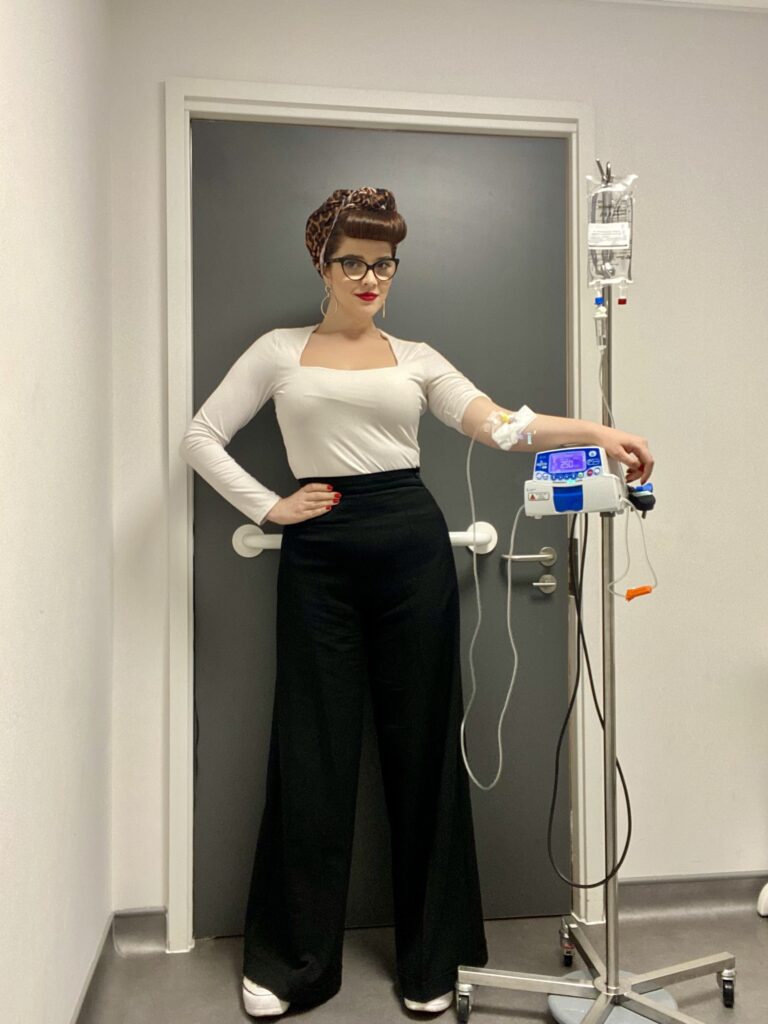
Over time, I was prescribed a few different medications, including azathioprine (a type of medicine that lowers the activity of the immune system, preventing it from attacking the body’s own cells) and adalimumab (a medicine administered via injection to reduce a type of protein that can damage the cells of the gut). I was on this for a year and a half before switching to Infliximab (a similar medicine to adalimumab given via a drip into a vein in your arm, in hospital). I am still on this now, 12 years later.”
How are you now?
“Things have been up and down over the years, including hospital visits, needing prescribed steroids and being temporarily put back on azathioprine. I’m on the maximum dose of Infliximab I can have, but have just had my blood levels checked, and all is okay currently.
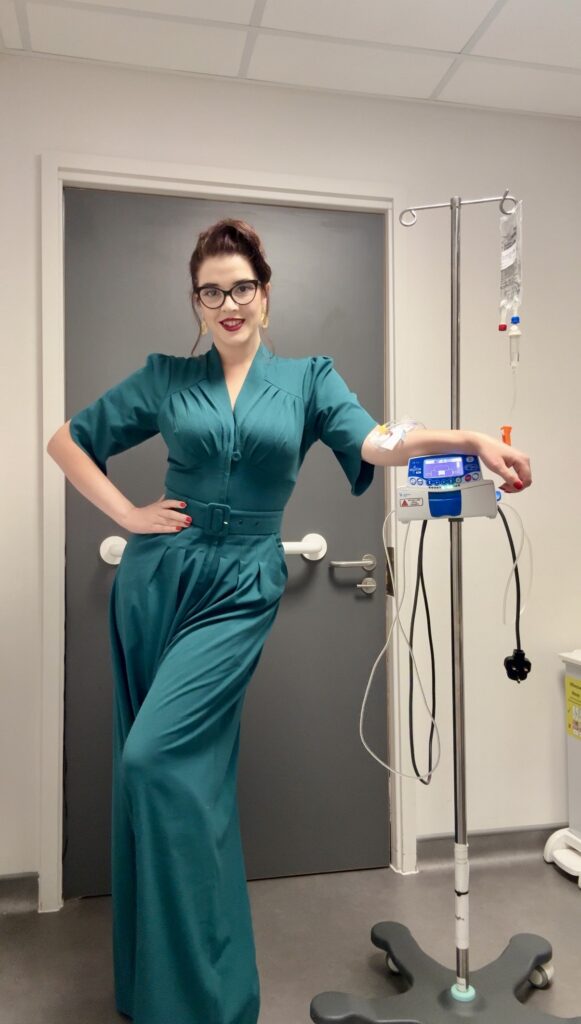
Crohn’s is different for everyone, and it’s important to remember that everyone has different levels of what is “good” for them. The week before my infliximab infusion, I need to take extra care. Fatigue becomes my worst enemy, and I get bouts of pain. I still get random days where stress or food has impacted me, making bathroom trips more frequent. “
Is there anything you’d say to someone with digestive symptoms or conditions?
“It’s so important to learn your body. Triggers and symptoms can be so different from person to person. There is no guide to living with a digestive condition but things such as keeping a food diary and notes of your symptoms can help.
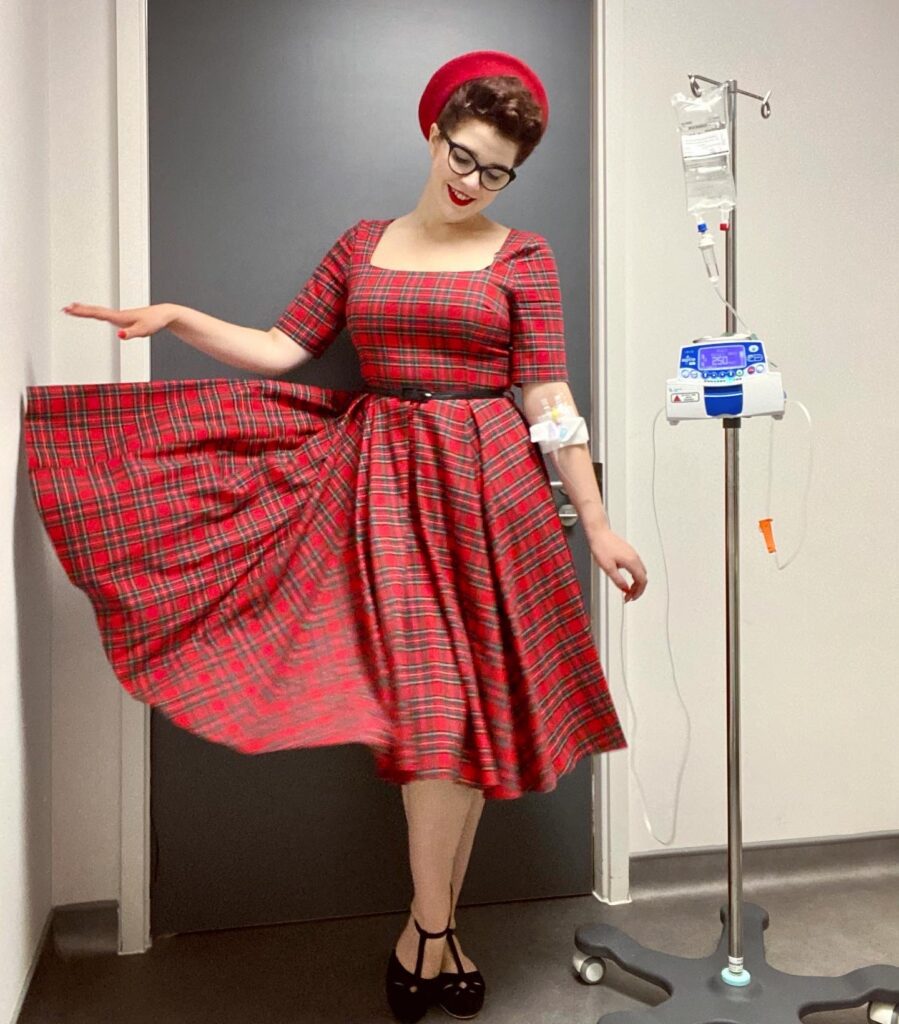
Life doesn’t have to stop just because you have a diagnosis. You might have to adapt, but it’s important not to give up. I’ve skydived and wing walked, and I get dressed up for my hospital infusions, as you can still be who you want to be, regardless of your condition.“
Why are you sharing your story?
“All stories are valid. I wanted to share my story as someone with Crohn’s disease who hasn’t had surgery, as I think it’s vital all aspects are shown. I’d love to be a beacon of hope for those reading this. We all poo, and reducing the shame and embarrassment is key.”

Why do you want to support Guts UK charity?
“From looking through Guts UK’s information, it’s clear just how many different digestive conditions there are. They all deserve awareness. We can downplay things sometimes, but things like acid reflux and other digestive symptoms deserve care, attention and support.”
About Guts UK
Guts UK is the national charity for the digestive system and the only UK charity funding research into the whole digestive system.
People are suffering. People are dying. All because of a lack of knowledge about our guts. Guts UK exists to change that.
With new knowledge, we will end the pain and suffering for the millions affected by digestive diseases. Please consider donating today. Your donation will help fund research leading to earlier diagnoses, kinder treatments and ultimately, a cure.