Microscopic Colitis Awareness Week
13th to 19th April 2026
 Microscopic Colitis Awareness Week takes place in April every year.
Microscopic Colitis (MC) is an Inflammatory Bowel Disease (IBD). This group includes Crohn’s disease and ulcerative colitis. Microscopic colitis causes inflammation in the bowel.
At Guts UK charity, we raise vital awareness for microscopic colitis. We also provide accredited information on the condition and fund vital research into digestive conditions.
Read on to discover how you can spot the signs and empower people to seek help sooner. Together, we’re getting to grips with digestive conditions such as microscopic colitis.
What is microscopic colitis?
Microscopic colitis (MC) is characterised by watery diarrhoea, usually accompanied by urgency and bowel control issues. People often have nighttime symptoms, which can be unrelenting. The severity of symptoms differs from person to person and can sometimes lead to a substantial loss of quality of life.
Importantly, good medications exist to bring about remission for this condition (where symptoms resolve or are much reduced).
What are the usual symptoms of microscopic colitis?
Symptoms of microscopic colitis include:
- Watery diarrhoea.
- Bowel incontinence episodes.
- Waking during the night to empty the bowels.
- Urgency to use the toilet.
- Frequent need to empty the bowels (can be many times in 24 hours).
- Abdominal pain.
- Unexplained weight loss.
- Bloating.
People must know the symptoms of microscopic colitis so that those affected can discuss it with their doctor. This is true for both the undiagnosed and those unsure of their treatment. Considering more symptoms and signs, along with watery diarrhoea, may help with the diagnosis.

Who does microscopic colitis affect?
Microscopic colitis can develop at any time, but is more common in middle age. Most people are diagnosed between the ages of 50 and 70 years old. In people over 65 with diarrhoea, as many as 1 in 5 might have microscopic colitis.
Microscopic colitis occurs more often in women and can occur earlier in people who smoke cigarettes.
How common is microscopic colitis?
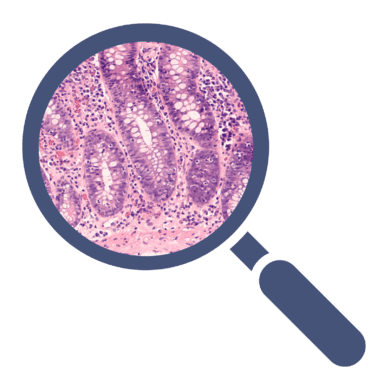
In the UK, 1 in 2,000 people have microscopic colitis. However, reported rates vary widely. Figures are likely to be an underestimate because it is often misdiagnosed or missed. This is because current stool and blood tests for other IBDs do not pick up microscopic colitis. Only tissue samples (biopsies) from the large bowel can detect microscopic colitis inflammation.
Diane’s story
Suddenly, I couldn’t go anywhere if there wasn’t a toilet in sight. There was no warning; I’d feel an urge to go to the toilet and within seconds, I’d be passing watery stools. You know when something is wrong. I know it might feel embarrassing and that might stop people from getting help, but know that help is there, and life can return to normal.

Sarah’s story
In 2017, around eighteen months after our youngest was born, I started experiencing stomach pain, urgency to go to the toilet, and a lot of wind. Often, I’d pass mucus but not much stool. Then other times, I’d have watery diarrhoea. I battled with symptoms for seven years before receiving my microscopic colitis diagnosis.

Where can I find more information on microscopic colitis?
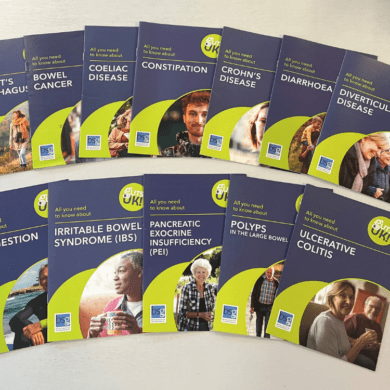
Our accredited information on digestive conditions and symptoms includes microscopic colitis. Our Helpline team can also provide information, guidance and support.
Watch our microscopic colitis webinar on demand
Discover more about microscopic colitis and hear from healthcare professionals and people with lived experience of the condition:
Why is it important to raise awareness for microscopic colitis?
Microscopic colitis is underreported and misdiagnosed, but even so, cases are on the rise globally. This is why it’s important to raise awareness among the public and health professionals, too. Diagnosis means treatment can finally begin.
By shining a light on microscopic colitis, we can empower more people to spot their symptoms, support healthcare professionals in making faster diagnoses and ensure that the thousands currently living without answers in the UK can access the information and support they need.

How can I help?
You can help us spread the word about microscopic colitis by:
- Following us on social media and sharing our awareness and information posts. You never know who we might reach and help together. Find us on Facebook, LinkedIn, and Instagram.
- Share an experience with microscopic colitis with your own circles and on your own social media channels. You can register your interest to share a story with us here.
- Fundraise for Guts UK charity to help us abolish the taboos surrounding digestive health, and get to grips with guts. You can fund life-changing research and empower people to seek help sooner.
Falk Foundation has provided support for this campaign. Find out more about how Guts UK works with the pharmaceutical industry here.