
Gut Microbiome (Poo) Testing
Download printable versionThinking about a poo (faecal/stool) microbiome test?
We recommend reading this information leaflet, especially the conclusion, before you decide. You might want to take the test for various reasons. But it’s important to know that it probably won’t explain any symptoms you have or offer specific ways to improve your health and wellbeing.
Overview
Research on the gut and its microbes, known as the gut microbiome or gut microbiota, is now a hot topic. Scientists are studying which microbes live in the human gut. They are also looking into how these microbes impact our health. Scientists want to know how these microbes affect how a person responds to diet and medications. This includes drugs for high blood pressure, cancer treatments, and antibiotics.
Findings have shifted from scientific publications to articles and books for the public. In response, several companies now offer an analysis of your faeces (otherwise known as stool or poo) to tell you what microbes are in your gut and how they might affect your health.
But what is really known about this approach? How useful are these tests? And what can we learn from the test results? This leaflet explains gut microbes, their connection to health and disease, and what test reports might mean. We hope this leaflet will help you decide if it is worth taking one of these tests, which may cost several hundred pounds.
Gut Microbiome
An introduction to the gut microbiome
As many as 1,000 types of bacteria can live in the large bowel of a human being. Each person typically has around 200 different species of bacteria. These differ from one person to the next, even between identical twins! Many other microbes also live there, including archaea, protozoa, viruses, and yeasts. Check the glossary at the end for more details on these microbes. These microbes also differ between individuals. The mouth, stomach, and small bowel also have microbes, but in lower amounts than the large bowel. Together, there are around 30-40 trillion microbes in the digestive tract. That’s about the same as the cells in the whole human body!
Most research has focused on large bowel bacteria, because we have access to lots of them in poo.
Analysis tools are currently best equipped for analysing bacteria.
This has also led to the launch of various commercial gut microbiome tests.
The gut microbiome is a complex system that does important jobs to maintain our health. It is essential for digestion. Gut microbes make chemicals called metabolites. These nourish your cells and help control your immune system and inflammation in the body. In rare cases, your immune system and the gut bacteria can cause disease. That is why scientists analyse poo samples. They want to find out which microbes are there and what they are doing.
We know your gut microbiome is key to your health, but we can’t say for sure what makes it healthy or not. We are all so different. We’re beginning to see features of your gut bacteria that might show how to improve your gut microbiota. However, we still have a long way to go.
What is poo?
Poo (otherwise known as stool or faeces) is waste matter. It is passed out of the body from the bowels after food is digested.
Poo contains:
- Water – about three quarters by weight
- Undigestible fibre from fruit and vegetables etc.
- Protein – mainly from you as a waste product
- Fat
- Salts
- Cells from the bowel – it is normal to shed these
- Mucus made by gut cells
Poo also has trillions of bacteria. Whilst in your gut, they help digest the unused parts of food and produce a range of chemicals (metabolites) that we need. Healthy poo is various shades of brown. A chemical called stercobilin causes this colour. It comes from the breakdown of old red blood cells, the body’s oxygen and carbon dioxide transporters. The chemical is excreted from the liver into the bile ducts and then into the small bowel. Stercobilin starts as yellow/green coloured bile and it is converted to brown in the large bowel. Some foods, medicines, or diseases can change the colour of poo. For instance, iron tablets can turn it black. A liver problem can make it chalk-coloured. Some people find the smell of poo offensive, but it is simply down to chemicals made by gut bacteria. For example, hydrogen sulphide causes the rotten egg smell – this is perfectly normal.
Poo can be graded using the Bristol Stool Chart (BSC). It ranges from 1 (hard pellets that are tough to pass) to 4 (a smooth sausage shape with no cracks) up to 7 (completely liquid). BSC grades 3-5 are considered normal, as is opening your bowels from once every three days to three times per day. Bowel function can vary a lot between people. The best option is to be aware of what your normal habit is.
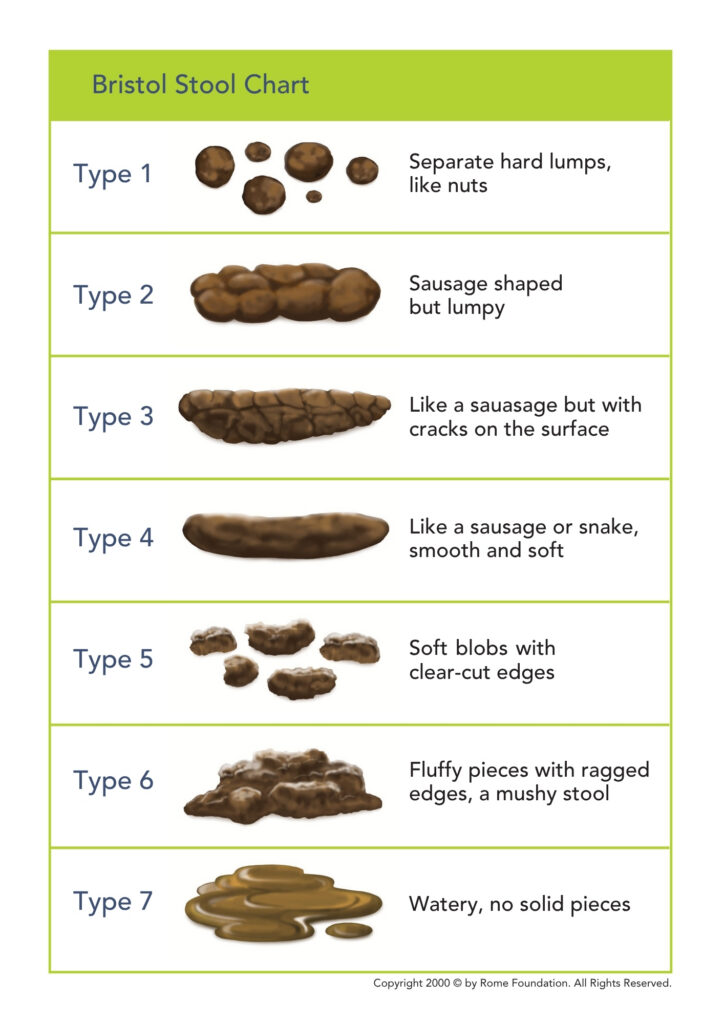
If you’d like to better understand what the colour, consistency and frequency of your poo means, check out our Poo-Torial tool.
Testing
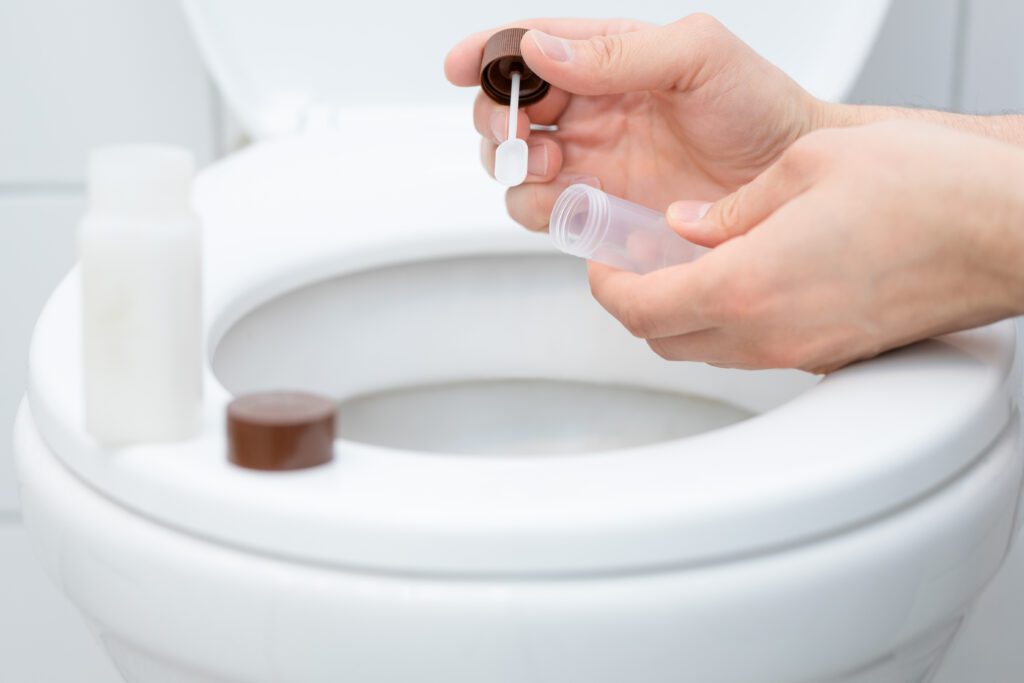
Gut microbiome testing usually requires a poo sample. It is collected in a container and sent to a lab for analysis. The lab analysis can include test tube experiments to detect bacteria that can cause infections. This is similar to how a doctor or nurse checks a urine sample for a urinary tract infection. However, many new companies offer to analyse the gut microbiome using the genetic material, or DNA, of the bacteria. This estimates how many types of bacteria are in the poo sample and potentially what sort of bacteria they are. Some tests will also measure other things e.g. calprotectin (a marker for gut inflammation).
Some companies, after an initial analysis, offer a ‘solution’ to your test result, such as a prebiotic or probiotic. A prebiotic is a product that stimulates the growth of certain beneficial microorganisms in the gut. A probiotic is a product containing live beneficial bacteria or yeasts. Based on current evidence, several probiotics have been assigned general health benefits. These may support digestive health and the immune system, but these benefits are not dependent on findings in a gut microbiome test. A very small number of probiotics have been approved for specific use, but they are not often prescribed by doctors following diagnosis of a relevant digestive condition and have nothing to do with a gut microbiome test.
Faecal Analysis
Faecal Analysis and Gut Microbiota
When you send off a poo sample for analysis, what does this mean? The answer depends on what tests are being done.
If the company running the test tries to grow the bacteria in your poo, they may be looking for disease-causing bacteria. Many of these bacteria cause symptoms, like diarrhoea. The test helps a doctor advise if treatment is required or if they can rule out an infection. It is what many hospitals do when they analyse poo, if doctors think you have a gut infection. Other companies extract DNA from your poo. They use DNA sequencing tools to identify the bacteria in it. They will give you a list of the types and numbers of bacteria. This analysis is sometimes referred to as a ‘profile’ or ‘fingerprint’. Currently, this has very little value to you, your GP, or nurse. This is for many reasons:
- It is only one sample. The bacteria found in samples can change. This can happen even if they come from the same person, but at different times of day or after short-term diet changes.
- It is only a poo sample, which may not be representative of the entire gut microbiome.
- Tests claiming to understand how healthy your gut is from the bacteria found in your poo do not, in fact, indicate gut health.
- DNA testing does not tell you if a microbe is dead or alive – just that it is or was there.
- Testing bacteria numbers is relative. This means if one type increases, others will decrease, even if the overall number of bacteria in the gut stays the same.
- Many gut bacteria might not show up in stool samples. They can cling to the gut wall. Even if they do end up in stool, we lack the tools to identify them. This means a poo sample is not fully representative of all the microbes found in the bowel.
This may still be of interest to you if you want to know what is in your poo. These tests are more useful for scientists studying the gut and its microbes. Scientific testing is often in very specific circumstances with specific research questions in mind.
Some companies will send you a report. This will compare your poo to what has been found in other poo samples. If the bacteria in your test match those in thousands of other people’s poo, then congratulations! Your poo is just like theirs. If it isn’t, there is still nothing to say whose is ‘better’ or ‘worse’.
The report may show the levels of bacteria reportedly linked to some diseases. Whilst these results may be interesting, they do not show a risk of developing that disease. Scientists haven’t clearly connected any bacteria to diseases such as cancer, heart disease, or dementia. So don’t panic, for instance, if your report says you have low levels of a bacteria associated with preventing diabetes. Scientists can’t say for sure if raising the bacteria level will lower your risk of diabetes. We don’t have enough information to suggest specific actions will help, like dietary changes or certain probiotics.
There is also the question of how valuable a single, one-time test is. Many doctors measure disease markers multiple times. They do this in case the first reading was an odd one, or to observe trends over time.
Also, we do not know what a ‘healthy’ level of some bacteria and chemicals in poo should be. We are just starting to understand how much gut microbes fluctuate in a healthy person over time. Until we do more research, these tests can raise doubt in people’s minds. They often don’t help doctors or nurses advise you on getting healthier or treating any health issues.
Importantly, at present, experts do not recommend routine gut microbiome testing.
A well-balanced diet with a good variety of foods usually leads to a wide variety of bacteria in your bowel and poo. Many experts feel this is a good thing.

Results
Different companies offer different reports on your poo. There is no single standard for them. A common feature is to report bacteria levels in your poo sample and compare them to the wider population. Researchers show that sending the same sample to different companies can lead to conflicting results.
As an example, a company may report this:
“Your test results indicate that your microbial diversity score is normal”.
This simply means that your gut microbiome is like that of people with healthy guts.
Another example of something a report might say is:
‘Your sample tested negative for pathogens. This includes Clostridioides difficile, Escherichia/Shigella, and Vibrio cholerae.”
If you had some of these microbes, you probably didn’t need a DNA test. You would be unwell, and doctors would likely have diagnosed you. Also, healthy people have some of these bacteria in their poo. They do not cause disease e.g. many types of Escherichia coli.
Some test providers may make a statement such as:
“The test does not suggest a diagnosis or lack of diagnosis. Please consult your doctor to interpret the results provided in this report.”
The science and evidence are not yet strong enough to support any links to disease. So, in fact, your doctor cannot make any recommendations based on the results. They can’t explain the results because the science isn’t clear. Some reports may suggest that your bacteria levels are abnormal. They might say “condition more likely,” but this is speculation.
Conclusion
We are entering a very exciting period of research into the role of different bacteria and other microbes in our body. Research may tell us how they might be connected to both health and disease, and how our gut microbes may affect how we respond to medicines prescribed by doctors. But we are far from saying that one poo sample can tell us if we are at risk of bowel cancer. Or, that it can show we are protected against heart disease or diabetes.
Getting your poo tested by a commercial company may be interesting. It may even satisfy your curiosity about what bacteria are in your gut. However, it won’t help you find out why you’re unwell or how to improve your health. In fact, a global panel of experts has advised against routine gut microbiome testing owing to its current limitations.
We do know that a healthy, varied, and balanced diet can improve your gut microbiota and overall health. This diet should be rich in plant-based foods, including fruit, vegetables, legumes, nuts, seeds, herbs and spices, with an avoidance of foods high in sugar, salt and saturated fat, or those that have been ultra-processed.
If you are experiencing symptoms, the best person to ask for help is a medical professional. Please check the What’s Up With My Gut website, which will tell you what tests your doctor may advise.

Discover more:


Copyright © 2026 Guts UK. This leaflet was published by Guts UK in May 2026 and will be reviewed in May 2029. The leaflet was written by Guts UK and the Gut Microbiota for Health Expert Panel of the British Society of Gastroenterology and has been subject to both lay and professional review. All content in this leaflet is for information only. The information in this leaflet is not a substitute for professional medical care by a qualified doctor or other healthcare professional. We currently use AI translation tools on our website, which may not always provide perfect translations. Please check for further explanation with your doctor if the information is unclear. ALWAYS check with your doctor if you have any concerns about your health, medical condition or treatment. The publishers are not responsible or liable, directly or indirectly, for any form of damages whatsoever resulting from the use (or misuse) of information contained or implied in this leaflet. Please contact Guts UK if you believe any information in this leaflet is in error.