
Oesophageal Motility Disorders
Download printable versionOverview
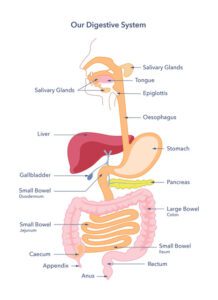
There are two types of swallowing problems. Doctors call swallowing problems dysphagia.
Oropharyngeal dysphagia: This is a swallowing problem that happens at the back of the mouth or in the throat. This problem usually happens above the epiglottis, as shown in the picture of the digestive system above. It is also called ‘high’ level dysphagia. The pharynx is part of the throat, not the oesophagus (food pipe), so it is a different diagnosis. Oropharyngeal dysphagia can be caused by neurological (nervous system) causes of swallowing problems, like Parkinson’s disease, strokes, and Alzheimer’s disease. Choking when eating solid food or drinking liquids is a common symptom. You can read more about high level dysphagia here. Please note – this information does not cover oropharyngeal dysphagia.
Oesophageal dysphagia: This is where the swallowing difficulty is in the gullet (oesophagus). This is the type of swallowing difficulty seen with oesophageal motility disorders. It happens below the level of the epiglottis, as shown in the image of the digestive system above. This is called ‘low’ dysphagia.
Rarely, people can have both oropharyngeal dysphagia and oesophageal dysphagia.
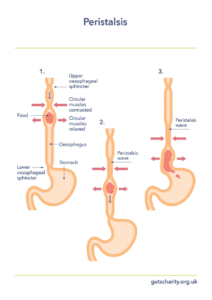
The oesophagus (or gullet) is a muscular tube that connects the mouth to the stomach. Nerves supply the gullet and signal to the muscles to squeeze (contract) when swallowing is needed. Movement of the digestive system is called peristalsis. The muscles contract in a co-ordinated way to help move the contents of the gullet to the stomach. Sometimes, these nerves do not work as they should. This is when problems with swallowing can occur.
Each type of disorder can affect people differently. The difficulties can range from mild swallowing problems to needing support, such as enteral nutrition (tube feeding). This is feeding through a tube if the person is unable to get enough nutrition by eating and drinking. A dietitian can support you in deciding whether tube feeding is right for you. Ask your doctor for a referral if tube feeding is being considered.
There are several different kinds. They are called:
- Distal oesophageal spasm: This disorder is diagnosed when the muscles in the lower part of the gullet spasm.
- Hypercontractile oesophagus: This disorder is diagnosed when the gullet muscles squeeze too vigorously and go into spasm. This can occur along the length of the gullet. The spasm can last for a few hours and prevent swallowing.
- Ineffective oesophageal motility: This disorder is diagnosed when peristalsis is weak, absent or uncoordinated. The failed swallow means that food does not move down the oesophagus in the usual way.
- Absent peristalsis: This is diagnosed when there is no movement of the gullet during testing.
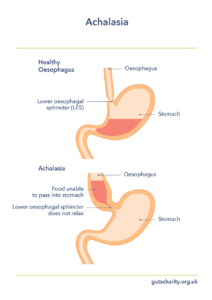
- Achalasia: A disorder where the lower oesophageal valve does not relax to let food into the stomach and the oesophageal muscles don’t contract.
Other causes of oesophageal swallowing difficulty should be ruled out by your doctor before a diagnosis of oesophageal motility disorder is made. These causes could include:
- Stricture: This is a narrowing of the oesophagus and is generally caused by inflammation.
- Oesophageal cancer: See the symptoms section for symptoms to look out for. Most people with swallowing difficulties do not have cancer.
- Rolling Hiatus Hernia: This is a rare form of stomach hernia where the stomach pushes up through the diaphragm into the chest.
Causes
Age: Most people are diagnosed with gullet motility problems at an older age.
Medicines: Some medicines can affect swallowing. This is particularly the case with strong opioid based medicines and bisphosphonates given for osteoporosis.
Lifestyle: Alcohol, tobacco and ketamine use can affect gullet motility.
Gastro-oesophageal reflux disease (GORD). Motility problems make it harder for acid to clear from the oesophagus. This can worsen GORD symptoms. Reflux into the oesophagus can irritate it and lead to spasms. Sometimes, it is unclear which symptom started the disorder.
Diabetes: Difficult-to-control diabetes can harm the nerves in the digestive system over time. This can lead to motility disorders.
Underactive thyroid: The thyroid regulates how fast the body works. If this gland is underactive, the body’s systems slow down. This can slow down the gullet’s movement, making it harder to swallow.
Eosinophilic Oesophagitis: This allergic disorder causes high levels of eosinophils, a type of white blood cell. When too many eosinophils gather in the gullet, they can cause long-term inflammation tissue damage. This disorder can affect the movement of the gullet. It is the most common cause of food bolus obstruction in the UK. A food bolus obstruction happens when swallowed food becomes stuck and blocks the gullet. This may need treatment using an endoscope to remove the food.
Systemic sclerosis: This is a rare connective tissue condition. People may have problems with how their digestive system moves. This can affect the movement of the gullet.
Sometimes the cause is not known. This is called idiopathic.
Symptoms
Symptoms include:
- Problems swallowing (dysphagia)
- Chest pain or burning pain
- Regurgitation of food
- Pain on swallowing
- Weight loss
- Nausea
- Vomiting
- A sensation of food getting stuck in the oesophagus
- Choking
Symptoms can mean that people take longer to finish a meal. They might also avoid tough foods because these are harder to swallow.
Some of these symptoms can also be symptoms of cancer. These are called red flags. Difficulty swallowing and losing weight without meaning to can be red flags. Talk to your doctor about these symptoms. Also, let them know if your symptoms change after diagnosis. For most people with these symptoms, cancer will not be the diagnosis.
Talk to your doctor if you have any of the following symptoms:
- Difficulty in swallowing
- Pain when swallowing, pain behind the breastbone, or upper belly pain
- Weight loss without trying
- Regurgitation of food or being sick (vomiting) after eating or drinking
- Regurgitated food containing blood
- Vomiting blood
- Choking, unexplained dry persistent coughing or unexplained chest infections
- Feeling tired, which can be related to anaemia. Anaemia is when you have low levels of healthy red blood cells to carry oxygen throughout your body
Pain when swallowing, known as odynophagia, often happens with infections like thrush (candidiasis). Thrush is more common in people taking steroids or who have recently taken a course of antibiotics.
If you have chest pain when you are active, talk to your doctor. They need to rule out angina before looking into or treating oesophageal issues. Angina is pain of the heart caused by coronary artery disease.
Diagnosis
A simple blood test can show if the thyroid gland is working properly. Your GP can arrange this test.
Endoscopy (gastroscopy)
A gastroscope is a camera at the end of a thin tube that is inserted through the mouth into the stomach. Sometimes it might be referred to as an oesophago-gastro-duodenoscopy (OGD). A gastroscopy is a test to check inside your throat, gullet (oesophagus) and stomach. This is the upper part of your digestive system. This is usually done first to rule out other causes of symptoms. In oesophageal motility disorders, the result is usually normal. A technician needs to take six small tissue samples to check for eosinophilic oesophagitis. This is necessary even if the oesophagus looks normal.
Sometimes a trans-nasal gastroscope is used. Doctors insert this through the nose instead of the mouth. This test will not be available in all centres.
pH testing
Your doctor might refer you to the physiology department to check for acid reflux. A nasogastric tube with an acid sensitive tip is placed through the nose to the bottom of the gullet. It is attached to a monitor, which you wear for 24 hours. The monitor records how many episodes of acid reflux occur.
Manometry
Doctors use a manometry test to diagnose motility disorders. This test is also performed in the physiology department. It uses a small tube that goes through the nose and into the oesophagus. This test checks how the muscles in the gullet move and whether these movements are coordinated. You should be given details of how to prepare for the test before your appointment.
Functional Lumen Imaging Probe
This balloon is used during gastroscopy to check contractions in the gullet. It is not yet widely available.
Barium swallow test
This is a type of X-ray that uses a liquid (barium), which shows up on the X-ray. This can show any abnormal muscle spasms in the gullet. It offers an alternative to gastroscopy. However, a downside is that it can’t take samples (biopsies).
Treatment
Treatments are based on the UK health system and may vary outside the UK.
Medicines
Do not stop taking any medicines without speaking to your doctor first.
There are few evidence based medicines to help with motility disorders.
Stop or reduce doses of medicines that affect motility, like opioids. These are not helpful for long-term chronic non-cancer pain. Your doctor might recommend that you reduce your dose or try a different treatment for pain.
Avoid tablets that might get stuck in the oesophagus if there’s a spasm or weak muscle contraction. These could be changed to soluble forms or given in other ways. Examples include NSAIDs (anti-inflammatory) and bisphosphonate (bone-strengthening) medicines.
If you have reflux, your doctor might recommend treatment with proton pump inhibitors.
Other medicines with limited research for boosting gullet motility include prucalopride and buspirone. These medicines are ‘off label’ use. This means they aren’t approved for use in the NHS for oesophageal motility disorders. But your doctor may feel that they could be helpful for you. Ask your doctor about the benefits and risks of the medication.
If chest pain is the main symptom from an oesophageal spasm, muscle relaxants might help. Options include:
- Calcium channel blockers like nifedipine or diltiazem
- Nitrates such as GTN spray
- Antispasmodics like buscopan or peppermint oil
Some of these medications might make reflux symptoms worse.
Using antidepressants like amitriptyline or trazodone might help reduce sensitivity of the pain in the oesophagus. These medicines are not used to treat mental ill health in this situation. They work directly on the gullet and are used to treat pain.
Lifestyle changes
Since alcohol and smoking have long-term health risks, it’s best to reduce or stop your intake. Your GP can discuss the help available in your area. People are usually more successful when they have support.
If you also have reflux, the lifestyle advice for reflux may be useful.
If swallowing is still a problem, you might need to change the texture of your food to make it easier to swallow. If you struggle with making diet changes, you should ask for a referral to a dietitian to help. Dietitians should be registered with the Health and Professions council. You can find out by checking the register here.
If you are also having problems with swallowing in the mouth and throat, you could be referred to a Speech and Language Therapist (SALT). They may prescribe a specific textured diet for you to follow and give you exercises to help with swallowing.
Some people with oesophageal motility disorders say that avoiding very hot or very cold drinks helps to reduce spasms. However, there’s little research to support this claim. For most people, avoiding very hot or very cold drinks shouldn’t be harmful or limiting.
Botox injections
These can be delivered through endoscopy. They may help people with hypercontractile oesophagus spasms by treating pain and dysphagia. They can be used to relax the lower oesophageal valve in people with achalasia who are not suitable for surgery.
Oesophageal POEM
This procedure uses endoscopy with heavy sedation or general anaesthetic. The treatment internally cuts the muscle of the lower oesophagus. It is used to treat severe spasm in hypercontractile oesophagus or a non-relaxing valve in achalasia.
Balloon dilatation
A small balloon is inserted into the oesophagus and inflated. This stretches the lower oesophageal valve and helps treat achalasia.
Surgical options
Myomectomy is a surgery that cuts the oesophageal muscle and lower oesophageal valve. It is mainly used for treating achalasia.
Support
What to ask your doctor?
- May I be referred to a dietitian to see if there are any changes to my diet that may help with my symptoms?
- Are there any other medications I can try?
- Have I been tested for eosinophilic oesophagitis?
- Do I need to be fed through a feeding tube to stop my weight loss?
Other support
PINNT are a support and advocacy charity for people needing home enteral nutrition.

Quick links


Copyright © 2026 Guts UK. This leaflet was published by Guts UK in September 2026 and will be reviewed in September 2028. The leaflet was written by Guts UK and reviewed by experts in oesophageal motility disorders and has been subject to both lay and professional review. All content in this leaflet is for information only. The information in this leaflet is not a substitute for professional medical care by a qualified doctor or other healthcare professional. We currently use AI translation tools on our website, which may not always provide perfect translations. Please check for further explanation with your doctor if the information is unclear. ALWAYS check with your doctor if you have any concerns about your health, medical condition or treatment. The publishers are not responsible or liable, directly or indirectly, for any form of damages whatsoever resulting from the use (or misuse) of information contained or implied in this leaflet. Please contact Guts UK if you believe any information in this leaflet is in error.