Posted: 7th September 2026 Updated: 4th September 2026
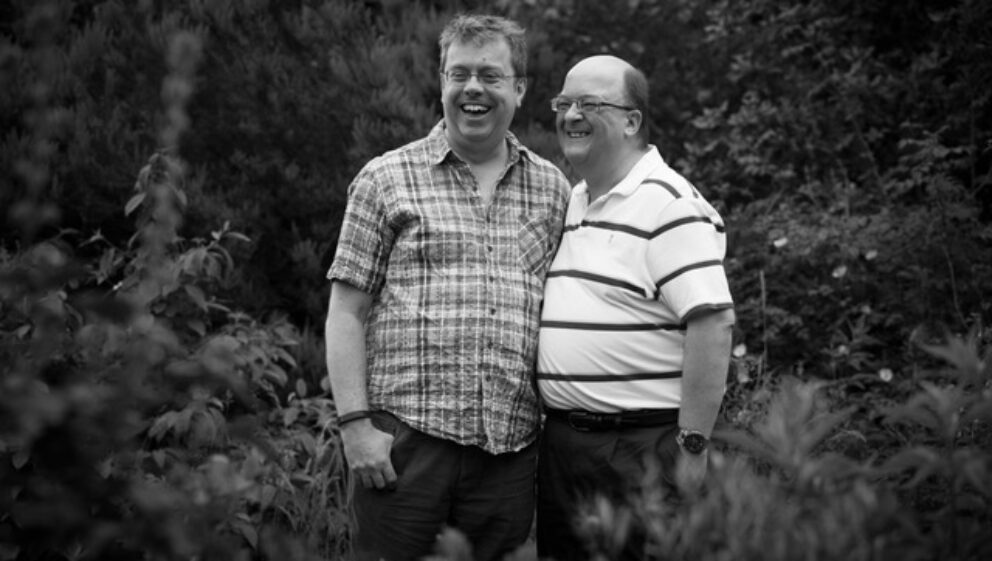
David and Steve met online in 2000. After six months of messages, they finally met in person and immediately clicked.
They built a life together filled with travel, theatre and live events. But for much of their marriage, they lived apart during the week.
Steve worked in South Wales, staying in a flat near his office, while David lived in Reading. Steve would return home every Friday, and the pair would spend their weekends together.
“We had planned to take early retirement and then we’d be free to live wherever we wanted and find a nice little place in the countryside somewhere.” said David.
But that future never happened. Steve died from severe acute pancreatitis aged just 54.
Around a decade before Steve developed pancreatitis, he was diagnosed with high triglycerides, which are a type of fat found in the blood.
Unbeknown to Steve and David at the time, high levels can increase the risk of acute pancreatitis, a sudden and potentially life-threatening inflammation of the pancreas.
“Since volunteering with Guts UK as an Expert by Experience (EBE), I’ve found that increased triglycerides are a significant risk factor in developing pancreatitis.”
In December 2019, Steve began experiencing stomach pain. The couple had been in London watching a show that weekend, before Steve returned to Wales.
“The next morning, he phoned me and said he still had stomach ache and he’d decided not to go into work, which was totally unheard of for Steve.”
The following morning, everything changed. “He phoned me and he was just screaming in pain.” recalls David.
David urged Steve to call 999. He then made the journey from Reading to Wales. In A&E, blood tests confirmed severe acute pancreatitis. Steve was struggling to breathe and was taken straight to intensive care.
“I asked one of the medical staff, ‘Could he die?’ They said, ‘Yes, we’re not sure he’s going to last the night. You’d better get the family down here.’”
Steve was critically ill in Wales, while David and the rest of their family were back in Reading. Steve was too unwell to be transferred closer to home, so David made the decision to stay at Steve’s work flat so he could be by his bed side.
Steve remained in hospital for almost three months, spending much of that time in intensive care. His pancreatitis led to multiple organ failure and other serious complications.
“I’d assumed that once they knew what it was, they could start treating it. But they said there was no treatment.
“Instead, doctors could only support Steve’s failing organs and hope his pancreas would recover.
“He went from experiencing an agonising stomach ache to multiple organ failure within 24 hours.”
There were brief moments when it seemed Steve might improve. Eventually, he was transferred to Reading, closer to David and his family, but he repeatedly needed intensive care.
“One of the complications of pancreatitis is pseudocysts, which are collections of fluid around the pancreas. They can become infected, and this happened to Steve a couple of times. He was given antibiotics and the infection cleared, but eventually it became so severe that there was nothing more they could do.” explains David.
“It was difficult because we had started to think about what life might look like if he survived. He had lost so much muscle that he couldn’t hold his head up, and we were told he would need intense therapy. He would also have needed to take medication for life and would have become diabetic.”
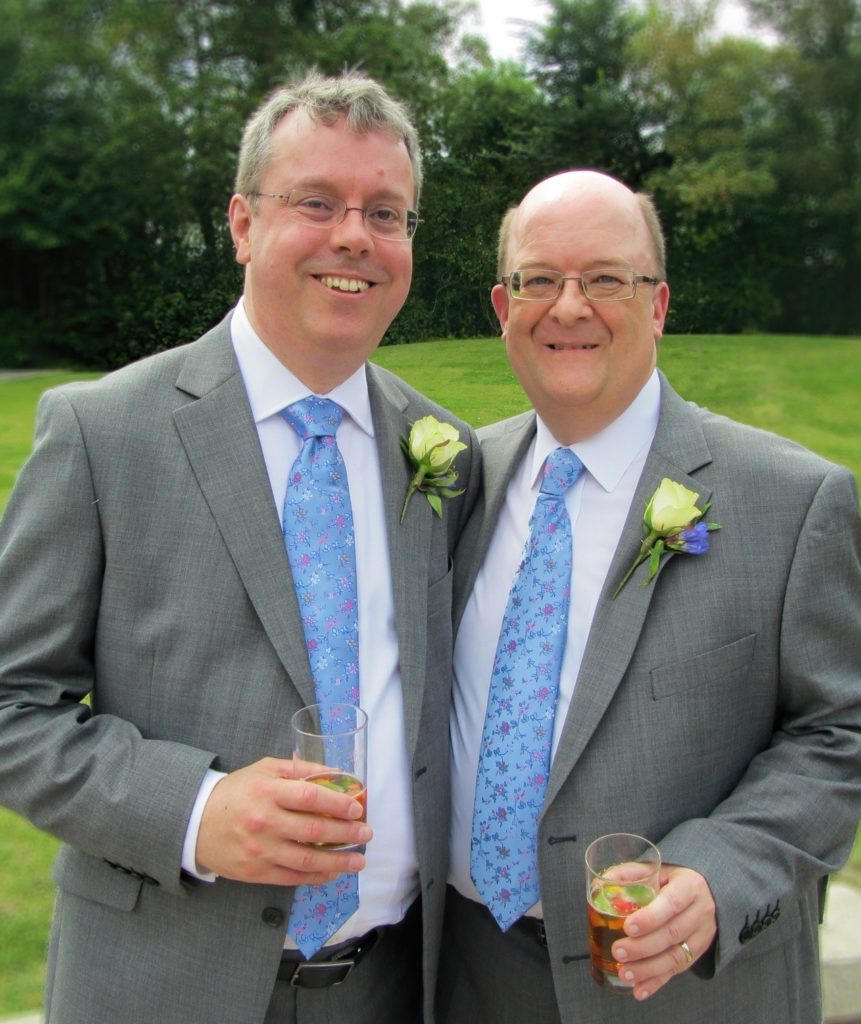
Steve (left) and David on their wedding day
After almost three months in hospital, Steve died on 15 March 2020.
After Steve died, David was left with questions he desperately wanted answered.
“Why is there no treatment? Could we have done anything to reduce his risk of getting pancreatitis? Why is there so little awareness of pancreatitis?
“It was too late to save Steve, but I wanted to know what I could do in his memory. I wanted to take everything I had learned from his experience and work with Guts UK to try to get answers and change the situation. And that’s what I’ve done.”
During Steve’s illness, Guts UK gave David something he desperately needed, information and support.
“At the time, I didn’t know what pancreatitis was, and the hospital gave us very little information. Finding Guts UK meant I could finally start to understand what was happening.
“The website gave us information about what pancreatitis was, what might happen next and whether somebody would survive it.
“It also helped us realise there were other people going through the same thing. Just knowing there was support there and somewhere to turn to was incredibly valuable during such a frightening time.”
Since 2020, David has volunteered with Guts UK as an Expert by Experience, contributing to research and clinical trials and helping ensure the experiences of people affected by pancreatitis are heard.
David has chosen to leave a gift in his Will to Guts UK.
“I can’t think of anything better than to support the work that Guts UK is doing. I’ve seen first-hand the difference that information, support, awareness and research can make, and I want to help make sure that continues in the future.
“There isn’t another charity that I’ve found in the UK that supports pancreatitis and other digestive diseases in the way Guts UK does.”
Talking about his hopes for the future, David said:
“I can’t change what happened to Steve. But if something that comes from his experience can help another family, then that’s incredibly important to me.
“The ultimate thing would be for research to eventually provide a treatment or cure for pancreatitis, but also to understand why people get it in the first place and whether there are ways of reducing the risk.”
For David, leaving a gift in his Will is about taking something devastating and using it to help create a better future for others.
“If my gift can help make sure another family has the information and support that we needed and help fund research so that one day people have better treatments, then that is a legacy I would be very proud to leave for Steve.
“And hopefully, Steve would be proud. I think he would”
Hirschsprung’s disease is a rare digestive condition that affects babies and children. It happens when part of the bowel is missing important nerve cells. Rather than surgery to remove the damaged bowel, this project explores...
On this Hirschsprung’s Disease Awareness Day (15th September), we’re sharing Rachel’s story. Rachel lives with a rare form of the condition – Total Colonic Aganglionosis (TCA) and shares her experiences of undergoing stoma surgery and...
did you know your guts are 25ft long?! sign up for more fascinating facts, the latest research developments and how you can support further, including fundraising activities and more:
Footer - Newsletter Signup
DID YOU KNOW YOUR GUTS ARE 25FT LONG?! SIGN UP FOR MORE FASCINATING FACTS, THE LATEST RESEARCH DEVELOPMENTS AND HOW YOU CAN SUPPORT FURTHER, INCLUDING FUNDRAISING ACTIVITIES AND MORE:
By submitting this form, you are consenting to Guts UK contacting you by email as detailed above. To make any changes to your preferences you can email us on [email protected] or by calling us on 020 7486 0341. Your details are safe with us. Please read our Privacy Policy for more details.