Leslie’s story – Oesophageal cancer
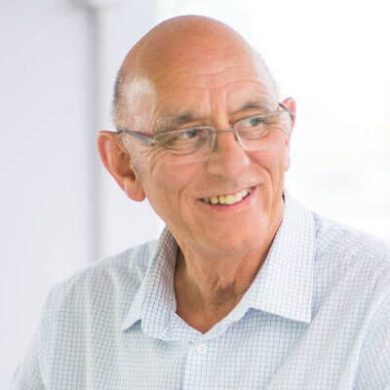
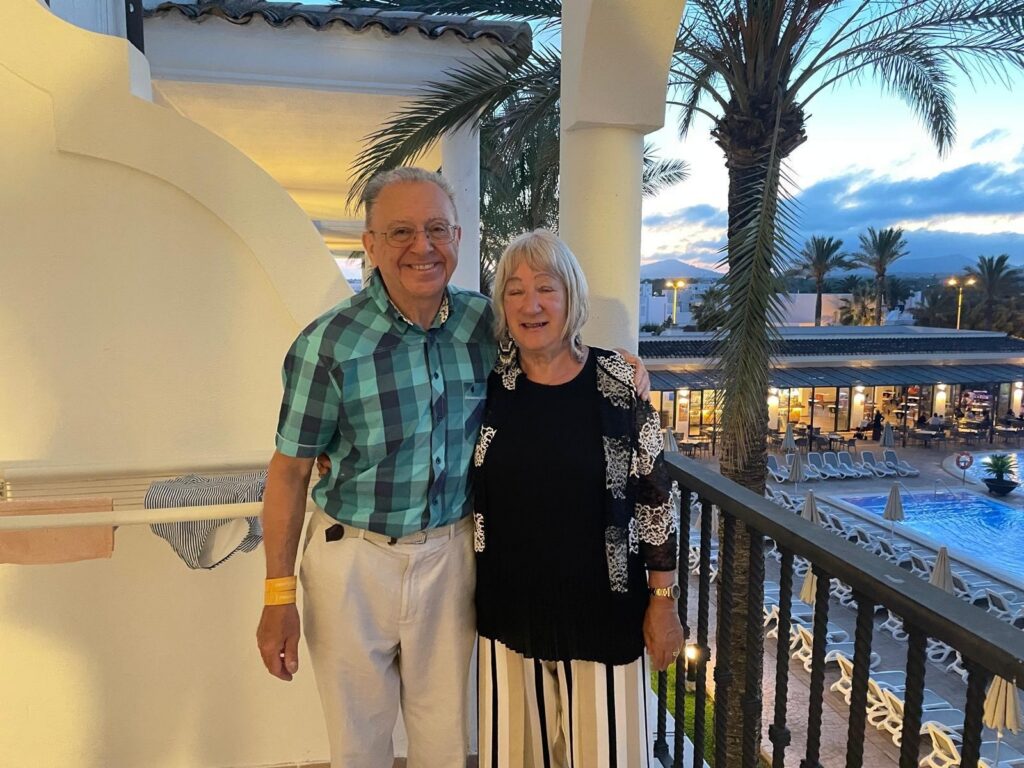
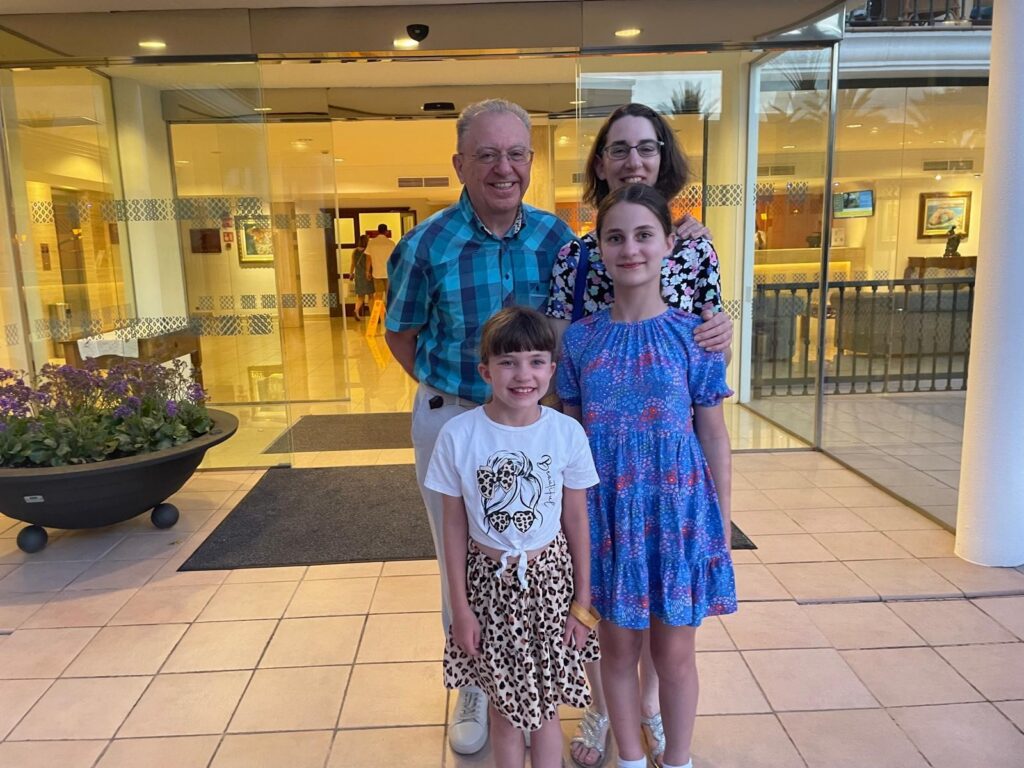
Leslie’s story is told by his daughter Nicola, with the help of her mother, Helen, and brother, Christopher.
Can you tell us a little about your dad?
“My dad originally came from Liverpool. He was the first person in his family to go to university and obtained a Classics degree at London University. He went on to complete his PGCE and go into teaching, before a career change in his 40s where he became a financial advisor.
Dad married my mum in 1983 and in 1984, I was born, followed by Christopher in 1987. He loved going travelling and reading literary and historical fiction, and he spoke and taught Greek and Latin.”
When did he begin experiencing symptoms of oesophageal cancer?
“Dad began experiencing symptoms of oesophageal cancer in early 2023. He loved cooking food, but once he had eaten, he would have digestive symptoms afterwards. It started being once every now and then and gradually increased to becoming more often. He had had heartburn for a few years but just treated it with over-the-counter medicines. We didn’t know that persistent heartburn could be a sign of oesophageal cancer. Dad decided to go and see his GP in July 2023.”
When was your dad diagnosed with oesophageal cancer?
“He had several months of tests and investigations including an endoscopy (a thin tube with a small camera on the end inserted via the mouth). In November 2023, Dad was officially diagnosed with oesophageal cancer.”
How did this impact you as a family?
“When he was first diagnosed, it was a massive shock to both him and our family. It was unexpected because there had been no history at all with any type of cancer in Dad’s family.”
What treatment did your dad receive?
“At the beginning of December 2023, I went with Dad to hospital to have a PICC line put in (a long, thin, flexible tube inserted into a large vein in the upper arm, providing long-term access for chemotherapy and other treatments). He began his first chemotherapy treatment a couple of days before Christmas. We were all nervous about the possible side effects he may experience from chemotherapy. He experienced dry skin, fatigue, coldness in his hands and feet, and hair loss. He couldn’t taste food very well and went off certain foods and drinks that he had previously liked. For example, he would choose green tea over ordinary tea!
Dad had neoadjuvant chemotherapy (treatment given, usually before surgery, to shrink a tumour, kill hidden cancer cells or to make surgery easier) for three months, then had an operation in March 2024 to remove his oesophagus (oesophagectomy). Another three months of chemotherapy followed this, then he was discharged in July 2024. After his discharge, his hair started to grow back.”
Tell us about what happened in September 2024
“Towards the end of September 2024, Dad started experiencing back pain. He had had a chest infection for a couple of weeks and thought the pain could be related. By the end of October, the pain had increased to the point where he couldn’t get out of bed.
We phoned for an ambulance and were told there was a six-hour wait, so Mum and I managed to get him in my car and took him into A&E in a wheelchair. After being on a few different wards and in hospital for 10 days for tests and scans, Dad was discharged. Tests found cancerous lesions on his spine, and we were told he needed radiotherapy (a precise cancer treatment that uses high-energy radiation, such as X-rays, to destroy cancer cells or shrink tumours). It wasn’t until Dad went to hospital for this that we were told his care was palliative (to reduce pain without curing the cause of the cancer). Until then, Dad thought he would be able to have his treatment and then go about his life as normal. Everything changed, and it took a while for the news to sink in. Dad passed away on 5th January 2025.”
Is there any advice you’d give to someone whose loved one has received a diagnosis of a digestive cancer?
“If you experience heartburn, see your doctor to make sure you are correctly treating the underlying symptoms.
Also, if you experience issues with swallowing, it’s so important to see a doctor as soon as possible. Early detection and treatment are key. If your loved one has been diagnosed with cancer, the important thing is to offer support and a listening ear.”
Why did you choose to support Guts UK at your dad’s funeral?
“We chose to support Guts UK at Dad’s funeral because we wanted to raise money so that there can be as much awareness as possible and life-changing medical research into digestive conditions.”
Why do you feel raising awareness is important, and what are your hopes for the future?
“Raising awareness of oesophageal cancer is extremely important as it is classed as one of the less survivable cancer types.
Our hopes for the future are better public awareness and improved treatment and care outcomes. We would be delighted if a cure is discovered for oesophageal cancer.”
About Guts UK
Guts UK is the national charity for the digestive system and the only UK charity funding research into the whole digestive system.
We provide information and support for people affected by digestive conditions like oesophageal cancer, including a dedicated Helpline.