Danielle’s story – Oesophageal cancer
I was told 'It’s unlikely to be cancer because you’re young and fit.' During the endoscopy, the room fell silent when they found a 6.5 cm tumour in my oesophagus. By May 2022, I was diagnosed with oesophageal cancer at the age of 37.
Tell us a little about yourself
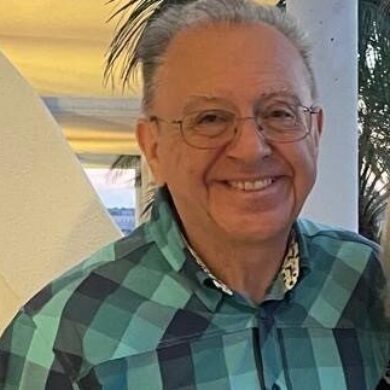
“I’m Danielle, and I’m 41 years old. I live in Leeds with my husband, Paul and my three children. I work as a teaching assistant.”
Can you describe when your symptoms started and what they were?
“In 2022, I started having difficulty swallowing, especially chewier foods like bread or meat, and I would need water to push them down. My GP thought it was heartburn and reflux and prescribed omeprazole (a medication used to treat heartburn and indigestion) and told me to come back in six weeks. I wasn’t convinced. I’d had heartburn during pregnancies, but this wasn’t the same sensation, and my swallowing didn’t improve.”
Talk us through your journey with oesophageal cancer
“On my fourth visit, a different GP agreed to refer me for an endoscopy (a thin tube with a small camera on the end inserted via the mouth) to rule out cancer. They said, “It’s unlikely to be cancer because you’re young and fit.”
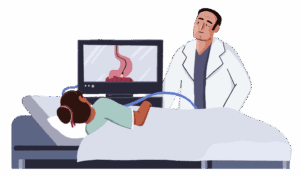
During the endoscopy, the room fell silent when they found a 6.5 cm tumour in my oesophagus. By May 2022, I was diagnosed with oesophageal cancer at the age of 37. Further tests showed it hadn’t spread to other organs, which I was relieved about.”
How did it impact your life?
“I was shocked and scared, and waiting for scans and answers was hard. You don’t feel like you’re in control of your life, but you have to have hope. I had five weeks of chemotherapy (drugs that work inside the body to destroy cancer cells) and radiotherapy (a precise cancer treatment that uses high-energy radiation to destroy cancer cells or shrink tumours).
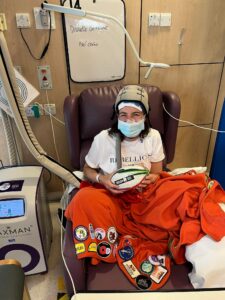
I carried on with usual activities, as I want things to stay normal as much as possible for my family. I kept running to keep myself strong, as it would help me through treatment and give me some control. I had medications to manage my pain and a feeding tube to make sure I had enough nutrition and energy to get through each day.”
What happened after your surgery?
“In September 2022, I had an oesophagectomy (surgically removing some or most of the oesophagus). After surgery, I had to completely change how I eat to adapt to my new digestive system. At first, it was painful and hard to learn how to eat again. I developed dumping syndrome, and my body doesn’t absorb some nutrients properly.
With support from my dietitian, I now eat little and often, focus on protein, take enzyme tablets and supplements. My stomach capacity is smaller, so I have to build up how much I can eat and aim for enough calories each day.”
How was your recovery?
“Recovering from surgery was the hardest thing I’ve ever done. However, I managed to run the Great North Run with a feeding tube while taking morphine for radiotherapy-induced oesophagitis (inflammation of the oesophageal lining caused by radiation damage during cancer treatment).
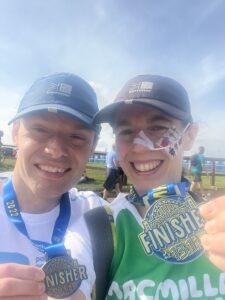
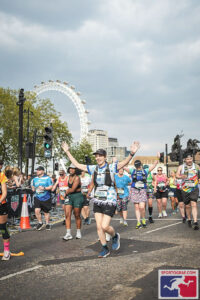
After surgery, I gradually rebuilt my fitness with yoga, Pilates, and by running again as a beginner. It took two years to get back to a similar level of fitness before surgery. Last year, I challenged myself to run the London Marathon in 2025, which was tricky to fuel with a digestive condition.”
How are you now?
“Cancer changed my life, but it also taught me to live in the present and value the time I’ve been given. I married my partner, Paul, in 2025 and went on holiday to Mauritius. I’m grateful to be here for my three children and watch them grow up. I’m back to working full-time and have found a sense of normality again.
Life can still feel scary at times. I had some counselling to help me adjust. Sometimes I worry if new sensations are my body adapting to a new normal or signs that the cancer is returning. But I now know the red flag symptoms to look out for and know when to get checked.“
What is one thing you wish people knew about oesophageal cancer?
“I wish people were aware of the symptoms and spoke to a doctor. The cause of my cancer is unknown, but ongoing acid reflux can increase the risk. What makes me sad is the complacency and ignorance around reflux symptoms.
Many people take antacids (medications that reduce the amount of stomach acid used to treat heartburn and indigestion) for months without medical advice and don’t realise how dangerous that can be. Acid reflux isn’t just caused by things you eat and drink. If your body is reacting like that, it’s telling you something isn’t right.
We also need to remove the stereotypes. Oesophageal cancer isn’t just something that affects older men. Anybody can get it. That thinking can delay diagnosis if people aren’t taken seriously.”
Why are you sharing your story?
“If you’re facing surgery or treatment, I want you to know that you’re not alone. It’s scary when you don’t know what life will look like, but recovery can happen. It takes a lot of hard work, but you can reach a good quality of life afterwards.
Oesophageal cancer is one of the least survivable cancers, and I’d love to see that change. If symptoms can be spotted earlier, it could improve the survival rates, but it still doesn’t get enough coverage. Before my diagnosis, I wouldn’t have been able to name the symptoms at all.”
Why do you support Guts UK charity?
“I support Guts UK because the information is clear, easy to understand and accessible to everyone. I found the website informative, and you’re funding a lot of research into digestive health. What stood out for me were the stories from people of all ages and all walks of life, including younger people. I was young when I was diagnosed, so those stories really resonated with me.”
About Guts UK
Guts UK is the national charity for the digestive system and the only UK charity funding research into the whole digestive system.
We provide information and support for people affected by digestive conditions like oesophageal cancer, including a dedicated Helpline.