Guts UK is proud to be a founding charity member of the Less Survivable Cancers Taskforce (LSCT).
Together with our Taskforce partners, we work to raise vital awareness of the less survivable cancers, four of which are digestive cancers, with Guts UK providing information and support for three of these cancer types, and to campaign for the change needed to save lives.
These cancers have an average five-year survival rate of just 16%. More than 90,000 people are diagnosed with one of these cancers every year.
Despite their devastating impact, these cancers have been neglected for decades, receiving significantly less funding, research attention and public awareness than more survivable cancers.
Why are outcomes so poor?
One of the biggest challenges is late diagnosis. Data released by the Taskforce shows that:
Average one-year survival is just 42%, compared with over 70% for all cancers.
Only 28% of patients are diagnosed at stage 1 or 2, compared with 54% across all cancers.
Symptoms of these conditions are often vague, screening programmes are limited and public awareness remains dangerously low.
The research gap
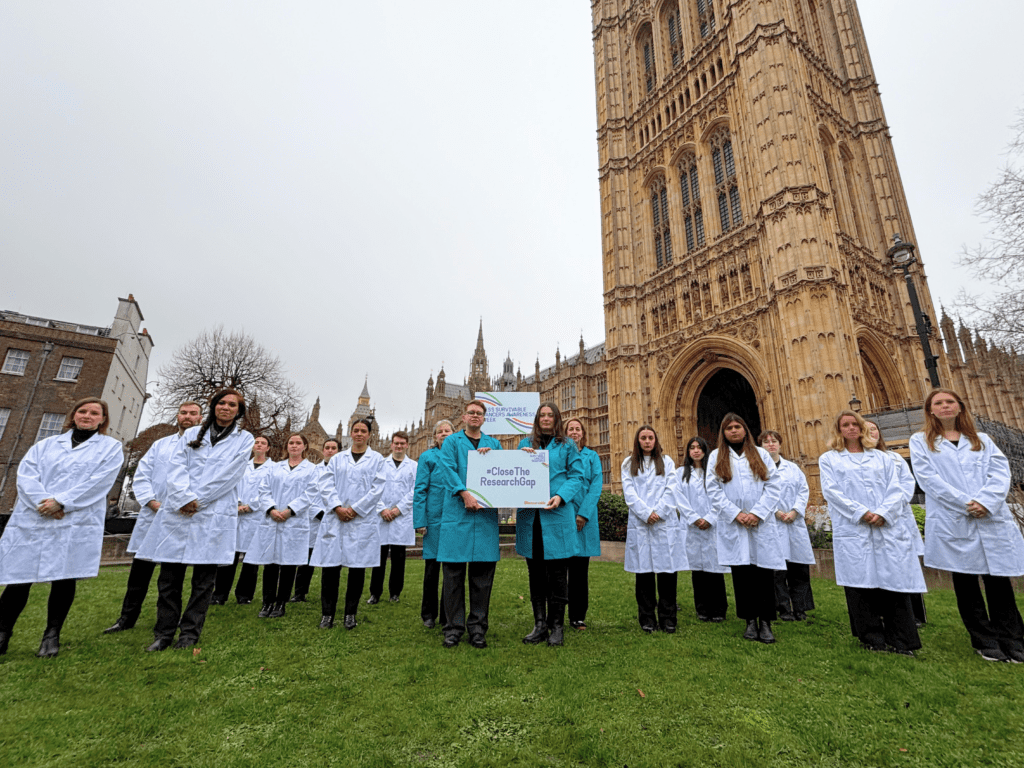
New figures released this week from the LSCT show despite causing 40% all cancer deaths, the less survivable cancers receive just 19% of cancer research funding. As part of Less Survivable Cancers Week 2026, Taskforce members attended Westminster to visually demonstrate this statistic through a publicity stunt.
Members of the LSCT attend Westminster to visually highlight the 19% funding less survivable cancers receive in comparison to other cancers.
The less survivable cancer research gap has real consequences, slowing progress in early detection, treatment options and survival outcomes. The LSCT was formed to change this. Our shared ambition is to double survival rates for the six less survivable cancers by 2029, increasing five-year survival to 28% and potentially saving 10,000 lives every year.
The difference research projects can make
BEST4 is a ground breaking research programme in oesophageal cancer. Professor Rebecca Fitzgerald who is leading the study, talks about its potential outcomes.
“The work of the BEST4 trial is vital to improving the survivability of oesophageal cancer. The trial explores using the capsule sponge test to detect and prevent oesophageal cancer in people with persistent heartburn, indigestion, or acid reflux. This year we partnered with the NHS to test the effects of using the test long term to improve survivability and it is already being used to help triage patients seeking advice for their reflux. If BEST4 is successful it’ll be rolled out as apart of the national screening programme saving hundreds if not thousands of lives.”
Getting to grips with Barrett’s Oesophagus and Oesophageal Cancer webinar
Interested in hearing more from Professor Rebecca Fitzgerald? Rebecca is a guest speaker at our upcoming webinar, Getting to Grips with Barrett’s Oesophagus and Oesophageal Cancer. Find out more about this free event on Thursday 19 February, 5:30pm-6:45pm and sign up here via Eventbrite.
About Less Survivable Cancers Awareness Week
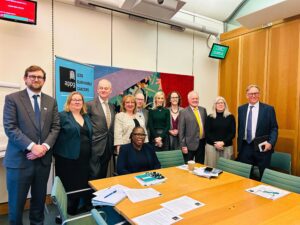
Until recently, the campaign took place on a single day each year. But one day was not enough. During last year’s Less Survivable Cancers Awareness Week, the Taskforce made significant progress in raising political awareness across the UK. The inaugural All-Party Parliamentary Group (APPG) on Less Survivable Cancers was launched at Westminster, creating a new platform to influence policy and improve outcomes for people affected by these cancers.
Members of the All-Party Parliamentary Group (APPG) at the inaugural meeting about the less survivable cancers.
Less Survivable Cancers Awareness Week 2026
In 2026, Less Survivable Cancers Awareness Week (12–16 January) will once again shine a spotlight on the devastating impact of these cancers, with a particular focus on the research gap that continues to hold progress back.
In Scotland and Wales, the week will include a drop-in briefing at the both the Scottish Parliament and Welsh Parliament, bringing together MSPs, clinicians, researchers, charity representatives and people with lived experience. The event will provide an opportunity to highlight the challenges facing people affected by less survivable cancers, including late diagnosis, unequal access to care and the urgent need for more research. Researchers based in Scotland and Wales will also share examples of work underway to improve early diagnosis and treatment.
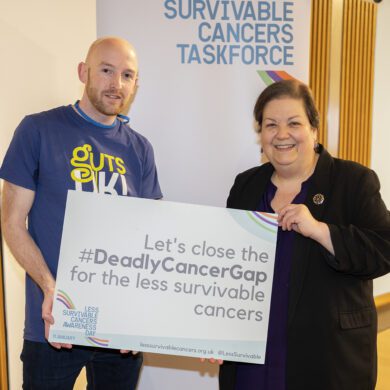
Central to this work are the voices of people affected. During last year’s Scottish campaign, Guts UK was joined by Ross, whose family has been deeply impacted by stomach cancer and a hereditary cancer gene. His story highlights the life-changing power of awareness, testing and early action and why progress cannot wait.
Keep an eye on the Guts UK socials to find out more about the Taskforce’s campaigning activity this Less Survivable Cancers Week, including more about a publicity stunt at Westminster, highlighting the disparities in funding.
Every November, Kranky Panky puts pancreatitis in the spotlight, sharing real stories from people in our community. This year, we’re also hosting ‘Getting to Grips with Pancreatitis’ – a free webinar exploring both acute and chronic...
Michael shares his story as part of our 2026 Diverticular Disease Awareness campaign, keen to share hope and to emphasise why patient-led research is so vital for chronic digestive conditions.
did you know your guts are 25ft long?! sign up for more fascinating facts, the latest research developments and how you can support further, including fundraising activities and more:
Footer - Newsletter Signup
DID YOU KNOW YOUR GUTS ARE 25FT LONG?! SIGN UP FOR MORE FASCINATING FACTS, THE LATEST RESEARCH DEVELOPMENTS AND HOW YOU CAN SUPPORT FURTHER, INCLUDING FUNDRAISING ACTIVITIES AND MORE:
By submitting this form, you are consenting to Guts UK contacting you by email as detailed above. To make any changes to your preferences you can email us on [email protected] or by calling us on 020 7486 0341. Your details are safe with us. Please read our Privacy Policy for more details.