
As we approach a new year, many of us take a moment to reflect on what we want to leave behind and what we want to move forward with. When it comes to our gut health, certain habits, beliefs and pressures can quietly follow us from year to year. For people living with digestive conditions or symptoms, these can add to an already challenging experience.
As we welcome 2026, this is a chance to let go of what no longer serves us and make space for better understanding and kinder conversations.
Here are ten things worth leaving behind as we step into the year ahead!
1. Poo taboo
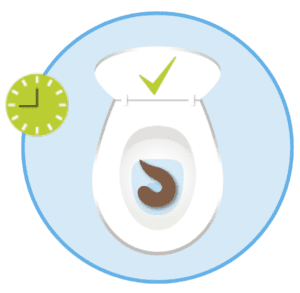
Your poo is an indication of your health. Checking your poo is vital.
Being aware of the colour, consistency and how often you empty your bowels is important, as it helps you to get to know your ‘normal’ and spot when something might not be right. Paying attention to changes, even small ones, can give early clues about your digestive health.
Everyone’s bowel habits are slightly different, so what is normal for one person may not be normal for another. If you’re unsure what is ‘normal’, our Poo-Torial is here to help.
2. Health misinformation
Misinformation spreads fast. It’s time to leave unreliable advice behind.
Digestive health can feel complicated, and it’s easy to come across advice online or from well-meaning friends that may not be accurate. Following the wrong guidance can sometimes do more harm than good or create unnecessary worry.
At Guts UK, we are committed to providing accredited information that you can trust. Our Patient Information Forum (PIF) TICK assures that our materials meet the highest standards. This means you can be confident that the information you follow is safe, accurate and up to date.

3. Ignoring symptoms
Many of us ignore symptoms, hoping they’ll go away. It’s easy to brush off discomfort or changes in your digestion, thinking it will pass, but your body often knows when something isn’t right. Paying attention to ongoing pain, unusual changes, or any new or worrying symptoms is important. Ignoring them can sometimes delay diagnosis or make a condition harder to manage.
Seeking help early from a healthcare professional can provide reassurance, guidance, and treatment if needed. Remember that taking your symptoms seriously is not overreacting. It’s looking after your health and wellbeing.

4. The guilt of saying no
It’s important to recognise that your health comes first. Putting yourself and your wellbeing at the centre is not selfish, it’s an act of self-care and strength.
Saying no isn’t a sign of weakness or letting others down. It’s a way of protecting yourself so that you can show up when it matters. It’s okay to set boundaries around activities, food, social events, or anything that might impact your health.
5. Misunderstanding of the gut
Since 1971, Guts UK has been dedicated to funding research that leads to better diagnoses and kinder treatments for people affected by digestive conditions and symptoms across the UK. While we are proud of the progress made, there is still so much more to do to improve understanding, care, and support for everyone living with these conditions.
Thanks to your support, we can continue to fund life-changing research, helping to create a better future for everyone affected.

6. “Just push through it”
Living with a digestive condition can mean good days and bad. Some days you may feel full of energy and able to do everything you planned, while other days even small tasks can feel exhausting. It’s easy to feel pressure to keep going or to push through discomfort, but this can do more harm than good.
Be kind to yourself, and let’s leave behind the expectation to always push through. Resting, slowing down, and giving your body time to recover is productive, too.

7. Blaming yourself
Digestive conditions are not your fault. They can happen to anyone, at any age, and for many different reasons. It’s natural to have questions or feel frustrated about why it’s happening, but you did not “bring this on yourself,” nor is it a reflection of your choices or actions. Let’s leave blame and guilt in 2026 and focus on self-care.

8. Stigma around talking about guts
Conversations about digestive health are still surrounded by shame and silence. Many people feel embarrassed or worried about how others will react if they talk about symptoms, even with family or friends. This can make it harder to get the support, advice, and treatment they need.
Let’s make 2026 the year we normalise talking about our guts. By opening up and having these conversations, barriers can be broken, and stigma can be reduced, leading to a greater understanding, and no one will have to suffer in silence.

9. Dismissive comments
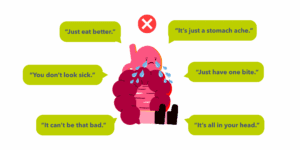
Dismissive comments can feel invalidating and often oversimplify what people are going through. They can make everyday challenges seem invisible and can leave someone feeling misunderstood. Digestive conditions are complex, and symptoms are often hidden, yet the impact can affect every part of life.
These comments can also create guilt, making people feel like they’re not doing enough or that they should push through. Let’s leave these dismissive comments behind in 2026 and focus on listening, understanding, and supporting each other.
10. Not feeling like you belong
Feeling like you don’t belong can be isolating, especially when living with digestive symptoms or conditions. The reality is that no one should feel alone in their experience. We’re made up of people from different backgrounds, with different beliefs, affected by different conditions…

And we all have one thing in common. We know all too well the pain and suffering that digestive conditions cause. Together, we are working towards a brighter future where our guts are better understood, and everyone gets the support they need.
Together, we will help the UK get to grips with guts!