Get to grips with the lower gastrointestinal tract!
We’ve all got guts. Around 25 feet of them, in fact. That’s a lot to get your head around!
Every month, we’ll be sharing a news post that will help you to get to grips with your digestive system. You can find out what’s coming next at the end of this post but for now, let’s get to know the lower gastrointestinal tract, often referred to as the lower GI tract.
What is the lower gastrointestinal tract?
The lower GI tract is the lower part of the digestive system, responsible for crucial roles in digestion, nutrient absorption, and waste elimination.
What organs make up the lower gastrointestinal tract?
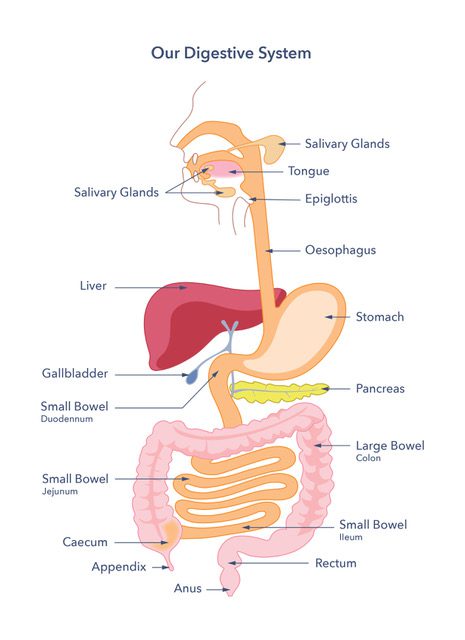
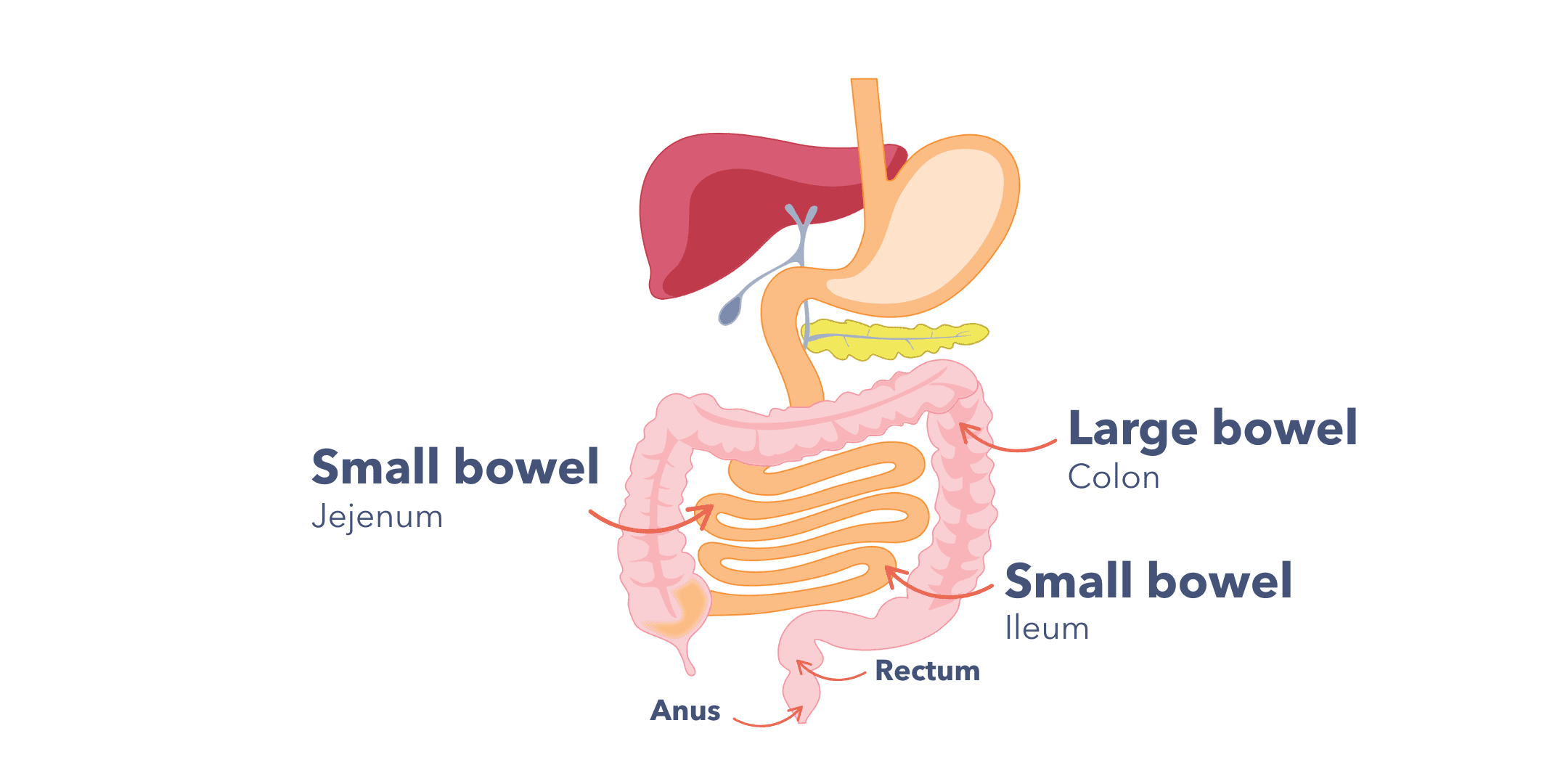
The lower GI tract includes the:
Small bowel
Large bowel (colon)
Rectum
Anus
Within the lower GI tract, there is a complex community of bacteria known as the gut microbiome. This plays a role in digestion. The lower GI tract also has immune functions to help protect against harmful microorganisms. In fact, the largest population of microorganisms within the body live within the large bowel.
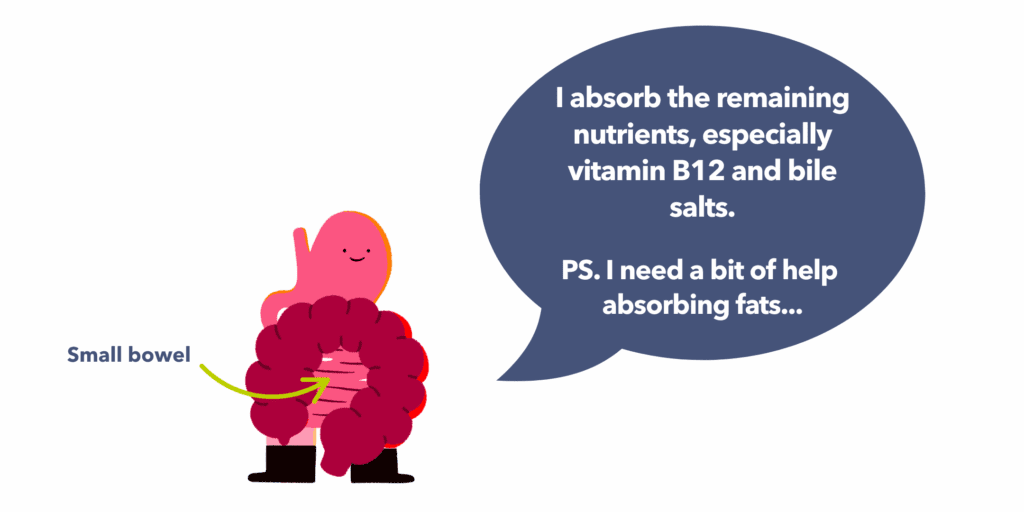
The ileum is the final section of the small intestine where the remaining absorption of nutrients takes place, especially vitamin B12 and bile salts.
Your small intestine needs a bit of help when it comes to absorbing fats. To help, the liver produces a substance called bile. This is made in the liver and then is stored temporarily in the gallbladder, under the liver. The gallbladder pumps bile into the duodenum to help break down fat into smaller droplets. These smaller droplets can then be attacked by pancreatic enzymes, which help make the droplets even smaller so they can be absorbed into the body. The ileum then absorbs the bile back into the bloodstream, and bile heads back to the liver.
The large bowel (colon)
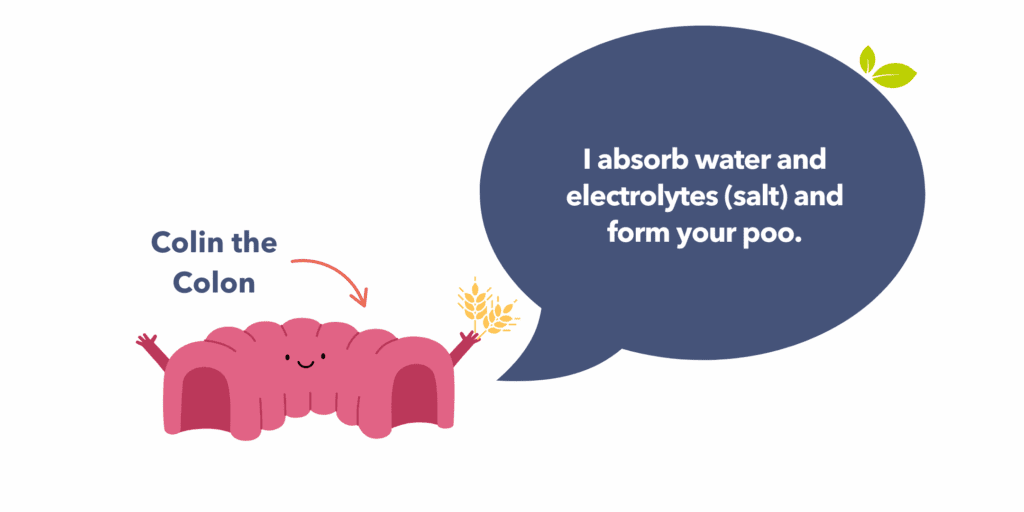
The colon absorbs water and electrolytes (salts) from the remaining undigested material and then forms solid waste (poo).
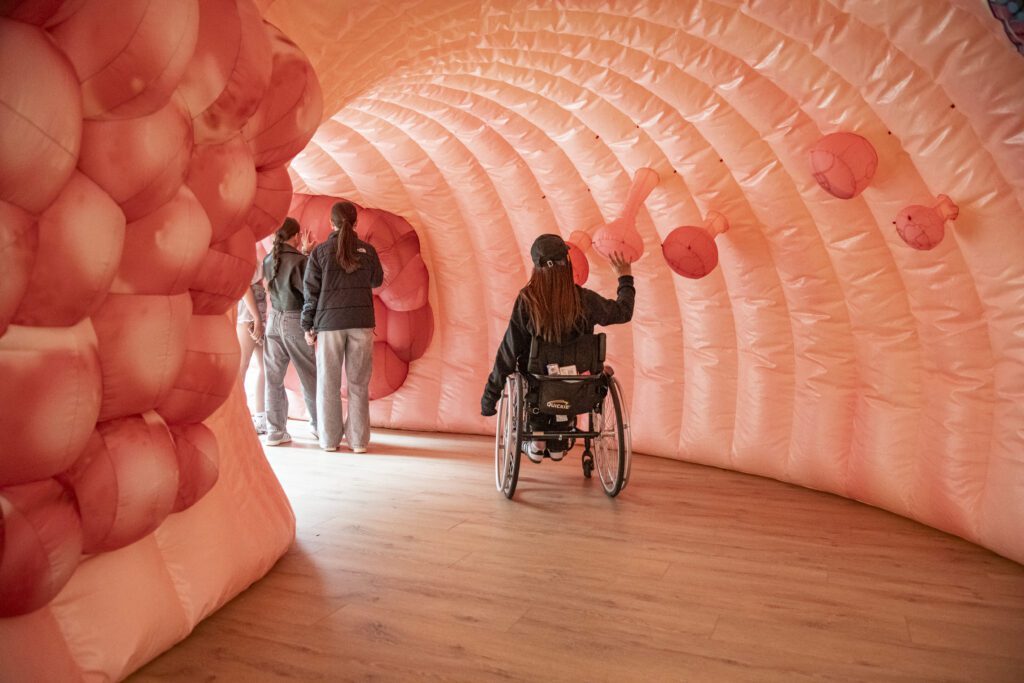
Guts UK team member, Colin, the Inflatable Colon.
By the time your food comes out of your small bowel, it looks like a very thin (and unappetising) soup! The large bowel eagerly awaits to receive this to enable the gut microbes to process the fibre it contains. This process involves microbes fermenting the fibre (similar to what happens when brewing beer). Products of this process are gas plus substances which help keep the gut healthy, for example, short-chain fatty acids. Slowly, over the course of a couple of days (give or take, depending on the individual), the mixture then gets thicker and drier, until it forms poo.
The rectum
The poo is then stored by the rectum, until it is eliminated from the body.
The anus
The anus is the opening at the end of the digestive tract. Poo leaves the body via here.
The function of the anus is under both conscious and unconscious control. The anus contains two rings of muscles called sphincters. When the rectum is full of poo, this triggers the nerves to empty the bowel and the inner sphincter relaxes to open the bowel to poo. The outer sphincter is under conscious control and helps a person to keep control of their bowels until they can reach a toilet. Loss of this control is called incontinence.
What have we learnt so far?
In our first posts of the series, we learnt some of the ‘basics’ about the digestive system, and all about the upper gastrointestinal/GI tract. You can catch up using these links:
We’ll be sharing more information on what our gut microbiome is, what we can do to help our gut microbiota thrive, and more.
Are you eager to learn more?
We have information about the digestive system and over 40 digestive conditions and symptoms, which can be found here. You can also follow us on social media by searching ‘gutscharityuk’ to learn more, keep up to date with the work we do and take part in vital awareness campaigns to help us spread the word that our guts deserve better. It’s time for the UK to get to grips with guts!
About Guts UK
Guts UK is the national charity for the digestive system. We are the only UK charity funding research into the whole digestive system.
People are suffering. People are dying. All because of a lack of knowledge about our guts. Guts UK exists to change that.
With new knowledge, we will end the pain and suffering for the millions affected by digestive diseases. Please consider donating today. Your donation will help fund research leading to earlier diagnoses, kinder treatments and ultimately, a cure.
This Oesophageal Cancer Awareness Month, Danielle shares her story. She started having difficulty swallowing in 2022, and her GP thought it was heartburn and reflux. On her fourth visit, she was finally referred for an...
did you know your guts are 25ft long?! sign up for more fascinating facts, the latest research developments and how you can support further, including fundraising activities and more:
Footer - Newsletter Signup
DID YOU KNOW YOUR GUTS ARE 25FT LONG?! SIGN UP FOR MORE FASCINATING FACTS, THE LATEST RESEARCH DEVELOPMENTS AND HOW YOU CAN SUPPORT FURTHER, INCLUDING FUNDRAISING ACTIVITIES AND MORE:
By submitting this form, you are consenting to Guts UK contacting you by email as detailed above. To make any changes to your preferences you can email us on info@gutscharity.org.uk or by calling us on 020 7486 0341. Your details are safe with us. Please read our Privacy Policy for more details.

 The lower GI tract includes the: